BIRD HUNTING IN THE FORLOH HOODED “PUFFY” JACKET
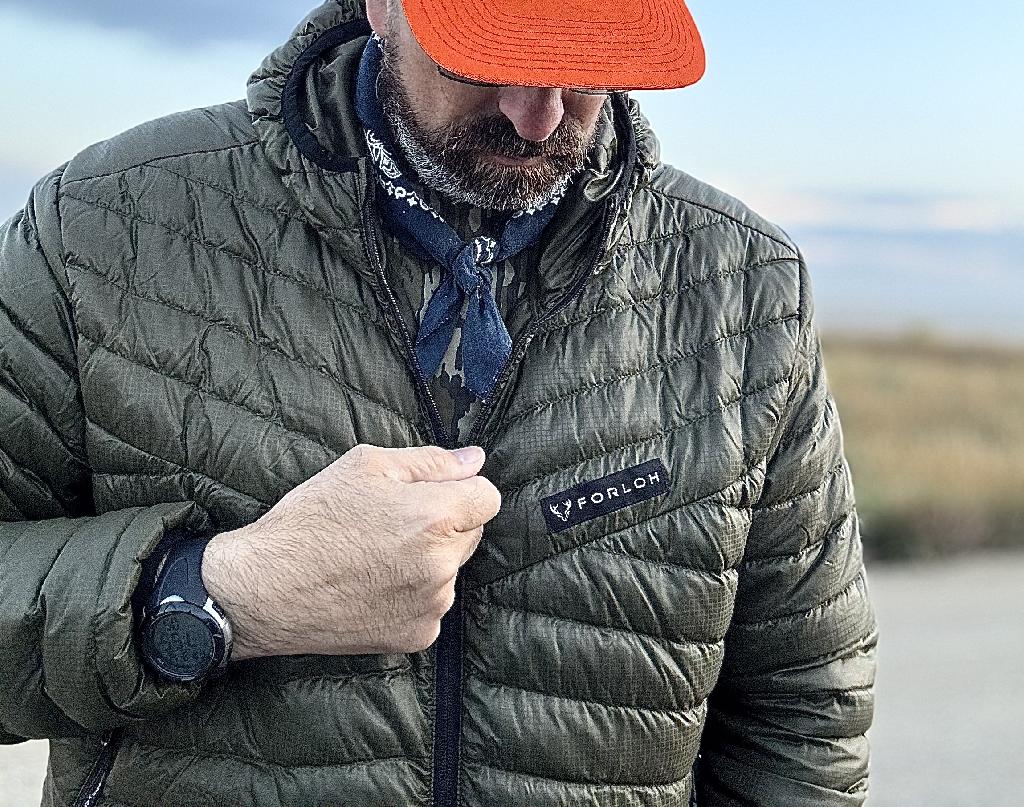
Then, in the early 2000s, with the advancements in textiles and technology, down jackets re-emerged and found a crucial place in the mainstream hunting industry. They quickly became essential pieces of gear in hunting kits when stalking deer, elk, and other ungulates. Quick on the heels of big game hunters were wingshooters, me included.
UPLAND VERSITILITY & DURABILITY
For over a year I have been wearing the FORLOH Thermoneutral Down Hooded Jacket when bird hunting. I have donned the jacket across a variety of harsh landscapes, including mountains, woods, marsh, and uplands, while chasing a long list of gamebirds.
FORLOH’s puffy coat saw action in Alaska, where its lightweight (XL 26 oz) and compactness easily stuffed in its own pocket. About the size of a 12-count pack of rolls, it was simple to haul in my bird vest during a six-hour trek into ptarmigan country. With ever-changing weather, having a superior quality down jacket was at the top of my gear list. With constant wet conditions, the FORLOH Jacket was quick drying with its DWR (Durable Water Repellant) breathable coated fabric, keeping me dry and comfortable. In an environment that can change at a moment’s notice, having a quality down jacket that’ll keep you warm and alive if the need arises to hunker down is critical.
The down jacket also made appearances in remote bird camps, around campfires, and keeping the chill off while cleaning sharptails and Huns on the tailgate in Montana. The jacket’s high-performance insulating down kept me warm while walking across open frozen grasslands for prairie chickens in frigid temperatures. Though, I was a bit hesitant on wearing the FORLOH jacket while hunting bobwhite quail and roosters in brush or thick vegetation, as puffy jackets are often fragile and susceptible to tearing, it actually held up to moderate abuse. The 100% nylon shell is made of Quantum 40D Ripstop (U.S. mil spec), which is an exceptionally durable, lightweight material. It features a breaking strength of 90-130lbs per 2-inch strip. This design allows for high-performance, offering excellent tear and abrasion resistance, making it suitable for demanding conditions. I was careful not to push it to extremes, but the FORLOH jacket held up in a variety habitat as I pushed through tall grass and weedy brambles.
FORLOH should look at including a color-matched patch kit with at least two trimmable pieces of durable, adhesive fabrics of 3” x 5”. This would provide a fast, no-sew, and waterproof fix for tears, rips, and escaping down feathers.
DUCK DOWN FOR THE DUCK BLIND
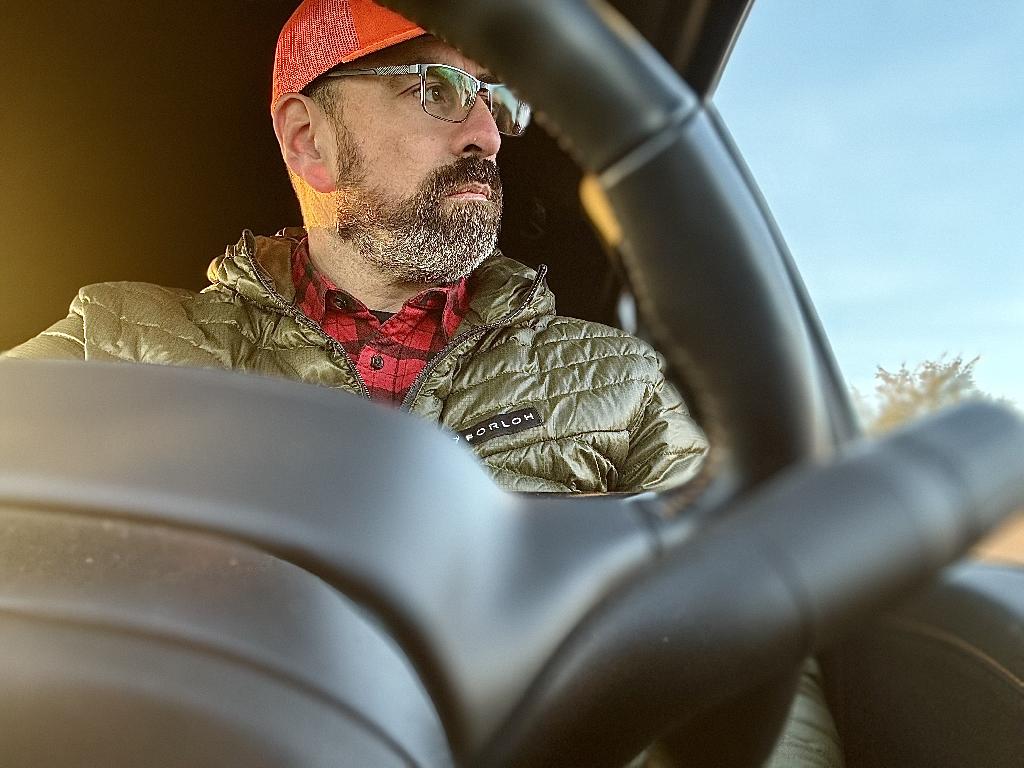
As a waterfowler I found the FORLOH Hooded Jacket to be an ideal pairing to wear as an outer layer underneath my waders. Duck hunters know that long bouts of standing in water or leaning up against a tree during less-than-ideal conditions, such as rain, sleet, and snow can be miserable.
The Activ-Dri™ Down Organic Duck Down is made of 800 fill power which translates to 135 grams of fill weight of RDS (Responsible Down Standard) – making it 60%drier than standard down. That equates to being toasty warm during sedentary-style winter shootouts for ducks and geese while hidden in layout blinds or sitting in a duck boat. The FORLOH jacket provided excellent warmth and insulation during extreme late-season conditions used as a static layer.
The FORLOH design team could look at incorporating a medium-sized outer zippered pocket. This would be great for cellphones, handwarmers, headlamps, duck calls, or the occasional extra shotshell or two.
WHO IS FORLOH
FORLOH: FOR Love Of Hunting – is 100% American-made. That means it is designed, sourced, stitched, and assembled together in the USA. Created with the adventurous spirit in mind, FORLOH was formed to fill a gap left by dissatisfied outdoor technical apparel companies.
IS THE FORLOH “PUFFY” WORTH WEARING TO BIRD HUNT
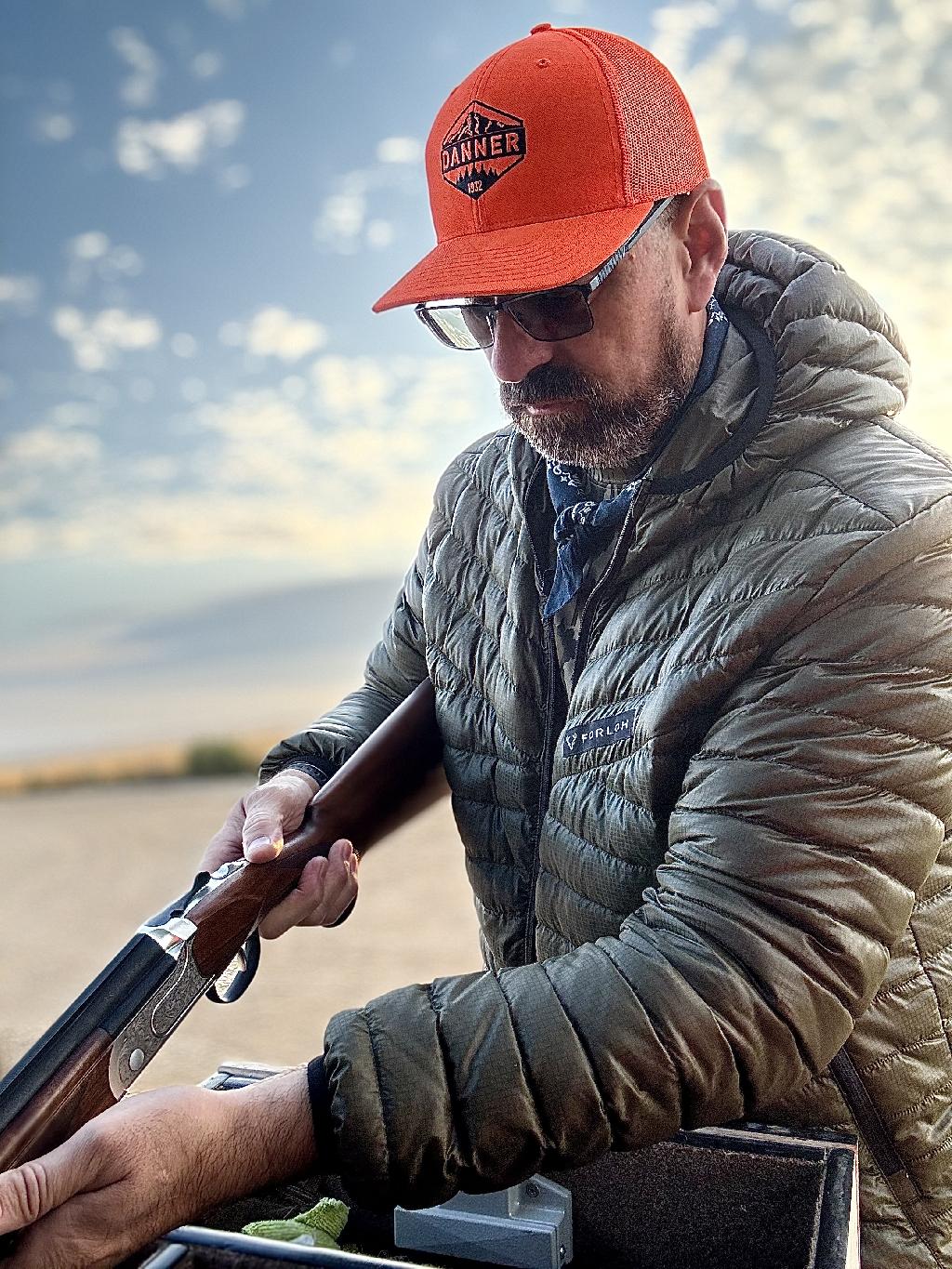
Absolutely. Whether you refer to them as down or puffy jackets, it’s safe to say that these overcoats serve an essential purpose across a wide platform of bird hunting disciplines. Its articulated design allows for free-range of motion, making it easy to mount, swing, and shoot a shotgun. The FORLOH Thermoneutral Down Hooded Jacket will keep wingshooters warm and dry. Its tough exterior isn’t briar and thorn proof, but it can take a beating, just be careful busting through thickets and heavy cover. In the wide-open chasing ringnecks, or maneuvering through the high-country for mountain grouse, its ideal. It’s well suited for camp chores and in-between hunts, and for travel. My FORLOH down jacket will be at the top of my gear list from here on out.
SPECS:
• Sizes: S, M, L, XL, 2XL, and 3XL
• Colors: Forloh Green, Multi-Cam, Marsh Field, and Black
• 800 fill power (135 grams fill weight) RDS Downlite (Responsible Down Standard)
• 1005 Nylon, Quantum 40D Ripstop (U.S. mil spec)
• DWR Treatment
• YKK Reverse Coil Zippers throughout
• Internal Secure Pocket
• Elastic Binding at hood & sleeve cuff openings
• Underarm gusset panels for increased range of motion
• (2) Elastic cinch cords at hem
• Elastic center back hood cinch
• (2) Secure lined pockets
PROS:
• Made in USA
• Lifetime Warranty
• Durable
CONS:
• Needs at least (2) patch kits with every jacket
• Outer zippered chest pocket
• Price is high compared to other specialized high-end outdoor hunting brands

About the Author : Edgar Castillo
Visit authors website | View more articlesEdgar Castillo is a recently retired law enforcement officer for a large Kansas City metropolitan agency. He also served in the United States Marine Corps.
Born in Guatemala, hunting was a new concept when Edgar came to the U.S. His passion lies in the uplands as he travels across public lands throughout Kansas or wherever the dirt road takes him…to hunt open fields, walk treelines, & bust through plum thickets in search of wild birds in wild places.
This fervid emotion for the uplands has since blossomed into a SIGNIFICANT social media presence. It has allowed Edgar to share his experiences and connect with other bird hunters through writing.
Follow Edgar’s upland escapades on Instagram at @hunt_birdz
Related Aritlces

`Upland` Chaps
The snow had begun to accumulate. Measuring just high enough that each boot step would certainly put me into almost ten inches of the white stuff. The landscape was wet with freshly fallen snow. Its weight had pushed down all the dried, tan switchgrass that fall and winter brings. I opened the back half of the truck’s cab to get to my gear bag. I unzipped the main compartment and pulled out matching tan chaps. They were quickly put on over my pants and secured. An hour into my hunt, I quickly found the chaps sole purpose that day was to keep me dry. I had pushed though snow-laden grass, flushing roosters who had taken to burrowing themselves in small openings to get out of the weather. If I had not worn chaps, I would’ve been one wet and cold bird hunter.

BENCHMADE FLYAWAY KNIFE
Bird hunters need to carry a knife. A good knife. One that is tailored to execute tasks across a myriad of landscapes and environments where gamebirds will be encountered, shot, field dressed, and ultimately cooked and eaten. For wingshooters, knives that are purpose-built for cleaning, skinning, and breaking down wild fowl are crucial for efficient and safe game processing. The knife needs to be capable of handling basic camp and home cutting chores too – be it deboning a bomber sage grouse on a tailgate or slicing bite-sized chunks of a pheasant rooster around a campfire, and or making delicate work of carving up little quail hors d'oeuvres in the kitchen.