Leather Gloves : A Tool for bird hunters
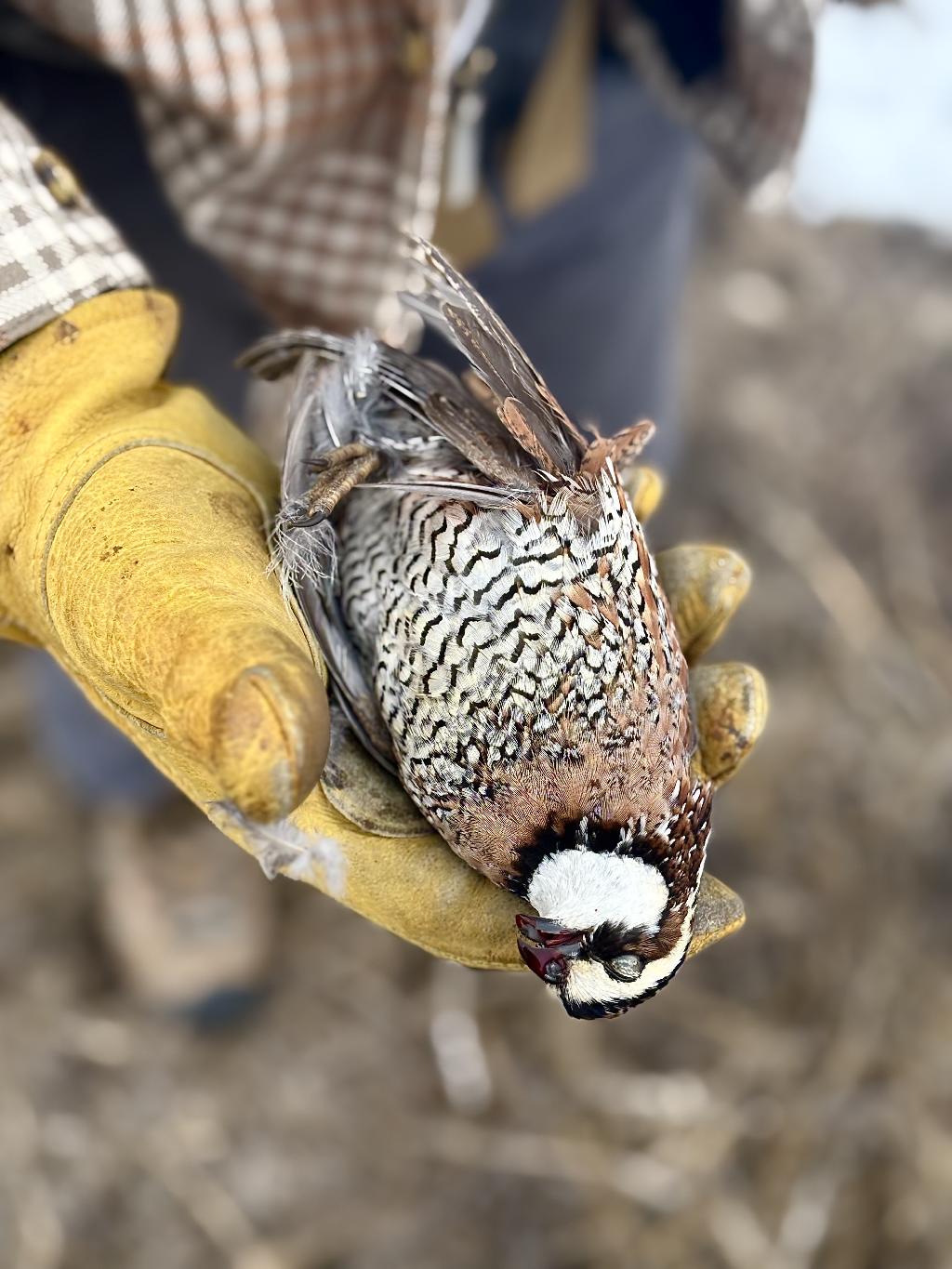
Throughout wingshooting and personal lore, leather gloves have played a significant role in crossing boundaries and forging past nature’s abrasive obstacles and harsh landscapes in our pursuit of gamebirds. To many, a pair of leather gloves offer a superior combination of protection, durability, and reliability. Leather gloves are just crafted and sewn together for tough conditions. There’s a reason why ranch hands, wranglers, oilmen, loggers, and those that work in extreme environments don leather gloves. They need to be a must-have on every bird hunter’s gear list. Here’s why:
LEATHER IS JUST BETTER
Leather gloves are widely preferred for their superior comfort and natural, tactile feel compared to synthetic alternatives. They offer a natural grip and feel for handling a shotgun, or any firearm and bow for that matter. With a comfortable and fast break-in period, leather gloves are designed to mold to the unique shape of the wearer’s hands over time, providing a custom fit that improves with age. It is often described as a “second skin” feel. Leather gloves are perfect for bird hunters who need tough, all-day protection and with unlined and lined options, offer usage from September doves to February desert quail.
Additionally, with each crease, scratch, and imperfection added through experiences, leather gloves just look better the more they are used. And, if they sustain damage, it’s easy to sew and patch them up with a scrap of animal hide, making them good for another couple of years.
THE RIGHT PAIR
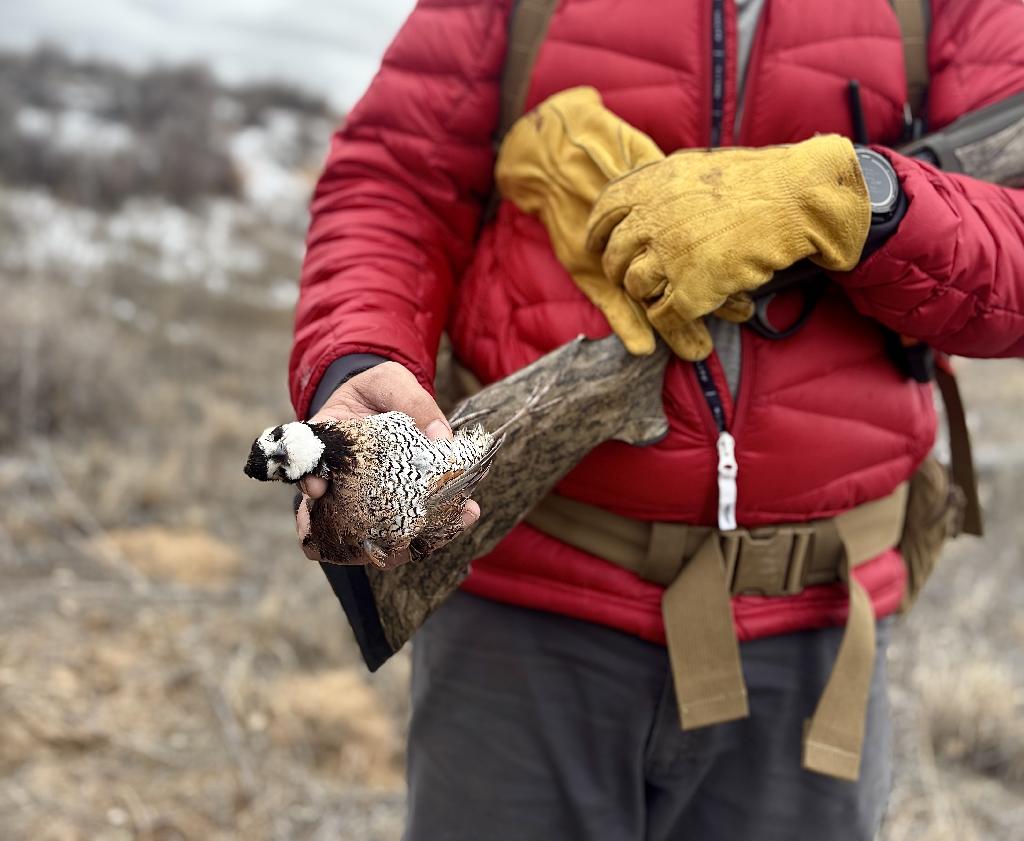
Choosing the right leather glove involves matching the leather type—cowhide for durability, pigskin for wet conditions, goatskin/deerskin for dexterity, or buffalo for sheer toughness—to your specific task. Ensure a snug fit, cuff styles, leather grades, and look for additional features like reinforced palms, pull and attachment tabs. Select the appropriate linings (fleece, Thinsulate, fur) for the weather and season where you’ll be bird hunting. Contemplate getting a warm to mild weather wearing gloves and cold, late season pair of leather gloves. Proper care, such as avoiding excessive water and applying conditioner, keeps gloves soft and durable.
BENEFITS OF LEATHER GLOVES
- Protection & Unmatched Durability
- Ergonomic Fit
- Dexterity & Grip
- Weather Protection
- Insulation
- Endures Heavy Use
RECOMMENDED LEATHER TYPES
- Deerskin: Extremely soft, offering high dexterity, comfort, and good, immediate fit.
- Goatskin: Tough and durable.
- Buffalo: Long-lasting. Naturally repels moisture better than cowhide.
THORNS, BRIARS, AND THINGS THAT CUT
Whether you’re navigating thick upland brush for ruffed grouse, bustin’ through plum thickets to flush a covey of bobwhite quail, or scaling rocky terrain in pursuit of chukar, leather gloves perform best in the difficult habitat where birds live. Leather gloves make traversing the arid southwest for Gambels, Scaled, and Mearns quail easier, as every thorny and prickly plant was designed to cut, slice, and poke bird hunters as they walk by. Alaskan bird hunters recommend wearing leather gloves while bushwhacking through Devil’s Club, an understory brush, enroute to ptarmigan country.
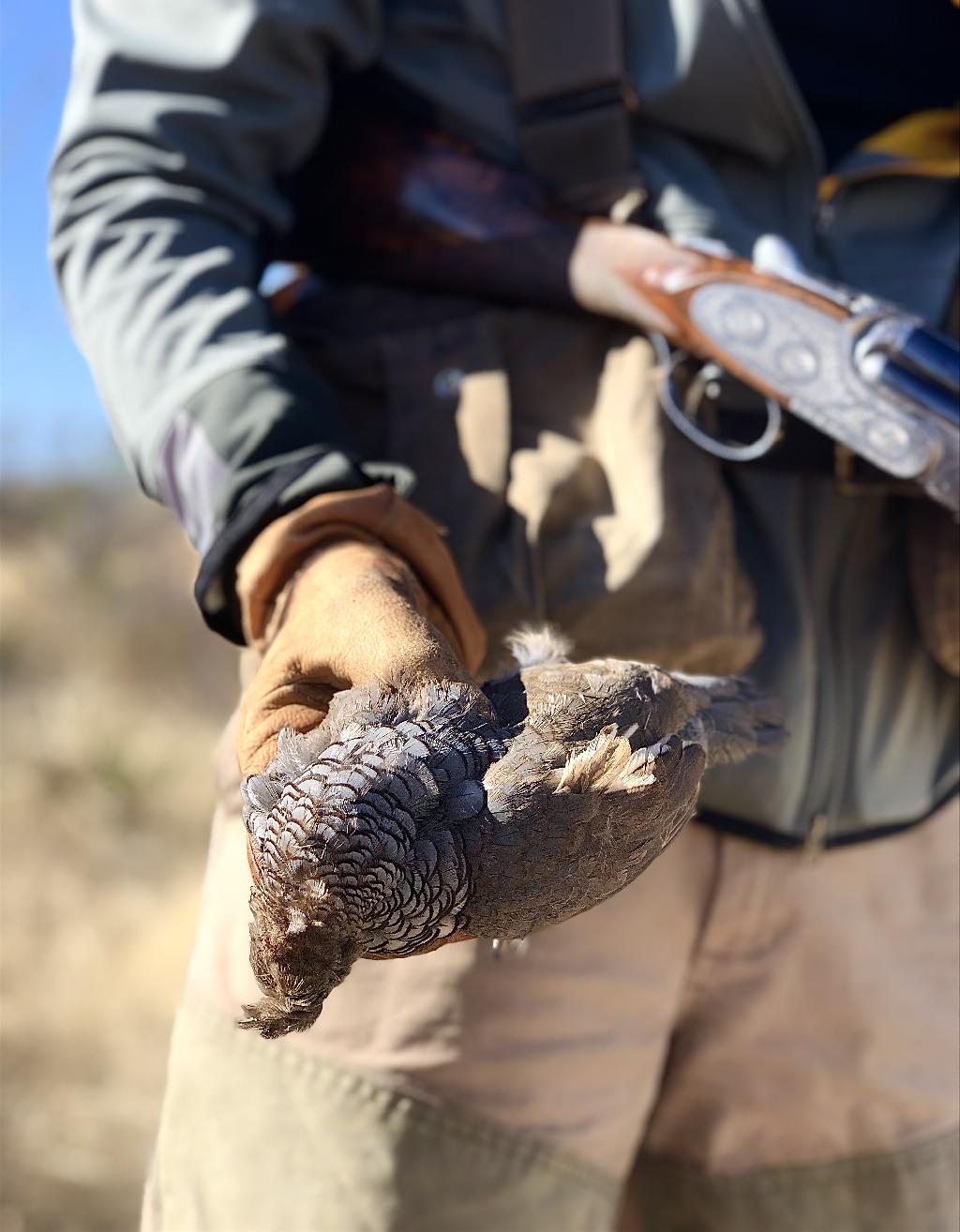
Leather Gloves offer maximum protection for hands when moving through dense forests and vegetation, and pushing through brambles where gamebirds rely for nesting, cover, and protection. It’s in these environments where leather gloves hold their own and can take the strenuous abuse to which they are exposed.
THE DEVIL’S ROPE
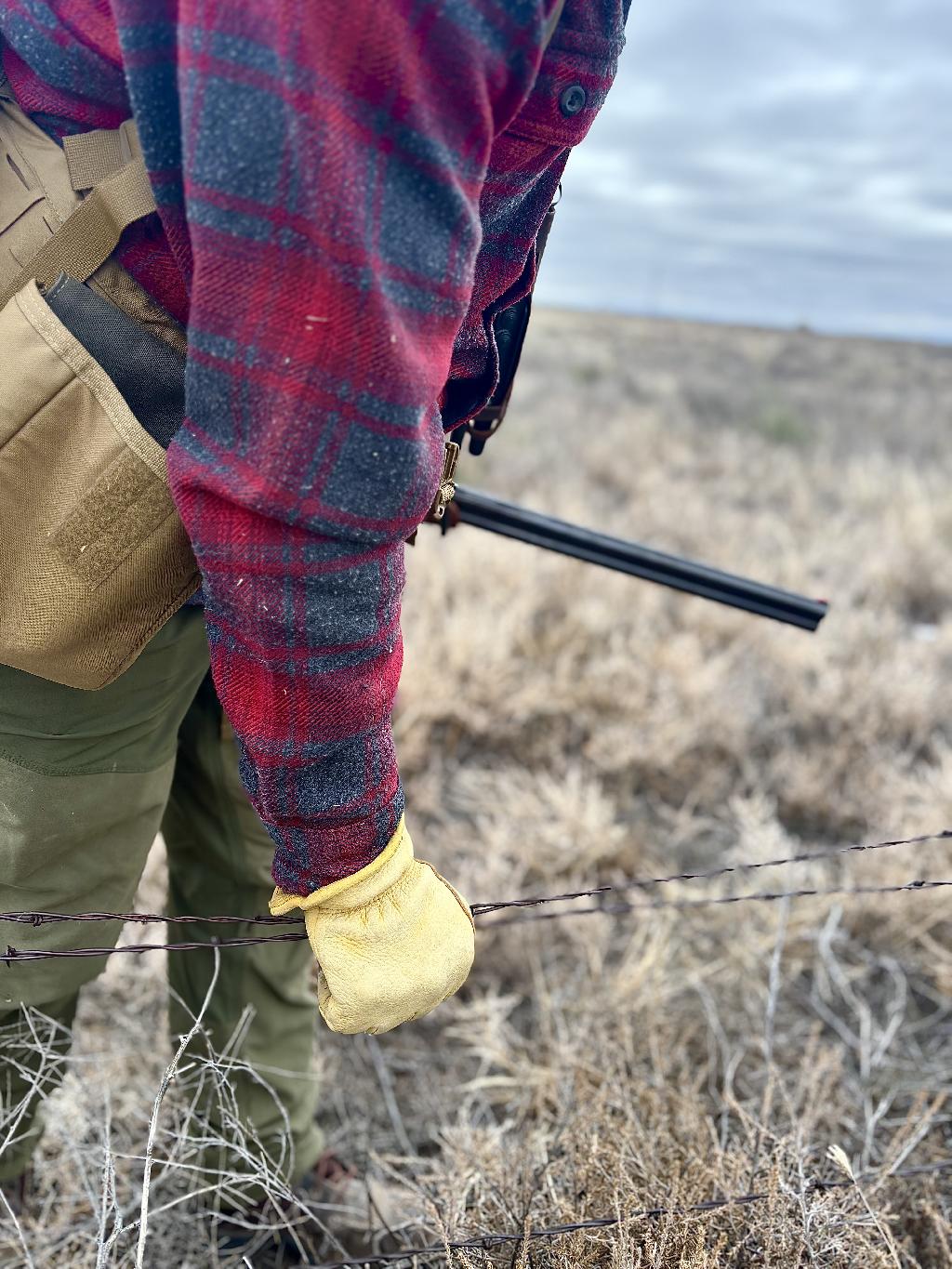
Leather gloves are hands down a vital tool for navigating the “Devil’s Rope” – barbed wire fences. Those notorious manmade barriers that gamebirds fly over or scurry underneath to escape bird dogs and hot-on-the-heel hunters. For crossing barbwire fences, leather gloves are far superior to regular fabric or synthetic gloves that tear or rip easily. In contrast they provide high abrasion resistance and protection against puncture wounds from sharp barbs and snagging metal. Because leather is so tough, it helps prevent injuries during fence traversal.
NO COLD HANDS
Cold weather doesn’t sway me away from wearing “leathers” during bird season, instead I opt to wear thick, fleece-lined leather gloves against the winter elements. The lined gloves offer additional insulation and wind protection, and in some cases, moisture. If temperatures drop below freezing, I activate handwarmers and place one in each palm for added warmth. Choose the right pair of leather gloves that provide warmth, durability, and dexterity without compromising your shooting ability to kill birds.
I’ve consistently worn leather gloves for almost three decades while pursuing gamebirds all over the country. They have served me well while hunting ringneck pheasants in the Midwest, prairie, and woodland grouse, even marsh birds, as well as ducks. Leather gloves function as essential, specialized tools that provide hardwearing defense for my hands in hazardous habitats and terrains, while allowing me to perform tasks. Leather gloves are a staple in my kit and should be placed in yours too.

About the Author : Edgar Castillo
Visit authors website | View more articlesEdgar Castillo is a recently retired law enforcement officer for a large Kansas City metropolitan agency. He also served in the United States Marine Corps.
Born in Guatemala, hunting was a new concept when Edgar came to the U.S. His passion lies in the uplands as he travels across public lands throughout Kansas or wherever the dirt road takes him…to hunt open fields, walk treelines, & bust through plum thickets in search of wild birds in wild places.
This fervid emotion for the uplands has since blossomed into a SIGNIFICANT social media presence. It has allowed Edgar to share his experiences and connect with other bird hunters through writing.
Follow Edgar’s upland escapades on Instagram at @hunt_birdz
Related Aritlces

`Upland` Chaps
The snow had begun to accumulate. Measuring just high enough that each boot step would certainly put me into almost ten inches of the white stuff. The landscape was wet with freshly fallen snow. Its weight had pushed down all the dried, tan switchgrass that fall and winter brings. I opened the back half of the truck’s cab to get to my gear bag. I unzipped the main compartment and pulled out matching tan chaps. They were quickly put on over my pants and secured. An hour into my hunt, I quickly found the chaps sole purpose that day was to keep me dry. I had pushed though snow-laden grass, flushing roosters who had taken to burrowing themselves in small openings to get out of the weather. If I had not worn chaps, I would’ve been one wet and cold bird hunter.
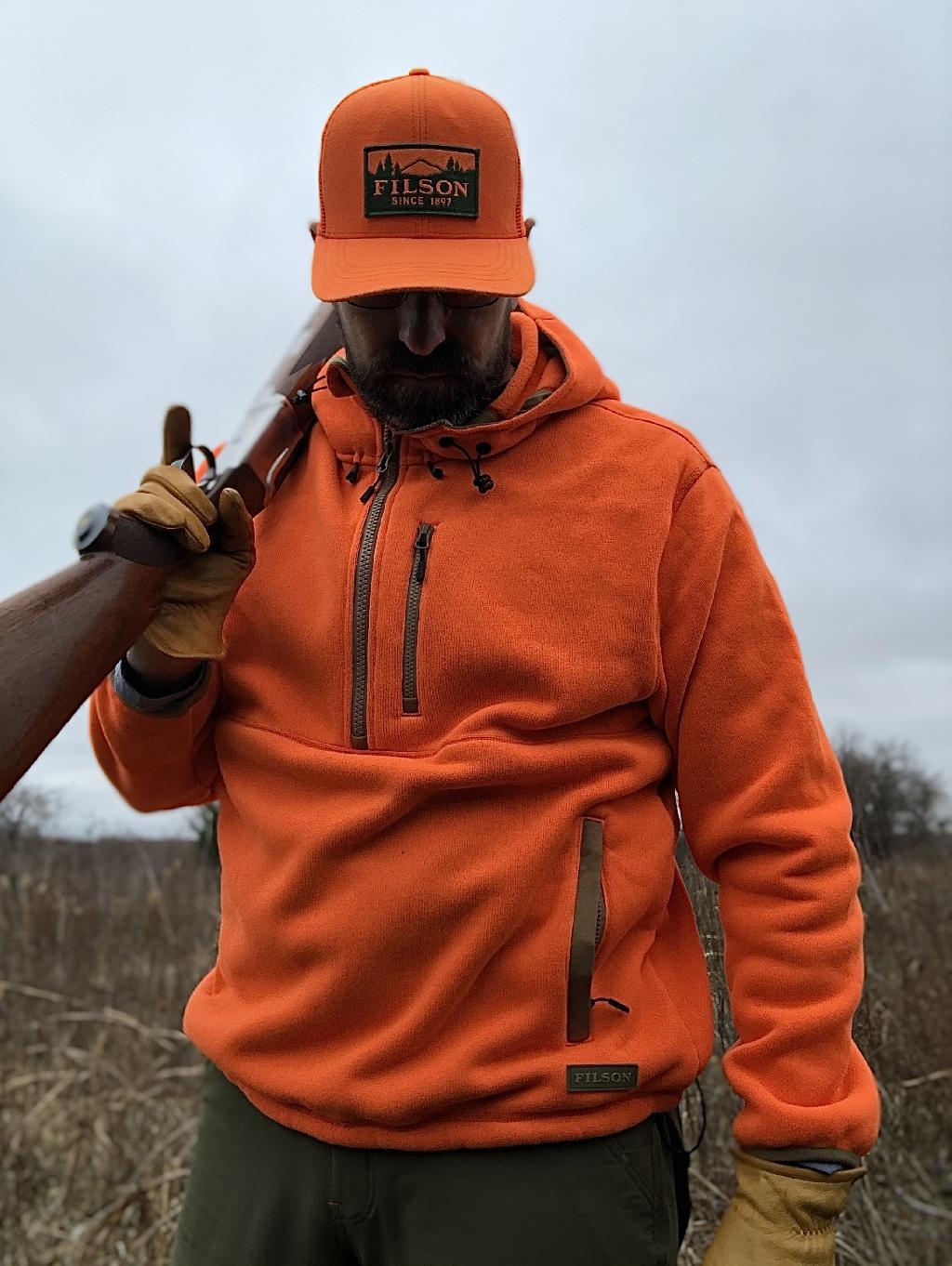
Filson’s Ridgeway Fleece Pullover
Filson has a knack for integrating history into everything they stitch together. They seem to be able to bring back to life or reinvent pieces of history in the form of garments to handle the tough struggles of outdoorsmen. Filson is synonymous with high quality and durable materials. Their clothing and gear are made to withstand the rigors of the wild outdoors and built to last a lifetime. Some Filson pieces almost possess an heirloom quality and status. Clothing is constructed for long-term use and the company relies on using materials that offers protection from the elements and environment for a wide range of activities. Putting on almost anything Filson, is like transforming oneself into a rugged folkloric Paul Bunyan type figure.