Boykin Spaniel
The Little Retriever from the South
Posted 07/27/2026
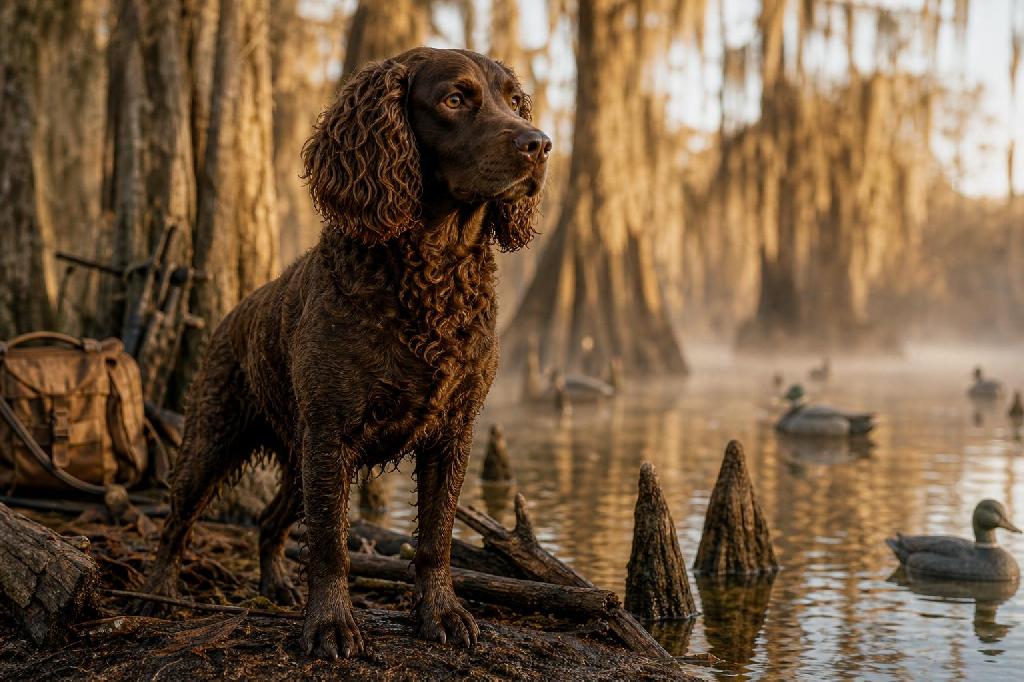
There are bird dogs that make a strong first impression with size, flash, or speed, and then there are dogs that earn your respect one retrieve at a time. The Boykin Spaniel falls into that second camp. If you have spent enough mornings in flooded timber, cypress edges, beaver swamps, and dove fields across the Southeast, you already know what these little brown dogs are about. They are compact, eager, and serious when birds are falling. The Boykin Spaniel may not take up much room in a truck box or a jon boat, but he carries himself like a dog twice his size when the work starts.
For hunters, that matters. A dog does not need to be flashy to be memorable. He needs to mark cleanly, hunt hard, handle pressure, and come back ready for the next bird. That is where the Boykin built his reputation. He is often called the little retriever from the South, and that name fits. While the breed can flush upland birds and work a field with plenty of enthusiasm, its real identity comes alive in the marsh, along muddy banks, and under the kind of wet, unpredictable conditions where grit counts more than style.
The Southern roots of the Boykin Spaniel
The Boykin Spaniel is one of the few truly American gun dog breeds, and its history is tied closely to South Carolina. The old story, which still gets passed around at camps and boat ramps, begins with a small brown stray that showed unusual bird sense and trainability. That dog eventually became the foundation of a line developed for practical hunting in the South. Hunters needed a dog that could ride in small boats, retrieve ducks, flush wild turkeys and upland birds, and handle thick cover without becoming a burden in tight quarters. Out of that need came the Boykin.
That origin story tells you a lot about the breed even now. This was not a dog bred for show-ring exaggeration or for one narrow task. The Boykin was shaped by working hunters who valued usefulness. The result is a medium-small spaniel with enough nose to find birds, enough drive to stay busy, and enough heart to tackle conditions that can wear down softer dogs. In a region where hunts often involve water, heat, mud, and brush all in the same day, versatility is not a luxury. It is the job description.
What makes the Boykin Spaniel a hunter’s dog
The first thing many hunters notice about a Boykin is size. He is small enough to fit comfortably in a cramped duck boat and light enough to handle easily in and out of the truck, but that convenience should never be confused with fragility. A good Boykin is compact and athletic, with a build that lets him push through brush, swim hard, and keep moving through a long day. He is not a big retriever, and he is not meant to be. He is a practical dog built around the realities of Southern hunting.
Temperament is another reason the breed has such a loyal following. Most Boykins are biddable dogs that want to be with their people and want to work. That matters in the field because cooperative dogs are easier to shape into reliable hunting partners. They typically carry a good balance of excitement and trainability, and when they are raised right, they can shift from house dog to hunting dog without much confusion. That kind of off-switch is valuable, especially for hunters who want one dog that can live with the family all week and then hit the timber on Saturday morning.
There is also an honest toughness to the breed. Boykins are often cheerful dogs, but do not mistake that for softness. A seasoned Boykin can take on cold water, rough banks, and stubborn cripples with impressive determination. I have seen more than one little brown dog launch into black water after a duck that bigger dogs hesitated on, and I have seen them claw their way through buttonbush and briars because they knew a bird was out there. A good one hunts with purpose, not just energy.
In the duck blind
This is where the Boykin Spaniel earned much of its name. In Southern duck country, especially where access is limited and boats are small, a compact retriever is an advantage. The Boykin does not need much room, and he generally settles well if trained properly. When birds start working, his marking ability becomes obvious. Many Boykins are natural markers, quick to lock onto falling birds and eager to recover them without wasted motion.
They are especially handy in places where retrieves are messy rather than long. Swamps, flooded woods, shallow marshes, and brush-lined sloughs all suit the breed. The Boykin’s size helps him weave through cover and scramble over slick obstacles, and his determination makes him valuable on wounded birds that do not give easy second chances. While a giant northern waterfowl dog may have more raw power in extreme cold or giant water, the Boykin is in his element in the conditions that shaped him.
In the dove field and uplands
Do not box the Boykin into water work alone. He can be a fine dove dog, and he brings a useful style to upland hunting as well. In a dove field, a steady Boykin can keep a hunter organized during busy shooting, picking up birds efficiently and staying engaged without becoming chaotic. In quail or pheasant cover, he works with a lively, close-to-medium range that fits many foot hunters. He is not a pointer, and he should not be judged like one. His job is to hunt birds, put them in the air, and recover them cleanly.
That versatility is part of the breed’s appeal. Plenty of hunters do not need a kennel full of specialists. They need one dog that can retrieve ducks in the morning, find doves in the afternoon, and still be a pleasure to have around camp. The Boykin often fills that role better than breeds with narrower talents.
Training a Boykin Spaniel for real hunting
The best Boykins are usually started with a steady hand and clear expectations. Because the breed tends to be intelligent and eager, early training often goes smoothly, but that does not mean you can wing it. A Boykin that is allowed to run wild on enthusiasm alone can become noisy, sloppy, or overly independent. Hunters who get the most out of the breed usually build obedience early, then channel drive into simple, repeatable field work.
Retrieving drills, steadiness around gunfire, clean delivery, and controlled quartering all matter. So does exposure. The Boykin is a dog that benefits from seeing birds, water, boats, mud, decoys, and all the awkward little variables that come with actual hunting. Training should not live only on manicured ground. If you want a dog that performs in Southern hunting conditions, then train in Southern hunting conditions. Let him learn how current moves scent, how thick cover changes a retrieve, and how to keep his head when the shot string gets exciting.
Most Boykins respond best to training that is firm but fair. They generally want to please, and many are sensitive enough that heavy-handed handling can dull attitude. At the same time, they are working dogs, not ornaments. Consistency matters. A Boykin that understands the rules and trusts the handler often becomes a very polished little gun dog.
Living with a Boykin outside the season
One reason the Boykin Spaniel has grown beyond its home region is that it tends to be a pleasant dog to live with. This is usually a friendly breed with a close bond to family, and that companionable nature makes it attractive to hunters who do not keep strictly outside kennel dogs. Still, people sometimes make the mistake of seeing the size and temperament and assuming the Boykin is low maintenance. He is not. This is an athletic sporting dog with real energy and a working mind.
If you let that energy stack up, you may discover a restless dog inventing his own entertainment. Regular exercise, simple training sessions, and some kind of job go a long way. The coat also deserves attention. It is practical, often wavy, and generally manageable, but mud, burrs, and swamp debris come with the territory. A hunter who wants a Boykin should be comfortable with a dog that looks best after a hard day, not before one.
Is the Boykin Spaniel right for every hunter?
Not every breed fits every hunter, and the Boykin is no exception. If your season revolves around giant late-season water, brutal cold, and long blind retrieves in open country, there may be better tools for that very specific job. But if your hunting is varied, especially if it is rooted in the South, the Boykin makes a compelling case. He is portable, versatile, willing, and tough in the sort of cover many bird hunters actually hunt.
He also suits hunters who appreciate a dog with personality. Boykins tend to bring a lot of life to camp and a lot of heart to the field. They are the kind of dogs that become part of the rhythm of a season. You remember the way they tremble when wood ducks start dropping through the trees, the way they stare into a patch of broomstraw where a dove landed, and the way they keep working after mud, weather, and fatigue have made everyone else slower.
Final thoughts on the little retriever from the South
The Boykin Spaniel did not earn his place through hype. He earned it the old-fashioned way, by helping hunters put birds in hand across some of the most demanding ground and water in the country. He is not oversized, overcomplicated, or overbred for appearance. At his best, he is a straightforward hunting companion with enough desire, intelligence, and grit to make himself useful in nearly any bird season the South can offer.
For bird hunters who want a dog that can fit the boat, ride the truck seat, work the swamp, and still curl up at home after the hunt, the Boykin remains one of the most practical choices around. Call him a spaniel, call him a retriever, call him a Southern original. Whatever name you use, the truth stays the same. A good Boykin Spaniel is a serious little gun dog, and once you hunt over one, you tend to remember him.
For hunters, that matters. A dog does not need to be flashy to be memorable. He needs to mark cleanly, hunt hard, handle pressure, and come back ready for the next bird. That is where the Boykin built his reputation. He is often called the little retriever from the South, and that name fits. While the breed can flush upland birds and work a field with plenty of enthusiasm, its real identity comes alive in the marsh, along muddy banks, and under the kind of wet, unpredictable conditions where grit counts more than style.
The Southern roots of the Boykin Spaniel
The Boykin Spaniel is one of the few truly American gun dog breeds, and its history is tied closely to South Carolina. The old story, which still gets passed around at camps and boat ramps, begins with a small brown stray that showed unusual bird sense and trainability. That dog eventually became the foundation of a line developed for practical hunting in the South. Hunters needed a dog that could ride in small boats, retrieve ducks, flush wild turkeys and upland birds, and handle thick cover without becoming a burden in tight quarters. Out of that need came the Boykin.
That origin story tells you a lot about the breed even now. This was not a dog bred for show-ring exaggeration or for one narrow task. The Boykin was shaped by working hunters who valued usefulness. The result is a medium-small spaniel with enough nose to find birds, enough drive to stay busy, and enough heart to tackle conditions that can wear down softer dogs. In a region where hunts often involve water, heat, mud, and brush all in the same day, versatility is not a luxury. It is the job description.
What makes the Boykin Spaniel a hunter’s dog
The first thing many hunters notice about a Boykin is size. He is small enough to fit comfortably in a cramped duck boat and light enough to handle easily in and out of the truck, but that convenience should never be confused with fragility. A good Boykin is compact and athletic, with a build that lets him push through brush, swim hard, and keep moving through a long day. He is not a big retriever, and he is not meant to be. He is a practical dog built around the realities of Southern hunting.
Temperament is another reason the breed has such a loyal following. Most Boykins are biddable dogs that want to be with their people and want to work. That matters in the field because cooperative dogs are easier to shape into reliable hunting partners. They typically carry a good balance of excitement and trainability, and when they are raised right, they can shift from house dog to hunting dog without much confusion. That kind of off-switch is valuable, especially for hunters who want one dog that can live with the family all week and then hit the timber on Saturday morning.
There is also an honest toughness to the breed. Boykins are often cheerful dogs, but do not mistake that for softness. A seasoned Boykin can take on cold water, rough banks, and stubborn cripples with impressive determination. I have seen more than one little brown dog launch into black water after a duck that bigger dogs hesitated on, and I have seen them claw their way through buttonbush and briars because they knew a bird was out there. A good one hunts with purpose, not just energy.
In the duck blind
This is where the Boykin Spaniel earned much of its name. In Southern duck country, especially where access is limited and boats are small, a compact retriever is an advantage. The Boykin does not need much room, and he generally settles well if trained properly. When birds start working, his marking ability becomes obvious. Many Boykins are natural markers, quick to lock onto falling birds and eager to recover them without wasted motion.
They are especially handy in places where retrieves are messy rather than long. Swamps, flooded woods, shallow marshes, and brush-lined sloughs all suit the breed. The Boykin’s size helps him weave through cover and scramble over slick obstacles, and his determination makes him valuable on wounded birds that do not give easy second chances. While a giant northern waterfowl dog may have more raw power in extreme cold or giant water, the Boykin is in his element in the conditions that shaped him.
In the dove field and uplands
Do not box the Boykin into water work alone. He can be a fine dove dog, and he brings a useful style to upland hunting as well. In a dove field, a steady Boykin can keep a hunter organized during busy shooting, picking up birds efficiently and staying engaged without becoming chaotic. In quail or pheasant cover, he works with a lively, close-to-medium range that fits many foot hunters. He is not a pointer, and he should not be judged like one. His job is to hunt birds, put them in the air, and recover them cleanly.
That versatility is part of the breed’s appeal. Plenty of hunters do not need a kennel full of specialists. They need one dog that can retrieve ducks in the morning, find doves in the afternoon, and still be a pleasure to have around camp. The Boykin often fills that role better than breeds with narrower talents.
Training a Boykin Spaniel for real hunting
The best Boykins are usually started with a steady hand and clear expectations. Because the breed tends to be intelligent and eager, early training often goes smoothly, but that does not mean you can wing it. A Boykin that is allowed to run wild on enthusiasm alone can become noisy, sloppy, or overly independent. Hunters who get the most out of the breed usually build obedience early, then channel drive into simple, repeatable field work.
Retrieving drills, steadiness around gunfire, clean delivery, and controlled quartering all matter. So does exposure. The Boykin is a dog that benefits from seeing birds, water, boats, mud, decoys, and all the awkward little variables that come with actual hunting. Training should not live only on manicured ground. If you want a dog that performs in Southern hunting conditions, then train in Southern hunting conditions. Let him learn how current moves scent, how thick cover changes a retrieve, and how to keep his head when the shot string gets exciting.
Most Boykins respond best to training that is firm but fair. They generally want to please, and many are sensitive enough that heavy-handed handling can dull attitude. At the same time, they are working dogs, not ornaments. Consistency matters. A Boykin that understands the rules and trusts the handler often becomes a very polished little gun dog.
Living with a Boykin outside the season
One reason the Boykin Spaniel has grown beyond its home region is that it tends to be a pleasant dog to live with. This is usually a friendly breed with a close bond to family, and that companionable nature makes it attractive to hunters who do not keep strictly outside kennel dogs. Still, people sometimes make the mistake of seeing the size and temperament and assuming the Boykin is low maintenance. He is not. This is an athletic sporting dog with real energy and a working mind.
If you let that energy stack up, you may discover a restless dog inventing his own entertainment. Regular exercise, simple training sessions, and some kind of job go a long way. The coat also deserves attention. It is practical, often wavy, and generally manageable, but mud, burrs, and swamp debris come with the territory. A hunter who wants a Boykin should be comfortable with a dog that looks best after a hard day, not before one.
Is the Boykin Spaniel right for every hunter?
Not every breed fits every hunter, and the Boykin is no exception. If your season revolves around giant late-season water, brutal cold, and long blind retrieves in open country, there may be better tools for that very specific job. But if your hunting is varied, especially if it is rooted in the South, the Boykin makes a compelling case. He is portable, versatile, willing, and tough in the sort of cover many bird hunters actually hunt.
He also suits hunters who appreciate a dog with personality. Boykins tend to bring a lot of life to camp and a lot of heart to the field. They are the kind of dogs that become part of the rhythm of a season. You remember the way they tremble when wood ducks start dropping through the trees, the way they stare into a patch of broomstraw where a dove landed, and the way they keep working after mud, weather, and fatigue have made everyone else slower.
Final thoughts on the little retriever from the South
The Boykin Spaniel did not earn his place through hype. He earned it the old-fashioned way, by helping hunters put birds in hand across some of the most demanding ground and water in the country. He is not oversized, overcomplicated, or overbred for appearance. At his best, he is a straightforward hunting companion with enough desire, intelligence, and grit to make himself useful in nearly any bird season the South can offer.
For bird hunters who want a dog that can fit the boat, ride the truck seat, work the swamp, and still curl up at home after the hunt, the Boykin remains one of the most practical choices around. Call him a spaniel, call him a retriever, call him a Southern original. Whatever name you use, the truth stays the same. A good Boykin Spaniel is a serious little gun dog, and once you hunt over one, you tend to remember him.