English Pointer vs German Shorthaired Pointer
Which Bird Dog Fits Your Hunt?
Posted 06/28/2026
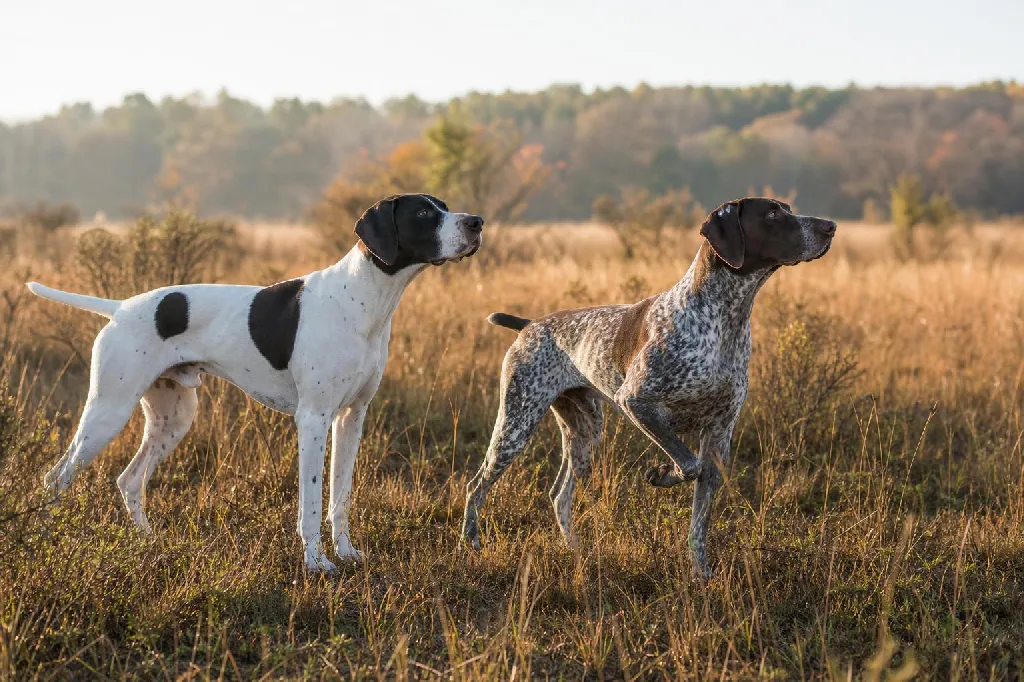
This debate always finds its way to the tailgate. Somebody swears the English Pointer is the finest upland dog ever bred, all speed, style, and bird sense. Somebody else leans back against the truck and argues that the German Shorthaired Pointer can do nearly everything a hunter could ask, from quail and pheasants to waterfowl and tracking. The truth, as it usually is in the dog world, depends on what kind of hunter you are and what kind of country you hunt.
I have watched both breeds work under a hard autumn sun, and I have seen both earn respect the old-fashioned way, with birds in the bag and no excuses needed. They are not the same dog wearing different coats. The English Pointer and the German Shorthaired Pointer were bred with different priorities in mind, and those differences matter once boots hit the ground.
If you are trying to decide between an English Pointer vs German Shorthaired Pointer, the smartest place to start is not with looks or popularity. Start with your hunting style, your expectations, and how much dog you truly want to live with for the next decade or more.
Field Style and Range
The English Pointer is, in many circles, the classic image of a big-running bird dog. When bred and trained for the field, a good Pointer covers country with a smooth, floating gait that seems almost effortless. They are famous for hunting with ambition and reaching to the front, especially in open ground where they have room to stretch out. On wild quail prairies, western sharptail country, or big expanses of plantation land, that kind of range is a beautiful thing to watch.
The German Shorthaired Pointer, by comparison, is often more versatile in how it handles ground. A GSP can run big, and some certainly do, but many are more naturally adjustable to the average foot hunter. They will still cover plenty of country, but they are often easier to shape into a practical pattern for mixed terrain, smaller farms, hedgerows, shelterbelts, and public ground where a dog disappearing over the horizon is not much use.
That does not mean one breed is automatically better. It means the English Pointer often shines brightest in open country and among hunters who appreciate a hard-charging dog with reach and independence. The German Shorthaired Pointer tends to fit hunters who want range, but also want a dog that can more easily transition from wide upland casts to closer work when the cover tightens up.
Style on Point
Few sights in bird hunting stir a man quite like an English Pointer locked up on birds. The posture, the intensity, the elevated head and tail, the stillness before the flush, it is part performance and part instinct sharpened by generations of selective breeding. Pointers are known for a dramatic, stylish point that has made them a favorite in horseback trials and among hunters who admire elegance in a working dog.
The German Shorthaired Pointer points with plenty of intensity too, though often with a different look. A GSP may not always have the same extreme silhouette, but a strong Shorthaired Pointer points with authority and confidence. In practical hunting terms, both breeds can pin birds beautifully. If you are especially drawn to high style and classic upland presentation, the English Pointer usually gets the nod.
Versatility in the Field
This is where the German Shorthaired Pointer has built a loyal following. The breed was developed to be a true versatile hunting dog, and that background still shows. A good GSP can point upland birds, retrieve doves, work a duck blind, track wounded game, and handle a variety of hunting jobs across a long season. For the hunter who wants one dog to do many things reasonably well, the German Shorthaired Pointer makes a compelling case.
The English Pointer is first and foremost an upland pointing specialist. That is not a weakness. In fact, if your entire fall revolves around quail, prairie grouse, Hungarian partridge, woodcock, or pheasants over a pointing dog, specialization can be a great strength. Many Pointers retrieve just fine with training, and some handle additional tasks better than people expect. Still, most hunters would agree the breed’s heart and soul belong to finding birds fast, pointing them hard, and doing it all day long.
If your season includes ducks in the marsh one week and coveys in the broom sedge the next, the German Shorthaired Pointer often offers more natural flexibility. If you live for upland work and want a dog bred to excel at that one job, the English Pointer is hard to overlook.
Trainability and Temperament
Both breeds are intelligent, driven, and highly trainable, but they carry themselves differently. The English Pointer often has a more independent streak in the field. That independence is part of what makes them such bold bird finders, but it also means they usually need a fair hand, consistency, and a trainer who understands how to develop natural talent without dulling it. With the right approach, they become magnificent hunting companions. With the wrong one, they can become confused or detached.
The German Shorthaired Pointer is often described as more handler-oriented, especially in family settings and in general obedience. Many GSPs are eager to engage, eager to please, and responsive to structured training. That has helped make them popular with first-time pointing dog owners. Still, no high-drive hunting breed is effortless. A bored GSP can invent trouble in a hurry, and a poorly trained one can be every bit as frustrating as any other energetic gun dog.
At home, the GSP is often the more adaptable house dog for active families, though that comes with a warning. They are affectionate, athletic, and close-working in temperament, but they need regular exercise and mental work. An underworked Shorthaired Pointer can turn a yard, couch, or kennel into a project site. The English Pointer can be a wonderful home companion too, often gentle and calm once settled, but some lines are so field-focused that they make the most sense with serious hunters who understand what they are bringing home.
Stamina, Toughness, and Daily Hunting Reality
There are few dogs on earth with more natural day-long hunting stamina than a well-bred English Pointer. In heat, in dry conditions, and across rough country, they have earned a reputation for endurance that is no accident. When the country is wide and the birds are scattered, that matters. A Pointer can keep searching with the kind of determination that turns a long day into a productive one.
The German Shorthaired Pointer is no slouch in stamina. Far from it. A fit GSP can hunt hard and long, and many do so with tremendous grit. They are rugged, capable dogs, but their coat and build make them feel the weather differently depending on conditions. In cold water or bitter late-season winds, some GSPs need a little more consideration than a hunter might give a heavier-coated retriever. In warm upland country, they are right at home.
I remember one dry afternoon behind a pair of dogs on late-season quail. The Pointer reached farther, swept cleaner, and looked like he could hunt until dark without ever changing gears. The Shorthaired dog hunted with more frequent check-ins, hit objectives with purpose, and handled the thicker edge cover better. Both found birds. The difference was not quality. It was style and application.
Health, Maintenance, and Ownership Considerations
From a grooming standpoint, both breeds are fairly straightforward compared to long-coated sporting dogs. The English Pointer has a short, easy-care coat. The German Shorthaired Pointer does too, though many owners notice year-round shedding and that the little hairs can work into upholstery like wire.
Health depends heavily on breeding, and this is where doing your homework matters more than breed slogans. Both breeds can be excellent, healthy working dogs when they come from thoughtful programs that prioritize soundness, temperament, and field ability. Hip issues, eye concerns, skin problems, and other inherited conditions can show up in either breed. Buying from a reputable breeder who hunts their dogs, health tests, and stands behind the litter is worth every bit of patience it takes.
Energy level should be part of the conversation too. These are not decorative dogs. Whether you choose an English Pointer or a German Shorthaired Pointer, you are bringing home an athlete. If your idea of exercise is opening the back door for ten minutes, neither breed will be happy with you.
Which Breed Is Better for Bird Hunters?
The better question is which breed is better for your birds, your ground, and your expectations. If you are a dedicated upland hunter who wants maximum range, classic pointing style, and a dog whose reputation was built on finding birds in open country, the English Pointer is often the better fit. For quail hunters, prairie bird hunters, and those who admire a specialist, the Pointer remains one of the finest tools ever made for the job.
If you want a more all-around hunting companion, one that can point, retrieve, adapt to multiple environments, and generally fit into a wider mix of hunting situations, the German Shorthaired Pointer may be the smarter choice. For hunters who value versatility and a dog that can transition from field to family life with a little more ease, the GSP continues to be one of the most practical sporting breeds in America.
Final Thoughts on English Pointer vs German Shorthaired Pointer
There is no wrong answer here if the dog comes from the right stock and lands with the right hunter. The English Pointer is a masterpiece of upland specialization, a breed that turns bird finding into something close to art. The German Shorthaired Pointer is the dependable multi-tool, athletic, adaptable, and capable across more situations than most hunters will ever ask of one dog.
When a hunter tells me he is choosing between the two, I usually ask where he hunts, what he hunts, and whether he wants a specialist or a versatile partner. That answer narrows the field faster than anything else. In the end, both breeds have earned their place behind shotguns and in hunting camps for good reason. Pick the one that matches your life and your cover, and either one can give you the kind of mornings you remember long after the season is gone.
I have watched both breeds work under a hard autumn sun, and I have seen both earn respect the old-fashioned way, with birds in the bag and no excuses needed. They are not the same dog wearing different coats. The English Pointer and the German Shorthaired Pointer were bred with different priorities in mind, and those differences matter once boots hit the ground.
If you are trying to decide between an English Pointer vs German Shorthaired Pointer, the smartest place to start is not with looks or popularity. Start with your hunting style, your expectations, and how much dog you truly want to live with for the next decade or more.
Field Style and Range
The English Pointer is, in many circles, the classic image of a big-running bird dog. When bred and trained for the field, a good Pointer covers country with a smooth, floating gait that seems almost effortless. They are famous for hunting with ambition and reaching to the front, especially in open ground where they have room to stretch out. On wild quail prairies, western sharptail country, or big expanses of plantation land, that kind of range is a beautiful thing to watch.
The German Shorthaired Pointer, by comparison, is often more versatile in how it handles ground. A GSP can run big, and some certainly do, but many are more naturally adjustable to the average foot hunter. They will still cover plenty of country, but they are often easier to shape into a practical pattern for mixed terrain, smaller farms, hedgerows, shelterbelts, and public ground where a dog disappearing over the horizon is not much use.
That does not mean one breed is automatically better. It means the English Pointer often shines brightest in open country and among hunters who appreciate a hard-charging dog with reach and independence. The German Shorthaired Pointer tends to fit hunters who want range, but also want a dog that can more easily transition from wide upland casts to closer work when the cover tightens up.
Style on Point
Few sights in bird hunting stir a man quite like an English Pointer locked up on birds. The posture, the intensity, the elevated head and tail, the stillness before the flush, it is part performance and part instinct sharpened by generations of selective breeding. Pointers are known for a dramatic, stylish point that has made them a favorite in horseback trials and among hunters who admire elegance in a working dog.
The German Shorthaired Pointer points with plenty of intensity too, though often with a different look. A GSP may not always have the same extreme silhouette, but a strong Shorthaired Pointer points with authority and confidence. In practical hunting terms, both breeds can pin birds beautifully. If you are especially drawn to high style and classic upland presentation, the English Pointer usually gets the nod.
Versatility in the Field
This is where the German Shorthaired Pointer has built a loyal following. The breed was developed to be a true versatile hunting dog, and that background still shows. A good GSP can point upland birds, retrieve doves, work a duck blind, track wounded game, and handle a variety of hunting jobs across a long season. For the hunter who wants one dog to do many things reasonably well, the German Shorthaired Pointer makes a compelling case.
The English Pointer is first and foremost an upland pointing specialist. That is not a weakness. In fact, if your entire fall revolves around quail, prairie grouse, Hungarian partridge, woodcock, or pheasants over a pointing dog, specialization can be a great strength. Many Pointers retrieve just fine with training, and some handle additional tasks better than people expect. Still, most hunters would agree the breed’s heart and soul belong to finding birds fast, pointing them hard, and doing it all day long.
If your season includes ducks in the marsh one week and coveys in the broom sedge the next, the German Shorthaired Pointer often offers more natural flexibility. If you live for upland work and want a dog bred to excel at that one job, the English Pointer is hard to overlook.
Trainability and Temperament
Both breeds are intelligent, driven, and highly trainable, but they carry themselves differently. The English Pointer often has a more independent streak in the field. That independence is part of what makes them such bold bird finders, but it also means they usually need a fair hand, consistency, and a trainer who understands how to develop natural talent without dulling it. With the right approach, they become magnificent hunting companions. With the wrong one, they can become confused or detached.
The German Shorthaired Pointer is often described as more handler-oriented, especially in family settings and in general obedience. Many GSPs are eager to engage, eager to please, and responsive to structured training. That has helped make them popular with first-time pointing dog owners. Still, no high-drive hunting breed is effortless. A bored GSP can invent trouble in a hurry, and a poorly trained one can be every bit as frustrating as any other energetic gun dog.
At home, the GSP is often the more adaptable house dog for active families, though that comes with a warning. They are affectionate, athletic, and close-working in temperament, but they need regular exercise and mental work. An underworked Shorthaired Pointer can turn a yard, couch, or kennel into a project site. The English Pointer can be a wonderful home companion too, often gentle and calm once settled, but some lines are so field-focused that they make the most sense with serious hunters who understand what they are bringing home.
Stamina, Toughness, and Daily Hunting Reality
There are few dogs on earth with more natural day-long hunting stamina than a well-bred English Pointer. In heat, in dry conditions, and across rough country, they have earned a reputation for endurance that is no accident. When the country is wide and the birds are scattered, that matters. A Pointer can keep searching with the kind of determination that turns a long day into a productive one.
The German Shorthaired Pointer is no slouch in stamina. Far from it. A fit GSP can hunt hard and long, and many do so with tremendous grit. They are rugged, capable dogs, but their coat and build make them feel the weather differently depending on conditions. In cold water or bitter late-season winds, some GSPs need a little more consideration than a hunter might give a heavier-coated retriever. In warm upland country, they are right at home.
I remember one dry afternoon behind a pair of dogs on late-season quail. The Pointer reached farther, swept cleaner, and looked like he could hunt until dark without ever changing gears. The Shorthaired dog hunted with more frequent check-ins, hit objectives with purpose, and handled the thicker edge cover better. Both found birds. The difference was not quality. It was style and application.
Health, Maintenance, and Ownership Considerations
From a grooming standpoint, both breeds are fairly straightforward compared to long-coated sporting dogs. The English Pointer has a short, easy-care coat. The German Shorthaired Pointer does too, though many owners notice year-round shedding and that the little hairs can work into upholstery like wire.
Health depends heavily on breeding, and this is where doing your homework matters more than breed slogans. Both breeds can be excellent, healthy working dogs when they come from thoughtful programs that prioritize soundness, temperament, and field ability. Hip issues, eye concerns, skin problems, and other inherited conditions can show up in either breed. Buying from a reputable breeder who hunts their dogs, health tests, and stands behind the litter is worth every bit of patience it takes.
Energy level should be part of the conversation too. These are not decorative dogs. Whether you choose an English Pointer or a German Shorthaired Pointer, you are bringing home an athlete. If your idea of exercise is opening the back door for ten minutes, neither breed will be happy with you.
Which Breed Is Better for Bird Hunters?
The better question is which breed is better for your birds, your ground, and your expectations. If you are a dedicated upland hunter who wants maximum range, classic pointing style, and a dog whose reputation was built on finding birds in open country, the English Pointer is often the better fit. For quail hunters, prairie bird hunters, and those who admire a specialist, the Pointer remains one of the finest tools ever made for the job.
If you want a more all-around hunting companion, one that can point, retrieve, adapt to multiple environments, and generally fit into a wider mix of hunting situations, the German Shorthaired Pointer may be the smarter choice. For hunters who value versatility and a dog that can transition from field to family life with a little more ease, the GSP continues to be one of the most practical sporting breeds in America.
Final Thoughts on English Pointer vs German Shorthaired Pointer
There is no wrong answer here if the dog comes from the right stock and lands with the right hunter. The English Pointer is a masterpiece of upland specialization, a breed that turns bird finding into something close to art. The German Shorthaired Pointer is the dependable multi-tool, athletic, adaptable, and capable across more situations than most hunters will ever ask of one dog.
When a hunter tells me he is choosing between the two, I usually ask where he hunts, what he hunts, and whether he wants a specialist or a versatile partner. That answer narrows the field faster than anything else. In the end, both breeds have earned their place behind shotguns and in hunting camps for good reason. Pick the one that matches your life and your cover, and either one can give you the kind of mornings you remember long after the season is gone.