The History of Gun Dogs in North American Hunting
Posted 07/27/2026
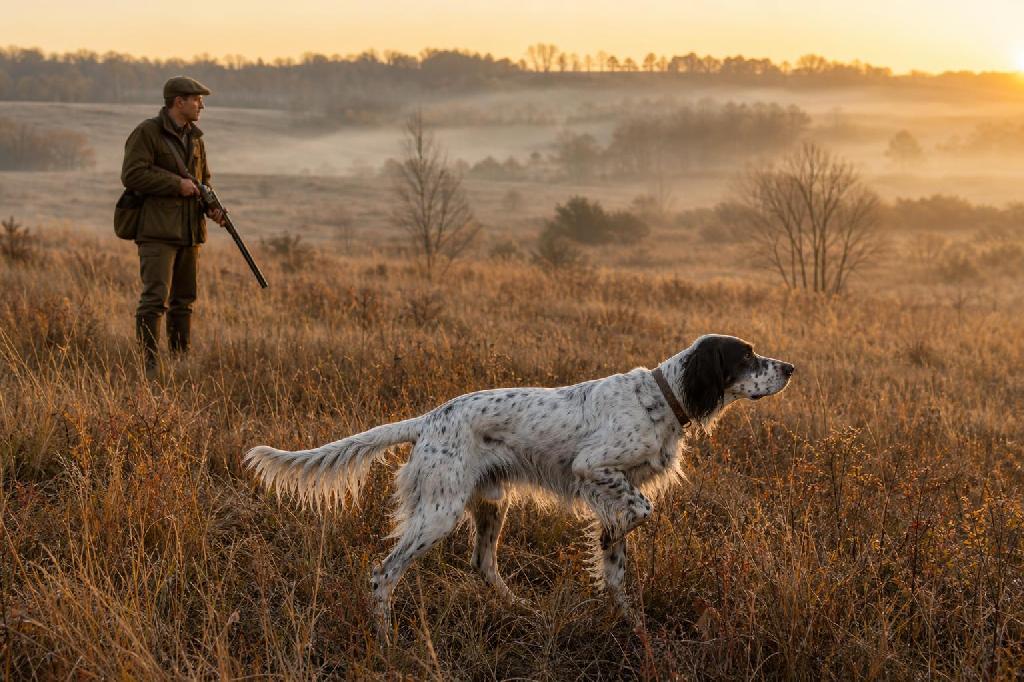
The history of bird hunting is not just a story of firearms, changing game laws, or evolving hunting traditions. It is also the story of the dogs that transformed the sport. In North America, gun dogs did far more than accompany hunters—they changed the way people pursued ducks, grouse, quail, pheasants, and nearly every other game bird worth following. From the earliest sporting dogs imported from Europe to the polished retrievers and hard-driving upland breeds of today, their legacy has been written in marsh mud, cut corn, alder runs, and sweeping prairie grass.
Long before modern breed clubs and trial formats gave us neat categories, hunters wanted one thing above all else: a dog that could find birds and bring them back. The details varied by region and game, but the partnership between hunter and dog became one of the defining features of North American bird hunting.
Early Sporting Dogs in Colonial North America
The first gun dogs in North America arrived with European settlers, especially the British, French, and Spanish, who brought their hunting traditions with them. In the 17th and 18th centuries, these dogs were not always the specialized breeds we recognize today. Many were broad sporting types used for finding game, flushing birds, and retrieving both fur and feather. Hunting itself looked different in those days. Smoothbore firearms were slow to load, birds were abundant in many regions, and a practical dog was worth more than a pedigree paper.
As settlements grew along the Atlantic seaboard and hunters pushed inland, dogs were adapted to local conditions. Thick eastern cover, tidal marshes, hardwood ridges, and southern plantations all asked different things from a dog. The old setting dogs and spaniels from Europe found a place quickly. Setters proved useful for locating upland birds in open or semi-open country, while spaniels excelled in close cover where birds had to be pushed to wing. Early retrieving dogs were less standardized, but any animal willing to swim hard, mark a fall, and return game to hand earned a place by the fire.
The Influence of European Hunting Traditions
North American gun dog history cannot be separated from Europe, especially Britain. The pointer and setter traditions crossed the ocean with sportsmen who expected dogs to quarter ground and hold birds for the gun. British spaniel work also left a deep mark, particularly in regions where flushing birds from dense cover was more practical than expecting a rigid point. But once these dogs reached North America, the land itself started reshaping them. Bigger country, wilder bird numbers, harsher winters, and more varied hunting conditions demanded toughness and adaptability that often went beyond old-world expectations.
The Rise of Pointers and Setters in the Uplands
By the 19th century, pointers and setters had become deeply woven into North American upland hunting. As quail hunting flourished in the South and ruffed grouse, woodcock, prairie chickens, and sharptails drew hunters elsewhere, the pointing dog came into its own. These dogs gave hunters range, style, and efficiency. A good dog could cover country no man could work alone and, just as importantly, could hold game long enough for the hunter to get into position.
The English Pointer earned a strong following among hunters who wanted speed, reach, and intensity. On southern quail plantations and in more open country, that style was hard to beat. Setters, especially the English Setter, developed a loyal following where their bird sense, coat protection, and adaptable pace suited rougher cover and mixed upland hunting. The Irish Setter and Gordon Setter also found places in North America, though regional preference often depended on terrain, climate, and the sort of birds a man chased most often.
In those days, a gun dog was judged less by appearance than by usefulness. Hunters bred for nose, stamina, trainability, and the sort of temperament that made a dog a partner rather than a headache. Breed standards mattered less in camp than whether a dog could find coveys, hold grouse in the timber, and still have enough left in the tank at sundown to make one more cast.
Waterfowling and the Evolution of Retrievers
If upland hunting helped shape the pointing breeds in North America, waterfowling helped build the retriever into a legend. Ducks and geese created a different set of demands. Hunters needed dogs that could mark birds at distance, break ice, push through cattails, and return crippled game from water and marsh. It was not enough for a dog to enjoy swimming. It had to have courage, steadiness, and the kind of memory that saves birds others would lose.
In the early years, many dogs retrieved waterfowl, including spaniels, mixed sporting dogs, and regional working strains. But by the late 19th and early 20th centuries, retriever breeding began to sharpen. The Labrador Retriever eventually became the dominant waterfowl dog in North America, and for good reason. Labs combined marking ability, biddability, toughness, and a practical coat that stood up to cold water and punishing weather. They could work from a boat, blind, or shoreline and still settle quietly between volleys.
Chesapeake Bay Retrievers deserve special mention in any honest history of North American gun dogs. Built in the harsh conditions of the Chesapeake, these dogs developed a reputation for grit that still carries weight today. Market gunners and serious duck hunters respected a dog that would crash into rough water, handle cold, and recover birds under nasty conditions. The Chesapeake Bay Retriever was one of the few retriever breeds with deep roots in American hunting culture rather than being simply imported and adapted.
The American Marsh Dog
Old stories from the Atlantic flyway and the big waters of the Great Lakes often sound the same. Men remembered not just the number of birds but the dog that brought them back. A retriever that could swim through skim ice, take a line on a wounded black duck, and return with bird after bird became part of a hunter’s identity. In many camps, the dog was as respected as the shooter, and sometimes more so.
Spaniels, Flushers, and Close-Cover Specialists
Not all bird hunting in North America favored a wide-running point. In thick grouse woods, briar tangles, river bottoms, and cattail sloughs, flushers carved out their own proud place. Cocker Spaniels and English Springer Spaniels became especially valued for hunting where birds held tight and visibility was measured in feet instead of yards.
These dogs worked close, hunted with animation, and put birds in the air where they might otherwise be walked past. For woodcock in alder cover, pheasants in hedgerows, and grouse in young timber, a good flusher could be pure joy to follow. North American hunters, particularly those in the Northeast and Midwest, came to appreciate dogs that could negotiate heavy cover without losing contact with the gun.
The popularity of pheasant hunting in the 20th century gave flushers another strong foothold. Ringnecks that ran ahead of hunters or burrowed into dense grass often required a persistent dog willing to root them out. That kind of practical field need did more for the spread of flushing breeds than any advertisement ever could.
The Rise of Versatile Hunting Dogs in America
While retrievers, pointers, setters, and spaniels each held their place, North America also became fertile ground for the rise of versatile hunting dogs. German breeds such as the German Shorthaired Pointer, Wirehaired Pointing Griffon, German Wirehaired Pointer, and others gained traction with hunters who wanted one dog to point upland birds, retrieve waterfowl, track wounded game, and handle varied terrain through the season.
This idea fit the realities of many American hunters. Not everyone could keep a kennel full of specialized dogs. One well-bred versatile dog that could hunt September grouse, October pheasants, and November ducks made a lot of sense. By the mid-20th century and beyond, these breeds became more common across the United States and Canada, particularly among hunters who valued utility as much as style.
Field Trials, Hunt Tests, and Modern Breeding
As North American hunting culture matured, organized competitions began shaping gun dog development. Field trials, hunt tests, and breed clubs helped preserve working traits, though they also sometimes pushed certain lines toward specialized performance. The best breeders kept one eye on ribbons and the other on real birds. Hunters have always known the difference. A dog can look impressive on paper, but if it folds under pressure in cold water or loses itself in poor cover, the field tells the truth fast.
Even so, organized testing played an important role in preserving trainability, marking ability, nose, and bird work. It created standards, encouraged record-keeping, and gave hunters a way to evaluate breeding stock more systematically than campfire talk alone ever could.
Gun Dogs in North American Hunting Today
Today, the history of gun dogs in North American hunting is still being written every fall. The breeds are more defined, the training tools are more advanced, and travel has made regional traditions overlap in ways they never did before. A hunter in the Dakotas may run a Labrador on ducks and pheasants. A grouse hunter in the Northwoods may favor an English Setter. A quail hunter in Georgia may still swear by pointers. Another hunter may rely on a German Shorthaired Pointer to do nearly everything asked of it from September through January.
What has not changed is the heart of the partnership. Gun dogs remain central to the hunt because they bring something no machine ever will. They carry instinct refined by generations, but they also carry trust. They learn your habits, your pace, your whistle, and your moods. Over time, they begin to hunt with you in a way that feels less like command and more like understanding.
That, more than anything, explains their lasting place in North American hunting history. Firearms evolved. Habitat changed. Bird numbers rose and fell. Laws tightened where once there were few. Yet the image remains familiar: a dog working ahead with purpose, a hunter following with hope, and the shared certainty that the next patch of cover might hold birds. In that simple picture, you can see centuries of tradition still alive and still moving.
Long before modern breed clubs and trial formats gave us neat categories, hunters wanted one thing above all else: a dog that could find birds and bring them back. The details varied by region and game, but the partnership between hunter and dog became one of the defining features of North American bird hunting.
Early Sporting Dogs in Colonial North America
The first gun dogs in North America arrived with European settlers, especially the British, French, and Spanish, who brought their hunting traditions with them. In the 17th and 18th centuries, these dogs were not always the specialized breeds we recognize today. Many were broad sporting types used for finding game, flushing birds, and retrieving both fur and feather. Hunting itself looked different in those days. Smoothbore firearms were slow to load, birds were abundant in many regions, and a practical dog was worth more than a pedigree paper.
As settlements grew along the Atlantic seaboard and hunters pushed inland, dogs were adapted to local conditions. Thick eastern cover, tidal marshes, hardwood ridges, and southern plantations all asked different things from a dog. The old setting dogs and spaniels from Europe found a place quickly. Setters proved useful for locating upland birds in open or semi-open country, while spaniels excelled in close cover where birds had to be pushed to wing. Early retrieving dogs were less standardized, but any animal willing to swim hard, mark a fall, and return game to hand earned a place by the fire.
The Influence of European Hunting Traditions
North American gun dog history cannot be separated from Europe, especially Britain. The pointer and setter traditions crossed the ocean with sportsmen who expected dogs to quarter ground and hold birds for the gun. British spaniel work also left a deep mark, particularly in regions where flushing birds from dense cover was more practical than expecting a rigid point. But once these dogs reached North America, the land itself started reshaping them. Bigger country, wilder bird numbers, harsher winters, and more varied hunting conditions demanded toughness and adaptability that often went beyond old-world expectations.
The Rise of Pointers and Setters in the Uplands
By the 19th century, pointers and setters had become deeply woven into North American upland hunting. As quail hunting flourished in the South and ruffed grouse, woodcock, prairie chickens, and sharptails drew hunters elsewhere, the pointing dog came into its own. These dogs gave hunters range, style, and efficiency. A good dog could cover country no man could work alone and, just as importantly, could hold game long enough for the hunter to get into position.
The English Pointer earned a strong following among hunters who wanted speed, reach, and intensity. On southern quail plantations and in more open country, that style was hard to beat. Setters, especially the English Setter, developed a loyal following where their bird sense, coat protection, and adaptable pace suited rougher cover and mixed upland hunting. The Irish Setter and Gordon Setter also found places in North America, though regional preference often depended on terrain, climate, and the sort of birds a man chased most often.
In those days, a gun dog was judged less by appearance than by usefulness. Hunters bred for nose, stamina, trainability, and the sort of temperament that made a dog a partner rather than a headache. Breed standards mattered less in camp than whether a dog could find coveys, hold grouse in the timber, and still have enough left in the tank at sundown to make one more cast.
Waterfowling and the Evolution of Retrievers
If upland hunting helped shape the pointing breeds in North America, waterfowling helped build the retriever into a legend. Ducks and geese created a different set of demands. Hunters needed dogs that could mark birds at distance, break ice, push through cattails, and return crippled game from water and marsh. It was not enough for a dog to enjoy swimming. It had to have courage, steadiness, and the kind of memory that saves birds others would lose.
In the early years, many dogs retrieved waterfowl, including spaniels, mixed sporting dogs, and regional working strains. But by the late 19th and early 20th centuries, retriever breeding began to sharpen. The Labrador Retriever eventually became the dominant waterfowl dog in North America, and for good reason. Labs combined marking ability, biddability, toughness, and a practical coat that stood up to cold water and punishing weather. They could work from a boat, blind, or shoreline and still settle quietly between volleys.
Chesapeake Bay Retrievers deserve special mention in any honest history of North American gun dogs. Built in the harsh conditions of the Chesapeake, these dogs developed a reputation for grit that still carries weight today. Market gunners and serious duck hunters respected a dog that would crash into rough water, handle cold, and recover birds under nasty conditions. The Chesapeake Bay Retriever was one of the few retriever breeds with deep roots in American hunting culture rather than being simply imported and adapted.
The American Marsh Dog
Old stories from the Atlantic flyway and the big waters of the Great Lakes often sound the same. Men remembered not just the number of birds but the dog that brought them back. A retriever that could swim through skim ice, take a line on a wounded black duck, and return with bird after bird became part of a hunter’s identity. In many camps, the dog was as respected as the shooter, and sometimes more so.
Spaniels, Flushers, and Close-Cover Specialists
Not all bird hunting in North America favored a wide-running point. In thick grouse woods, briar tangles, river bottoms, and cattail sloughs, flushers carved out their own proud place. Cocker Spaniels and English Springer Spaniels became especially valued for hunting where birds held tight and visibility was measured in feet instead of yards.
These dogs worked close, hunted with animation, and put birds in the air where they might otherwise be walked past. For woodcock in alder cover, pheasants in hedgerows, and grouse in young timber, a good flusher could be pure joy to follow. North American hunters, particularly those in the Northeast and Midwest, came to appreciate dogs that could negotiate heavy cover without losing contact with the gun.
The popularity of pheasant hunting in the 20th century gave flushers another strong foothold. Ringnecks that ran ahead of hunters or burrowed into dense grass often required a persistent dog willing to root them out. That kind of practical field need did more for the spread of flushing breeds than any advertisement ever could.
The Rise of Versatile Hunting Dogs in America
While retrievers, pointers, setters, and spaniels each held their place, North America also became fertile ground for the rise of versatile hunting dogs. German breeds such as the German Shorthaired Pointer, Wirehaired Pointing Griffon, German Wirehaired Pointer, and others gained traction with hunters who wanted one dog to point upland birds, retrieve waterfowl, track wounded game, and handle varied terrain through the season.
This idea fit the realities of many American hunters. Not everyone could keep a kennel full of specialized dogs. One well-bred versatile dog that could hunt September grouse, October pheasants, and November ducks made a lot of sense. By the mid-20th century and beyond, these breeds became more common across the United States and Canada, particularly among hunters who valued utility as much as style.
Field Trials, Hunt Tests, and Modern Breeding
As North American hunting culture matured, organized competitions began shaping gun dog development. Field trials, hunt tests, and breed clubs helped preserve working traits, though they also sometimes pushed certain lines toward specialized performance. The best breeders kept one eye on ribbons and the other on real birds. Hunters have always known the difference. A dog can look impressive on paper, but if it folds under pressure in cold water or loses itself in poor cover, the field tells the truth fast.
Even so, organized testing played an important role in preserving trainability, marking ability, nose, and bird work. It created standards, encouraged record-keeping, and gave hunters a way to evaluate breeding stock more systematically than campfire talk alone ever could.
Gun Dogs in North American Hunting Today
Today, the history of gun dogs in North American hunting is still being written every fall. The breeds are more defined, the training tools are more advanced, and travel has made regional traditions overlap in ways they never did before. A hunter in the Dakotas may run a Labrador on ducks and pheasants. A grouse hunter in the Northwoods may favor an English Setter. A quail hunter in Georgia may still swear by pointers. Another hunter may rely on a German Shorthaired Pointer to do nearly everything asked of it from September through January.
What has not changed is the heart of the partnership. Gun dogs remain central to the hunt because they bring something no machine ever will. They carry instinct refined by generations, but they also carry trust. They learn your habits, your pace, your whistle, and your moods. Over time, they begin to hunt with you in a way that feels less like command and more like understanding.
That, more than anything, explains their lasting place in North American hunting history. Firearms evolved. Habitat changed. Bird numbers rose and fell. Laws tightened where once there were few. Yet the image remains familiar: a dog working ahead with purpose, a hunter following with hope, and the shared certainty that the next patch of cover might hold birds. In that simple picture, you can see centuries of tradition still alive and still moving.