Hunting Those Cold, Wet Winter Days in the Fields and Woods for Pheasants


It was the first week of December and old man winter had come with a vengeance. Temperatures were cold and the wind howled like a pack of wolves. The morning brought frigid cold temps. We started our approach towards where we had seen the pheasants milling about. The decision was made to work the dogs in the sorghum field. We ended up shooting a duo of roosters each amongst the row of cut sorghum and flushed several ring necks out of the trees. The morning was an eye opener for hunting pheasants in the cold. If we would have never had seen the pheasants, we would have looked for grassy fields as is the norm when starting out in the morning. We learned to keep our options open and analyzing why the pheasants took to heavier cover so early in the morning as opposed to staying in thick grass.
Here are a trio of tips for hunting pheasants in the winter that I found useful and easy to put into play in the pheasant fields.

Hunting Cold, Wet, and Windy Mornings. The typical agenda for pheasants during normal conditions is to wake up in the morning after roosting in thick, heavy grasses and either walk or fly to the nearest food plot. This could be some type of grain field; corn, milo, sunflower, or wheat field. At midday, pheasants then tend to hang out or loaf in light cover near a food source. During the last portion of the day, pheasants return to the fields again just before going to heavy cover to roost for the night. Hunters know how to take advantage of this pheasant schedule and hit those spots at key times throughout the day.
Now that winter is upon us, pheasants tend to alter their habits and hunters must do the same. When temperatures are frigid cold, pheasants start for the fields by dawn’s early light to fill their bellies with high-energy grain. They need to feed in order to help stay warm. After gorging themselves pheasants return to the confines of heavy cover. Hunters should now focus on grain fields and bypass roosting sites. If a food source is nearby to heavy cover and grasses, hunters should work the food plot and field edges. Pheasants may defer to conducting dine-and-dashes being relatively close to a meal during those cold days. Hunters should look for tracks and travel patterns. These highways can steer hunters to travel corridors used by pheasants as well as possible roosting sites.
Search out thick fields of CRP. When it's windy and wet, hunting the roost in the early morning is a good tactic. Birds will be reluctant to leave their warm and toasty confines when there’s precipitation. Strong winds will keep pheasants at bay and help mask hunters’ approach.
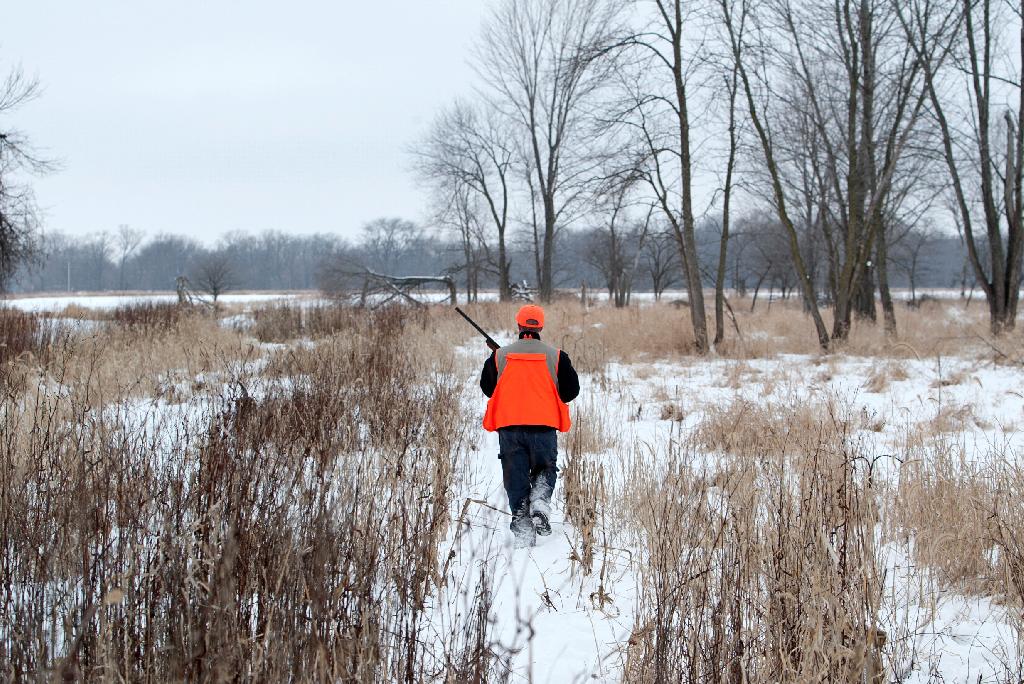
To the Woods. Pheasants are grassland birds. Yes, hunters find them in marshes and cattails, but timber is usually not a place normally associated with pheasants. Imagine watching a rooster take to the air maneuvering through branches to clear the canopy of trees with its flowing long tail…it would be a sight. This reason alone is enough for roosters to avoid the woods. When pheasants have no place to go, they will take to the woods. Usually they’re forced or pressured because of the weather. When heavy snows fall and flatten the grassy fields and there is relatively no other cover, hunters need to focus their efforts in the woodlots.
The ideal woods for pheasants to hide in consist of bushes, brush piles, shrubs, and creek bottoms. Sometimes small coverts of trees that act like shelterbelts in the middle or along fields offer excellent protection and sanctuaries for pheasants. Don’t think that you need large expanses of woods.
Sometimes it may be a small woodlot in or along a field. Hunters should work the edges and maybe stagger a hunter just inside the woods to flush out any loafing ring necks. Remember to look up in the trees for perched roosters.
An unusual phenomenon that I cannot explain but have noticed and read elsewhere is that when pheasants are found in the woods, there’s a high percentage they’ll be roosters. I know not of any correlation between roosters and woods. I can say from drawing on my own experiences that when I have hunted the woods, I have ONLY found roosters. Mind you that I did not purposely hunt the woods, it was more so that driving by, I noticed several roosters hanging out on the edge of a tree line and darting back into the woods when we stopped.

Stay Warm, but Don’t Overdress. Many pheasant hunters tend to bundle up when it’s cold outside. Rightfully so. But dressing smart is the key. Pheasant hunters should feel a little bit of chill getting ready, because once the walking begins, the body will kick start its internal thermostat and start warming up the body. Overdressing causes hunters to overheat. This can become a serious issue as hunters begin to sweat which could cause hunters becoming wet and cold and even hypothermic.
Pheasant hunters should dress in layers. Start with lightweight base layers to keep the core body warm then add a mid-weight layer, then finish up with a heavy-layer or instead wear a water and windproof outer-shell. Hunters can add and subtract layers as they cool down or warm up.
I find that some core pieces of gear can make the difference. A neck gaiter is versatile and can be worn around the neck for warmth or removed to cool down. It can easily be pulled up over the back of the head and up over your nose for those extreme cold days afield. Upland chaps offer protection against briars and brush as well as keeping you dry when hunting through wet grassy fields and snow. Many are water and windproof. I use chaps in place of long underwear or a bottom base layer. As the conditions or weather change, chaps can be removed quickly. The last piece of clothing I wear is a vest. I wear this instead of a coat. Preferably made up of fleece or synthetic material. Vests heat the core while allowing total freedom of movement. The first two items can easily be stored in one’s vest when not in use.

About the Author : Edgar Castillo
Visit authors website | View more articlesEdgar Castillo is a recently retired law enforcement officer for a large Kansas City metropolitan agency. He also served in the United States Marine Corps.
Born in Guatemala, hunting was a new concept when Edgar came to the U.S. His passion lies in the uplands as he travels across public lands throughout Kansas or wherever the dirt road takes him…to hunt open fields, walk treelines, & bust through plum thickets in search of wild birds in wild places.
This fervid emotion for the uplands has since blossomed into a SIGNIFICANT social media presence. It has allowed Edgar to share his experiences and connect with other bird hunters through writing.
Follow Edgar’s upland escapades on Instagram at @hunt_birdz
Related Aritlces

4 Great Ways to Shoot Your Dog
Karl, a German shorthaired pointer, zig zagged his way through the humid, early season corn maze. These South Dakota stalks stood tall, taller than even an NBA center, and if a bird flushed up it’d make for tricky shooting. To harvest a bird over a point, Karl’s owner knew he’d need to get out to the edge. When there was an opening he headed west, and stopped where the last row of stalks met the winter rye.

Hunting Chromatic Snowbirds
No matter when snow blankets the landscape with white powdery ice crystals, it’s prime time for bird hunters to do what it takes to get after those ring-neck pheasants. If this means layering up like the Michelin Man or donning snowshoes, then so be it. Pheasants will seek out those places that offer protection from the elements, for when the heavy snow comes, and flatten sparse cover.

DOVES: From the Field, to Cleaning, to Eating
It’s that time of the year when we find ourselves gathered with family, friends, and strangers positioned around a cut grain or sunflower field waiting for those September gray birds to come screaming in. Dogs will sit idly by, panting as they await anxiously for doves to be interrupted in midflight with shot. As the first flight comes in, a barrage of gunfire will thunderously erupt, signaling that hunting season has arrived. Dove hunters will instantly feel the excitement by the heat of expended shotshells, yells from strangers saying “Comin’ at ya!”, and the sweat running down backs and necks as sun rays pour from the blue sky as summer still holds on tightly.