Pheasant Wild Ramp Pesto Pasta

These Wild Ramps only grow for a short period of time during the spring, around the Appalachian Mountain regions of North America and Canada. These ramps have a sweet onion - garlic flavor and pungent smell. You can identify these Ramps by their broad, smooth, green leaves, usually with two or three leaves per stalk, and white bulb. Species in the northern states can have a reddish colored stalk. Wild Ramps have experienced a surge in popularity the past several years. Because of this and the fact that these plants can take seven years to reach maturity, it can lead to over harvesting. If you're lucky enough to find these growing, practice responsible, sustainable harvesting techniques, such as only cutting one to two leaves from each plant and leaving the bulbs behind or only harvesting of a few of the plants and leaving the majority behind.
I've tried to use these ramps several different ways. I've incorporated the bulbs into recipes where I would normally use garlic, onion or shallot, or any other member of the Allium family of vegetables. In some cases, I would use them as an addition, instead of a replacement, to those ingredients. Whereas the leaves I used as a garnish or wilted into dishes or diced them up like you would with green onions. I've used the leaves and bulbs to make a Wild Ramp Pesto and I've also dehydrated the leaves to make Ramps Salt seasoning. I then used the Wild Ramp Pesto and Ramps seasoning salt to make this Wild Ramp Pesto and Pheasant Pasta dish. If you don't want to make the Wild Ramp Pesto you can always substitute it for traditional Basil Pesto, then use Arugula at the end with Regular sea salt instead of the Ramp Salt.

About the Author : Jeff Davis
Visit authors website | View more articlesYou may think cooking and recipes don’t have much to do with a website dedicated to hunting dogs ... but really, why do we hunt? Sure, we enjoy watching our dogs work in the field and being outdoors, but ultimately, hunting is about survival and feeding our families. We might as well try to do it well. I'm not a chef and definitely no food authority ... but I do like to eat and enjoy cooking. After searching for people willing to share their recipes on Gundog Central, without much success, I decided to try to do a few on my own, with my wife Tami's help. The recipes I share here are things I like to eat and have made here at home. I've tried to include step-by-step instructions with each meal describing exactly how I did it, but my method may not be best, if you decide to try a recipe posted here, please use whatever technique you think works best, I'm simply sharing how I did it. You'll see a lot of recipes where I've tried to make things from starch, when I could have just used store bought ingredients, simply because I wanted to learn how something was done. My goal is to continually update these recipes as I learn new things and techniques. These are my attempts at creating good, home cooked food, that I would like to eat! If I'm sharing it here, my family and I enjoyed it and I believe you will too.
Related Aritlces
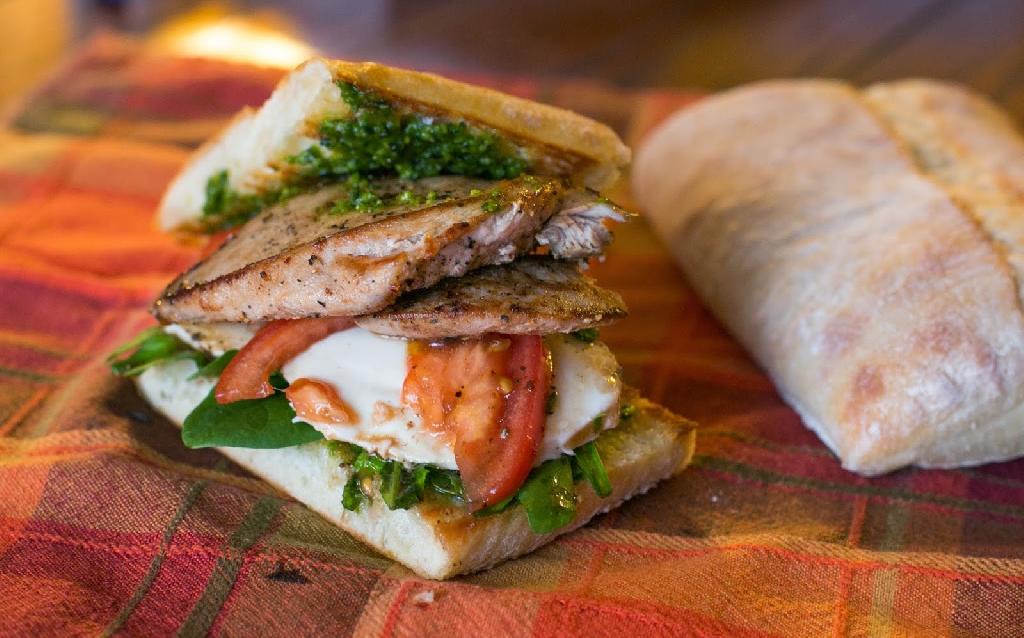
Pheasant and Pesto Sandwich
These sandwiches make delicious after-hunt lunches. You can even prepare them in the field: Make the pesto at home and slice sandwich fixings ahead of time. Bring a camp stove to cook the breasts on the tailgate of your truck.

Pheasant Noodle Soup
With the Coronavirus pandemic ongoing and the flu season fast approaching in the United States, I thought I'd try to post a recipe that's a classic folk remedy all around the world. When I was dating my wife, Tami, who just so happens to be a nurse ... she would brag about how she never got sick. Wouldn't you know it ... A few weeks later, she was sporting a temperature and couldn't get out of bed. One night, on the way to her house, I stopped at the local Walmart and purchased everything I needed to make some good old fashion homemade Chicken Noodle Soup. I made a huge batch that she'd be able to eat on for days, hoping that it'd help her feel a little better. To this day, she still talks about that soup! I don't know if it was that good or if the virus she had just made her that delirious. Anyway, this is my attempt to recreate that recipe with Pheasant and some homemade vegetable broth.
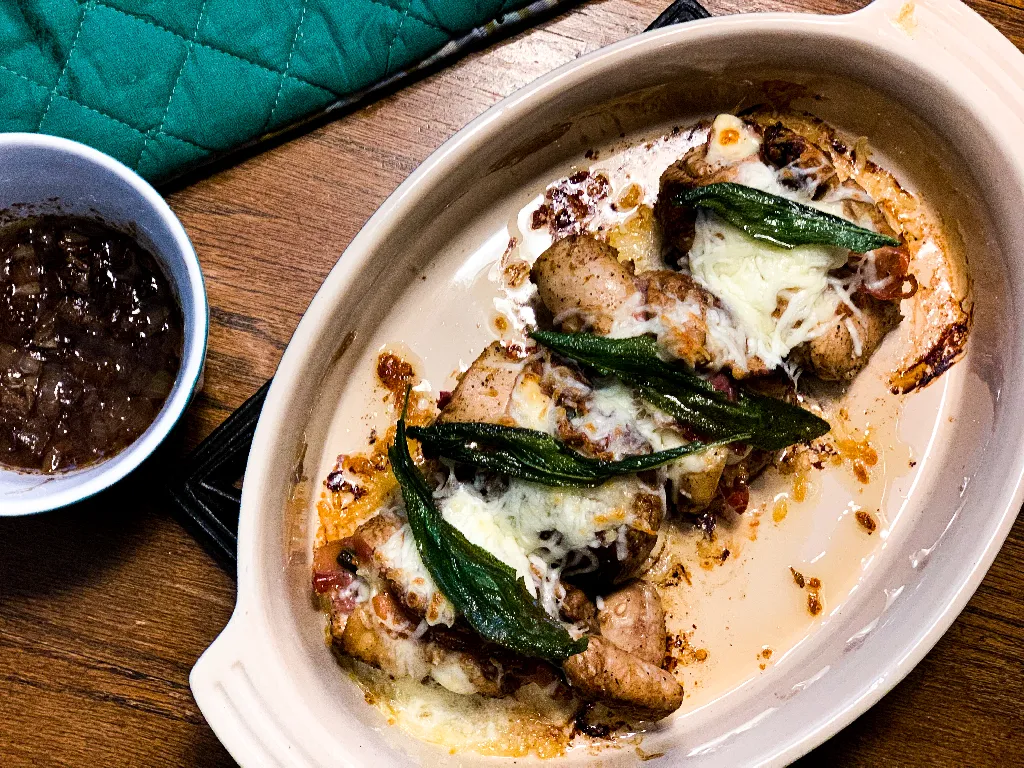
Pheasant Saltimbocca with Basil Pesto Gnocchi
I have a little herb garden that sits under a window in the backyard, it's roughly 2 feet by 4 feet. I was hesitant about putting it in the backyard because it doesn't get a lot of sun. The trees block the morning sun, and the house blocks the afternoon sun, allowing it to only get direct sunlight in the middle of the afternoon. We planted Basil in it last year, with no expectation that it would grow, but it did, and it flourished! We had more Basil than we knew what to do with. We made lots of Pesto, then my wife preserved what she could with Salt and Olive oil in mason jars. This year we decided to try planting it with a few other herbs, Thyme, Oregano, Rosemary, Sage, and Parsley, along with more Basil. The Basil came up strong and took over, we have these big, healthy looking Basil plants and very little of anything else. I do however have these two lonely sage plants, towering out of a sea of Basil. Everything else we planted in this herb garden, showed up briefly, then disappeared. I don't know if we didn't water it enough, or it the Basil just choked everything else out.