Understanding the Different Types of Gun Dogs
Posted 07/27/2026
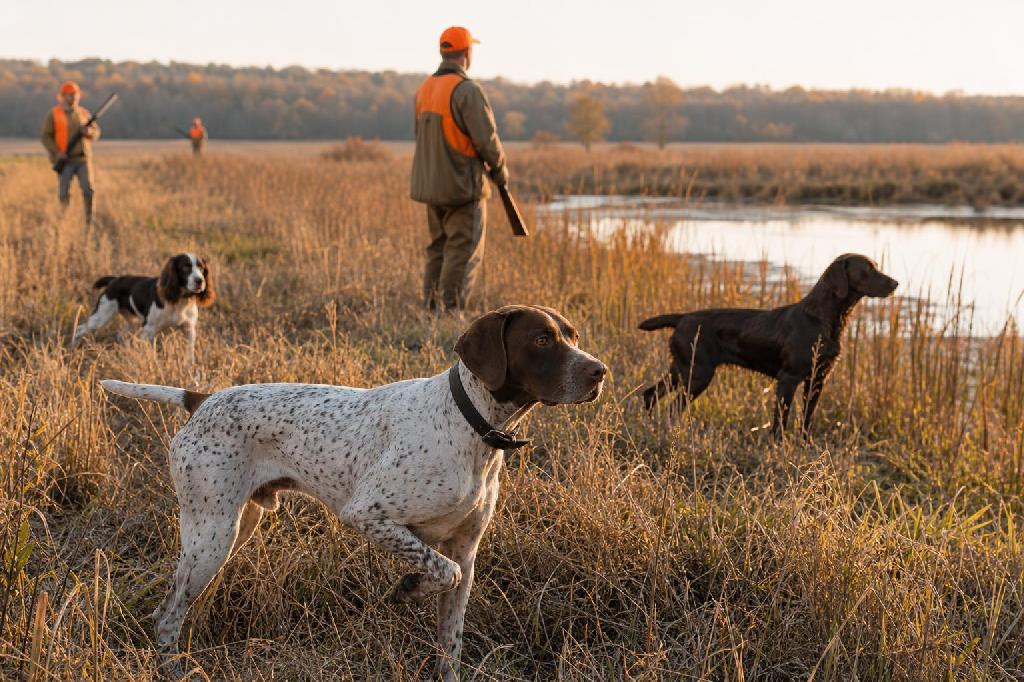
One of the first things hunters discover is that not all gun dogs hunt the same, and they were never meant to. A dog bred to pin running prairie birds with a stylish point is working from a different playbook than one that charges through thick cattails to send pheasants boiling skyward. Another may sit motionless beside a timber hole or in a duck blind, waiting for the sound of wings and the command to retrieve. Each type of gun dog was shaped by the game it pursued, the country it hunted, and the practical needs of the hunters who depended on it.
For bird hunters, understanding the different types of gun dogs is more than kennel talk. It matters in the field. The right dog for ruffed grouse in tight northern cover may not be the right dog for wild quail on open ranchland, and the dog that shines in a goose pit may not be the one you want threading through alder tangles after woodcock. Good hunters know what they ask of a dog, and good dog men respect the work each type was bred to do.
What Makes a Gun Dog a Gun Dog?
A gun dog is a hunting dog developed to find, flush, point, or retrieve game for the gun. The broad term covers several working styles, but the common thread is cooperation. These dogs hunt with the hunter, not just for themselves. Nose, drive, trainability, stamina, and a willingness to handle birds properly all matter. So does temperament. A real gun dog can burn with intensity in the field and still settle at camp or in the truck on the ride home.
Over time, gun dogs came to be grouped into a few major categories: pointers and setters, flushing dogs, retrievers, and the versatile breeds. There is some overlap, and any seasoned hunter has seen individual dogs bend the rules a little. Still, those categories tell you a lot about how a dog works and where it is most at home.
Pointers and Setters: Dogs Built to Find and Hold Birds
When many hunters picture a classic upland dog, this is what they see: a dog quartering with purpose, catching bird scent on the wind, then stopping hard and standing like carved stone. Pointers and setters are the traditional pointing breeds, developed to locate birds and hold them in place long enough for the hunter to walk in for the flush and shot.
There is an elegance to a good pointing dog, but what matters most is efficiency. On big country, a pointer or setter can cover ground quickly and still hunt with the gun. They are especially valued for quail, pheasants, Hungarian partridge, prairie grouse, and other upland birds that may hold tight or run before pressure. A polished pointing dog handles that puzzle with nose, range, and composure.
How Pointing Dogs Work in the Field
A pointing dog hunts for scent, often with head high, reading wind and terrain. When it locates birds, instinct tells it to freeze. That pause is the heart of the pointing style. It gives the hunter time to close distance and be ready when the covey erupts or a rooster cackles out of the grass. Good pointing dogs also relocate intelligently when birds move, a trait any wild bird hunter learns to appreciate in a hurry.
Breeds in this group include the English Pointer, German Shorthaired Pointer, English Setter, Gordon Setter, and Irish Setter, among others. Some lines are bred for wider range and horseback country, while others are more foot-hunter friendly. That distinction matters. A man hunting cutovers and hedgerows a few evenings a week does not always need the same dog as one chasing sharptails across open plains all season.
Flushing Dogs: Close-Working Bird Finders
Flushing dogs work differently, and in thick cover they can be pure gold. Instead of freezing on scent, these dogs hunt close, find birds, and push them into the air for the shot. It is active, intimate hunting, and it suits the kind of country where birds sit tight in brush, briars, cattails, and creek bottoms. There is less pageantry than with pointing dogs, maybe, but no less skill.
If you have ever followed a hard-going flushing dog through waist-high cover while roosters slip and run ahead, you know how valuable that relentless nose can be. The dog keeps pressure on birds that might otherwise sneak out the back door. When the flush comes, it often happens fast and close, which is why hunters who favor flushing breeds tend to value quick shooting and a dog that remains steady after the bird gets up.
Spaniels and Other Flushers
The best-known flushing dogs are the spaniels, especially the English Springer Spaniel and Cocker Spaniel. Labrador Retrievers also flush well in upland settings, and many hunters use them that way with great success. A flushing dog should hunt within gun range, stay responsive, and mark downed birds with care. In rough cover, that combination is hard to beat.
For pheasants, woodcock, and grouse in dense habitat, flushers shine. They fit hunters who like a close-working dog and a more compact hunting pattern. They also tend to be a practical choice for folks who split time between upland fields and waterfowl work, particularly if the dog has a strong retrieve and the temperament to shift gears.
Retrievers: Specialists of the Recover and Return
No category is more closely tied to waterfowl than the retrievers. These dogs were developed to mark falling birds, swim through cold water, push through marsh vegetation, and bring game back gently to hand. A reliable retriever saves birds, plain and simple. That alone makes them indispensable in duck marshes, flooded timber, goose spreads, and any place where a downed bird can disappear in seconds.
Watching a finished retriever work is one of the clean pleasures of hunting. The bird falls across the pond or sails into a patch of smartweed, the dog watches every inch of it, then leaves on command with no wasted motion. In icy water, in current, in mud, in sleet, the dog keeps going. That sort of courage and steadiness is bred in deep.
The Hallmarks of a Good Retriever
Labrador Retrievers dominate this world for good reason. They are trainable, durable, driven, and adaptable. Golden Retrievers and Chesapeake Bay Retrievers also have strong traditions among hunters, with the Chessie especially respected for toughness in harsh conditions. A true retriever needs more than desire. It needs steadiness in the blind, strong marking ability, nose for blind retrieves, and a soft mouth that delivers birds without damage.
Plenty of retrievers also make capable upland companions, especially for hunters who prefer a dog that can flush and retrieve rather than point. That flexibility is part of their appeal. Still, their true specialty remains recovering game efficiently and reliably, especially in water and difficult terrain where a lost bird is a real possibility.
Versatile Hunting Dogs: One Dog, Many Jobs
The versatile breeds occupy a special place in the gun dog world because they were developed to do a little of everything. These dogs can point upland birds, retrieve on land and water, track wounded game, and often handle a wider range of hunting tasks than the more specialized breeds. For the hunter who wants one dog for multiple seasons, that can be a mighty appealing package.
Breeds such as the German Wirehaired Pointer, Wirehaired Pointing Griffon, Small Munsterlander, and Deutsch Drahthaar are commonly placed in this category. They are often favored by hunters who chase pheasants in October, ducks in November, and maybe test a dog on fur or blood tracking as well. In the right hands, they are rugged, honest workers with plenty of grit.
Why Hunters Choose Versatile Breeds
The appeal is obvious. Many hunters do not have the time, kennel space, or budget for separate upland and waterfowl dogs. A versatile dog can bridge that gap. It may not match a field-trial pointer on big running quail or a top retriever on advanced blind work, but that misses the point. The beauty of the versatile dog is balance. It can handle a broad menu of jobs and still be a dependable hunting companion across the season.
That said, versatility only pays off if the owner trains for it. These dogs thrive when given structure, exposure, and real work. Left to drift without direction, all that natural ability can get muddy. Like any good tool, they perform best when matched with a hunter who understands what they are and what they are not.
Choosing the Right Type of Gun Dog for Your Hunting Style
The best gun dog is not the one with the flashiest pedigree or the most social media polish. It is the one that fits your birds, your cover, your pace, and your expectations. If you hunt big western country and want a dog to find scattered coveys at distance, a pointing breed may be the natural answer. If your season means grouse woods, hedgerows, and rooster cover where birds flush tight and fast, a flusher may suit you better. If your best days begin in a duck blind before daylight, a retriever belongs high on the list.
Then there is the practical side. How much room do you have? How often will you train? Do you hunt forty days a year or six? Can you handle a high-octane dog that needs regular work, or would a calmer, more adaptable partner make more sense? Honest answers save a lot of frustration. A dog can only thrive when its nature matches the life it is given.
I have seen hunters choose breeds for looks, reputation, or romance, only to learn the hard way that every dog comes with a purpose. The happiest partnerships happen when a hunter respects that purpose from the start. Do that, put in the training, and the dog will teach you the rest one season at a time.
In the End, Every Good Gun Dog Earns Its Place
There are different types of gun dogs because bird hunting itself takes many forms. Open prairie is not grouse timber. A cattail slough is not a beaver pond at sunrise. The work changes, and the dogs change with it. What ties them together is the partnership. A gun dog extends a hunter’s reach, sharpens his odds, and turns ordinary hunts into memories that last for years.
If you spend enough time afield, you stop arguing over which type is best in some absolute sense. You start appreciating what each one was made to do. The stylish point, the explosive flush, the long retrieve through freezing water, the all-around usefulness of a versatile dog, each has its own kind of beauty. And for bird hunters, understanding those differences is the first step toward finding the right dog for a lifetime in the field.
For bird hunters, understanding the different types of gun dogs is more than kennel talk. It matters in the field. The right dog for ruffed grouse in tight northern cover may not be the right dog for wild quail on open ranchland, and the dog that shines in a goose pit may not be the one you want threading through alder tangles after woodcock. Good hunters know what they ask of a dog, and good dog men respect the work each type was bred to do.
What Makes a Gun Dog a Gun Dog?
A gun dog is a hunting dog developed to find, flush, point, or retrieve game for the gun. The broad term covers several working styles, but the common thread is cooperation. These dogs hunt with the hunter, not just for themselves. Nose, drive, trainability, stamina, and a willingness to handle birds properly all matter. So does temperament. A real gun dog can burn with intensity in the field and still settle at camp or in the truck on the ride home.
Over time, gun dogs came to be grouped into a few major categories: pointers and setters, flushing dogs, retrievers, and the versatile breeds. There is some overlap, and any seasoned hunter has seen individual dogs bend the rules a little. Still, those categories tell you a lot about how a dog works and where it is most at home.
Pointers and Setters: Dogs Built to Find and Hold Birds
When many hunters picture a classic upland dog, this is what they see: a dog quartering with purpose, catching bird scent on the wind, then stopping hard and standing like carved stone. Pointers and setters are the traditional pointing breeds, developed to locate birds and hold them in place long enough for the hunter to walk in for the flush and shot.
There is an elegance to a good pointing dog, but what matters most is efficiency. On big country, a pointer or setter can cover ground quickly and still hunt with the gun. They are especially valued for quail, pheasants, Hungarian partridge, prairie grouse, and other upland birds that may hold tight or run before pressure. A polished pointing dog handles that puzzle with nose, range, and composure.
How Pointing Dogs Work in the Field
A pointing dog hunts for scent, often with head high, reading wind and terrain. When it locates birds, instinct tells it to freeze. That pause is the heart of the pointing style. It gives the hunter time to close distance and be ready when the covey erupts or a rooster cackles out of the grass. Good pointing dogs also relocate intelligently when birds move, a trait any wild bird hunter learns to appreciate in a hurry.
Breeds in this group include the English Pointer, German Shorthaired Pointer, English Setter, Gordon Setter, and Irish Setter, among others. Some lines are bred for wider range and horseback country, while others are more foot-hunter friendly. That distinction matters. A man hunting cutovers and hedgerows a few evenings a week does not always need the same dog as one chasing sharptails across open plains all season.
Flushing Dogs: Close-Working Bird Finders
Flushing dogs work differently, and in thick cover they can be pure gold. Instead of freezing on scent, these dogs hunt close, find birds, and push them into the air for the shot. It is active, intimate hunting, and it suits the kind of country where birds sit tight in brush, briars, cattails, and creek bottoms. There is less pageantry than with pointing dogs, maybe, but no less skill.
If you have ever followed a hard-going flushing dog through waist-high cover while roosters slip and run ahead, you know how valuable that relentless nose can be. The dog keeps pressure on birds that might otherwise sneak out the back door. When the flush comes, it often happens fast and close, which is why hunters who favor flushing breeds tend to value quick shooting and a dog that remains steady after the bird gets up.
Spaniels and Other Flushers
The best-known flushing dogs are the spaniels, especially the English Springer Spaniel and Cocker Spaniel. Labrador Retrievers also flush well in upland settings, and many hunters use them that way with great success. A flushing dog should hunt within gun range, stay responsive, and mark downed birds with care. In rough cover, that combination is hard to beat.
For pheasants, woodcock, and grouse in dense habitat, flushers shine. They fit hunters who like a close-working dog and a more compact hunting pattern. They also tend to be a practical choice for folks who split time between upland fields and waterfowl work, particularly if the dog has a strong retrieve and the temperament to shift gears.
Retrievers: Specialists of the Recover and Return
No category is more closely tied to waterfowl than the retrievers. These dogs were developed to mark falling birds, swim through cold water, push through marsh vegetation, and bring game back gently to hand. A reliable retriever saves birds, plain and simple. That alone makes them indispensable in duck marshes, flooded timber, goose spreads, and any place where a downed bird can disappear in seconds.
Watching a finished retriever work is one of the clean pleasures of hunting. The bird falls across the pond or sails into a patch of smartweed, the dog watches every inch of it, then leaves on command with no wasted motion. In icy water, in current, in mud, in sleet, the dog keeps going. That sort of courage and steadiness is bred in deep.
The Hallmarks of a Good Retriever
Labrador Retrievers dominate this world for good reason. They are trainable, durable, driven, and adaptable. Golden Retrievers and Chesapeake Bay Retrievers also have strong traditions among hunters, with the Chessie especially respected for toughness in harsh conditions. A true retriever needs more than desire. It needs steadiness in the blind, strong marking ability, nose for blind retrieves, and a soft mouth that delivers birds without damage.
Plenty of retrievers also make capable upland companions, especially for hunters who prefer a dog that can flush and retrieve rather than point. That flexibility is part of their appeal. Still, their true specialty remains recovering game efficiently and reliably, especially in water and difficult terrain where a lost bird is a real possibility.
Versatile Hunting Dogs: One Dog, Many Jobs
The versatile breeds occupy a special place in the gun dog world because they were developed to do a little of everything. These dogs can point upland birds, retrieve on land and water, track wounded game, and often handle a wider range of hunting tasks than the more specialized breeds. For the hunter who wants one dog for multiple seasons, that can be a mighty appealing package.
Breeds such as the German Wirehaired Pointer, Wirehaired Pointing Griffon, Small Munsterlander, and Deutsch Drahthaar are commonly placed in this category. They are often favored by hunters who chase pheasants in October, ducks in November, and maybe test a dog on fur or blood tracking as well. In the right hands, they are rugged, honest workers with plenty of grit.
Why Hunters Choose Versatile Breeds
The appeal is obvious. Many hunters do not have the time, kennel space, or budget for separate upland and waterfowl dogs. A versatile dog can bridge that gap. It may not match a field-trial pointer on big running quail or a top retriever on advanced blind work, but that misses the point. The beauty of the versatile dog is balance. It can handle a broad menu of jobs and still be a dependable hunting companion across the season.
That said, versatility only pays off if the owner trains for it. These dogs thrive when given structure, exposure, and real work. Left to drift without direction, all that natural ability can get muddy. Like any good tool, they perform best when matched with a hunter who understands what they are and what they are not.
Choosing the Right Type of Gun Dog for Your Hunting Style
The best gun dog is not the one with the flashiest pedigree or the most social media polish. It is the one that fits your birds, your cover, your pace, and your expectations. If you hunt big western country and want a dog to find scattered coveys at distance, a pointing breed may be the natural answer. If your season means grouse woods, hedgerows, and rooster cover where birds flush tight and fast, a flusher may suit you better. If your best days begin in a duck blind before daylight, a retriever belongs high on the list.
Then there is the practical side. How much room do you have? How often will you train? Do you hunt forty days a year or six? Can you handle a high-octane dog that needs regular work, or would a calmer, more adaptable partner make more sense? Honest answers save a lot of frustration. A dog can only thrive when its nature matches the life it is given.
I have seen hunters choose breeds for looks, reputation, or romance, only to learn the hard way that every dog comes with a purpose. The happiest partnerships happen when a hunter respects that purpose from the start. Do that, put in the training, and the dog will teach you the rest one season at a time.
In the End, Every Good Gun Dog Earns Its Place
There are different types of gun dogs because bird hunting itself takes many forms. Open prairie is not grouse timber. A cattail slough is not a beaver pond at sunrise. The work changes, and the dogs change with it. What ties them together is the partnership. A gun dog extends a hunter’s reach, sharpens his odds, and turns ordinary hunts into memories that last for years.
If you spend enough time afield, you stop arguing over which type is best in some absolute sense. You start appreciating what each one was made to do. The stylish point, the explosive flush, the long retrieve through freezing water, the all-around usefulness of a versatile dog, each has its own kind of beauty. And for bird hunters, understanding those differences is the first step toward finding the right dog for a lifetime in the field.