The Importance of Mental Stimulation for Sporting Breed Puppies
Content Provided By Eukanuba
Posted 06/25/2023
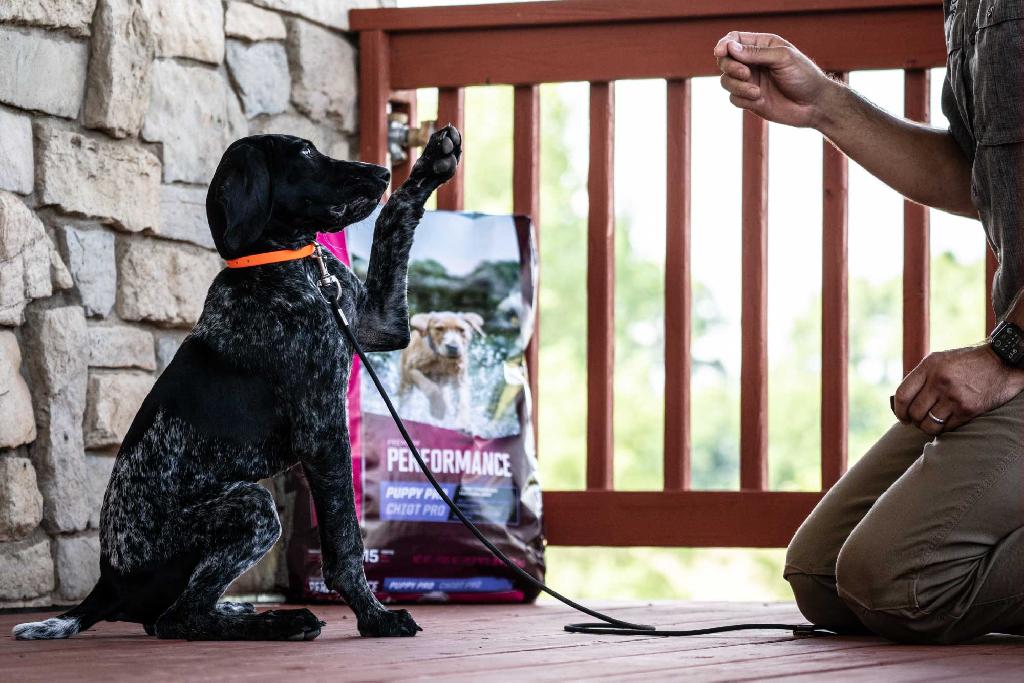
Training your puppy starts the moment he comes home, and it begins with mental stimulation. Keeping him on task from the beginning will build a better adult sporting dog—but how do you do it? Read on for advice on how to hold a puppy’s attention.
Understanding the Chemicals
First, it’s important to understand how your puppy’s brain is developing, and what you can do to help support that progress. That starts with what you’re feeding your puppy.
[%BANNER-EUK650%]
Docosahexaenoic acid (DHA) is a long-chain omega-3 fatty acid that is important for neural development in puppies. This fatty acid is deposited in your puppy’s neurological tissue and helps support the rapid growth of his brain and nervous system—that’s why DHA in puppy food for sporting breeds is so important.
Mental Stimulation for Puppies
Puppies need structure and boundaries, and those are promoted through mental stimulation. Puppies that are given free rein develop behavioral and training issues. Mental stimulation for puppies is key to their success. If you don’t entertain your puppy, he will entertain himself, and that can mean developing undesirable characteristics. Going to the bathroom in the house, chewing shoes or furniture, and other unwanted behaviors are easy for puppies to learn and hard habits to break.
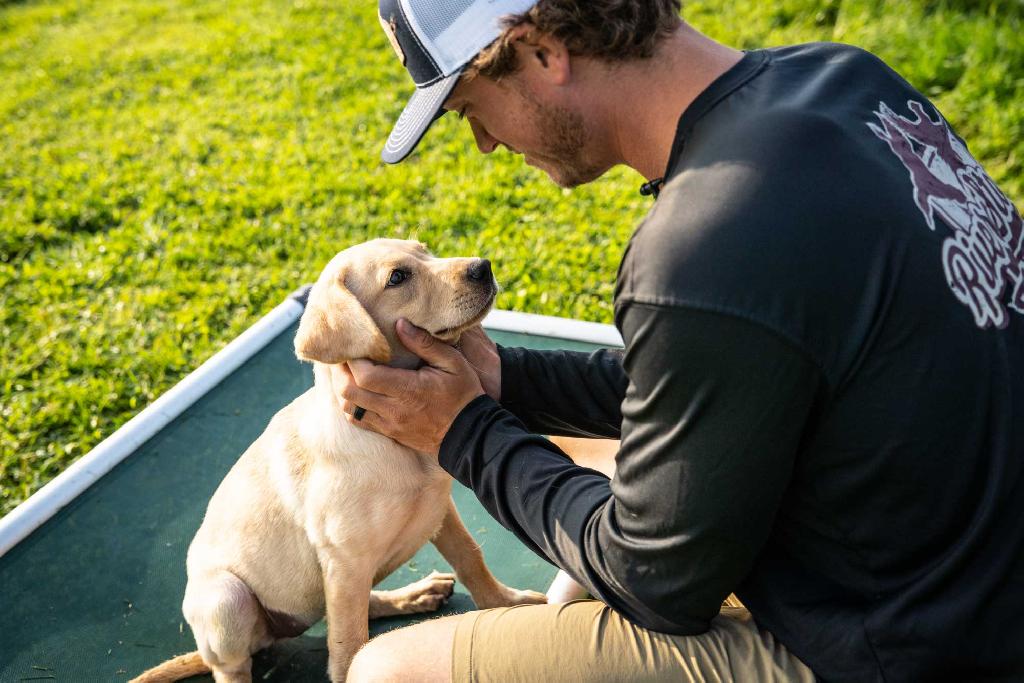
“If you put a highly active puppy in a kennel and don’t interact regularly with him, then he is unlikely to develop a connection or bond with you,” says Russ Kelley, Eukanuba’s Scientific Services Nutritionist. “It’s important to have a connection with your puppy because he’ll learn to want to please you. Those strong bonds make for easier training.”
Kelley recommends stimulating your puppy’s mind through short training sessions of no more than 5 to 10 minutes at a time. Puppies are associative learners, meaning they learn from encounters and experiences. Keeping them engaged is important and contributes to overall wellbeing and good behavior.
Teaching basic obedience is one way to promote mental stimulation. Teaching commands such as “sit,” “stay,” and “come” helps establish a training foundation. This basic command work, conducted routinely in short sessions, helps keep a puppy stimulated and readies him for more advanced training.
“Be firm and set clear expectations as soon as you bring puppies home,” says Kelley. “Puppies are perfectly capable of learning at a young age.”
Puppy Timeline
It takes time to mold a sporting dog and bring out his natural abilities. Every puppy is different and learns at his own pace. It’s up to his handler/trainer to develop him into the adult dog he wants. But what sort of timeline does that look like, realistically?
According to Kelley, a puppy won’t be mentally mature even at 12 months—he’ll still be putting together everything he is learning at that age. “I like to think of the initial 8- to 12-month period in a puppy’s life as sort of like a high school kid,” says Kelley. “The 14- to 36-month timeframe is like a college student.”
Even when thinking of your puppy’s development in this timeframe, it’s important to note that how well they do as adults starts with the mental stimulation they are given when they are young. If you leave a puppy in isolation or give him minimal obedience or formal training, you cannot expect him to perform or behave well as an adult.
[%BANNER-EUK728%]
Understanding the Chemicals
First, it’s important to understand how your puppy’s brain is developing, and what you can do to help support that progress. That starts with what you’re feeding your puppy.
[%BANNER-EUK650%]
Docosahexaenoic acid (DHA) is a long-chain omega-3 fatty acid that is important for neural development in puppies. This fatty acid is deposited in your puppy’s neurological tissue and helps support the rapid growth of his brain and nervous system—that’s why DHA in puppy food for sporting breeds is so important.
Mental Stimulation for Puppies
Puppies need structure and boundaries, and those are promoted through mental stimulation. Puppies that are given free rein develop behavioral and training issues. Mental stimulation for puppies is key to their success. If you don’t entertain your puppy, he will entertain himself, and that can mean developing undesirable characteristics. Going to the bathroom in the house, chewing shoes or furniture, and other unwanted behaviors are easy for puppies to learn and hard habits to break.
“If you put a highly active puppy in a kennel and don’t interact regularly with him, then he is unlikely to develop a connection or bond with you,” says Russ Kelley, Eukanuba’s Scientific Services Nutritionist. “It’s important to have a connection with your puppy because he’ll learn to want to please you. Those strong bonds make for easier training.”
Kelley recommends stimulating your puppy’s mind through short training sessions of no more than 5 to 10 minutes at a time. Puppies are associative learners, meaning they learn from encounters and experiences. Keeping them engaged is important and contributes to overall wellbeing and good behavior.
Teaching basic obedience is one way to promote mental stimulation. Teaching commands such as “sit,” “stay,” and “come” helps establish a training foundation. This basic command work, conducted routinely in short sessions, helps keep a puppy stimulated and readies him for more advanced training.
“Be firm and set clear expectations as soon as you bring puppies home,” says Kelley. “Puppies are perfectly capable of learning at a young age.”
Puppy Timeline
It takes time to mold a sporting dog and bring out his natural abilities. Every puppy is different and learns at his own pace. It’s up to his handler/trainer to develop him into the adult dog he wants. But what sort of timeline does that look like, realistically?
According to Kelley, a puppy won’t be mentally mature even at 12 months—he’ll still be putting together everything he is learning at that age. “I like to think of the initial 8- to 12-month period in a puppy’s life as sort of like a high school kid,” says Kelley. “The 14- to 36-month timeframe is like a college student.”
Even when thinking of your puppy’s development in this timeframe, it’s important to note that how well they do as adults starts with the mental stimulation they are given when they are young. If you leave a puppy in isolation or give him minimal obedience or formal training, you cannot expect him to perform or behave well as an adult.
[%BANNER-EUK728%]
Related Aritlces

How To Support Joint Health in Your Sporting
When we think about the longevity of our hardworking sporting dogs in the fields and blinds, joint health is often a point of concern. They run hard in a variety of conditions, they jump over logs or stone walls, and they twist and turn their way through fields and covers. Those aggressive movements can put a tremendous amount of stress on their joints.
Key Nutrients for a Healthy Skin and Coat
Humans can use topical supplements like moisturizing lotion or hair conditioner for good health, but a dog doesn't have that luxury. The condition of a dog's hair and skin comes from proper feeding, and it's far more important than just making them look good. Healthy hair and skin protect them from the environment.