German Shorthaired Pointer Guide for Bird Hunters
Find German Shorthaired Pointers for Sale
This German Shorthaired Pointer guide is for hunters who want more than a breed summary. A GSP is not just a handsome dog with a liver head and a clean outline. This is a serious sporting dog bred for work, and that matters. When the breeding is right and the training is steady, a German Shorthaired Pointer can be an upland machine with enough versatility to handle water retrieves, track wounded game, and keep going long after many dogs start to fade.
The German Shorthaired Pointer in the Field
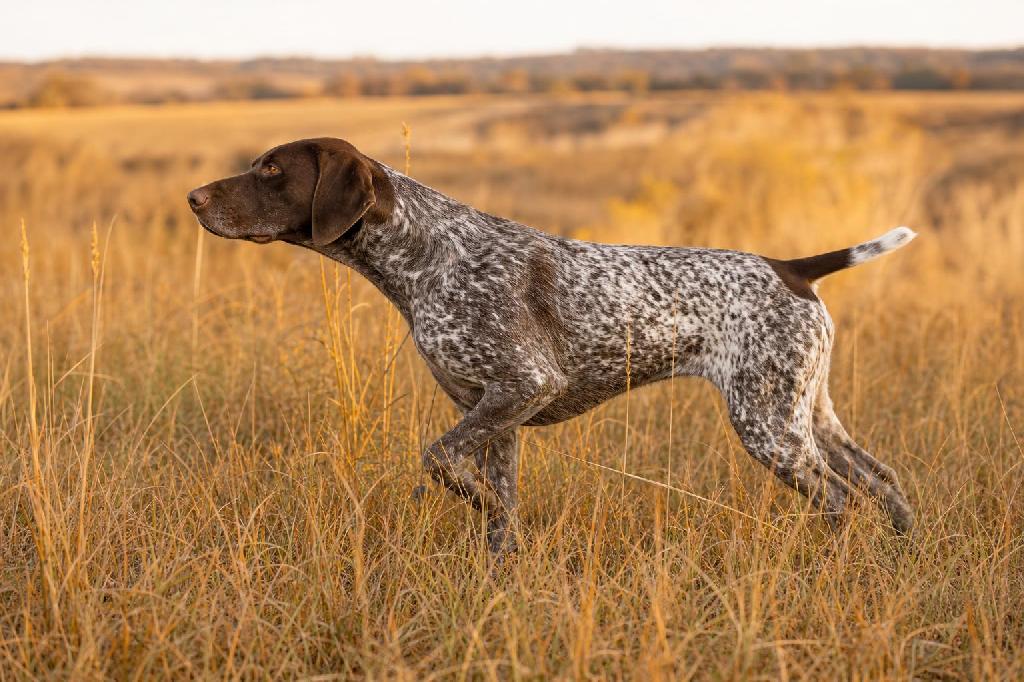
The first thing most hunters notice about a German Shorthaired Pointer is speed. They move with confidence and reach, covering ground in a way that makes sense for a big-running bird dog. In open country, that style shines. Prairie birds, western quail, sharptails, and pheasants in broad agricultural country all suit the breed well. A good GSP hunts with purpose rather than chaos. It casts, uses the wind, checks objectives, and seems to understand that birds are rarely found in empty country.
That said, speed alone is worthless without a nose and enough bird sense to use it. The better German Shorthaired Pointers combine drive with a practical mind. They know when to punch out and when to shorten up. I have seen some hunt the edge of a cattail slough with real discipline, then roll into a stubble field and widen out exactly as the cover changed. That kind of adaptability is where the breed earns its keep.
The GSP is also known for being versatile. While many hunters first think of upland birds, these dogs were bred to be more complete than a one-job specialist. Plenty of them take naturally to water, and a well-bred dog with proper exposure can become a dependable retriever on ducks as well as a steady upland partner. Not every line is equal in that department, but the breed standard itself has always leaned toward all-around usefulness.
Drive, range, and bird sense
One truth about German Shorthaired Pointers is that they need an outlet. This breed carries a strong motor. For an active bird hunter, that is a blessing. For someone who wants a laid-back kennel ornament, it can become a headache. A GSP with no work and too little structure will often invent its own entertainment, and hunters know that usually ends in chewed gear, worn paths in the yard, or a dog that grows hard to settle.
In the field, though, that motor is exactly what many of us want. The breed often runs with animation, hunts hard into the wind, and stays eager through long miles. The best ones are not just fast; they are efficient. They hit likely objectives, carry themselves well, and stand birds with confidence. On wild birds, that combination of nose, range, and intensity is tough to beat.
Temperament and Life at Home
Hunters sometimes make the mistake of judging a dog only by what it does between sunrise and the tailgate lunch. A German Shorthaired Pointer is a hunting dog, but it also lives with you. In the home, most GSPs are affectionate, loyal, and deeply attached to their people. Many are the kind of dog that wants to know where you are at all times. They like contact, attention, and a routine. If you bond with one, expect a dog that gives you all of itself.
Still, there is no getting around the breed’s energy level. This is not usually a low-maintenance companion. A German Shorthaired Pointer needs physical exercise, but just as important, it needs mental engagement. Training, free running in safe country, yard drills, retrieving work, and regular exposure to new situations all help shape a stable dog. When those needs are met, many GSPs settle well in the house and become excellent family dogs. When those needs are ignored, problems tend to show up quickly.
Is the GSP right for every hunter?
Not always. That is worth saying plainly. The German Shorthaired Pointer is a great breed, but great does not mean universal. If you hunt a handful of weekends a year and have little time for conditioning or training, there may be calmer breeds that fit your life better. If, on the other hand, your ideal fall means hard walking, wild birds, and a dog that meets every day with enthusiasm, the GSP starts making a lot of sense.
Training a German Shorthaired Pointer
Training a German Shorthaired Pointer is usually rewarding because the breed tends to be intelligent and responsive. They learn quickly, but that same intelligence means they also learn bad habits quickly if you let things slide. Consistency matters. So does timing. A GSP often thrives when the handler is clear, fair, and calm. Heavy-handed work can sour a sensitive dog, while too little structure can leave all that drive pointed in the wrong direction.
Early obedience lays the foundation. Come, kennel, whoa, and steadiness around excitement all matter. Socialization is just as important. A young German Shorthaired Pointer should see birds, cover, gunfire introduced properly, vehicles, people, and the normal chaos of a hunting life. The more balanced the dog is early, the easier the rest becomes.
Bird contact is where the breed often comes alive. You can see instinct switch on in a promising pup. The first whiff of scent, the hesitation, the tail tightening, the body leaning into something ancient and inherited, that is the moment many handlers fall hard for the breed. From there, good training is about channeling instinct without smothering it. A polished dog still needs fire. Manners should support desire, not replace it.
Common training challenges
Many German Shorthaired Pointers are bold and energetic enough that recall and range management become early priorities. Some are natural retrievers, while others need more formal work to finish cleanly to hand. Some handle pressure well, others need a softer touch. This is one reason pedigree matters. Different lines can vary in range, cooperation, water desire, and intensity. Choosing a pup from proven hunting stock with a temperament that suits your hunting style can save a lot of frustration later.
Health, Conditioning, and Care
A healthy German Shorthaired Pointer is built for work, and keeping one fit is part of owning the breed responsibly. These dogs do best when lean, muscled, and conditioned ahead of season. Too many hunters expect a dog to go from backyard shape in September to all-day performance in November. A GSP deserves better than that. Roading, free running, swimming, and controlled conditioning all help prepare the dog for long days and reduce risk of injury.
The coat is one of the breed’s practical advantages. It is short, tidy, and relatively easy to maintain. Burrs and mud are usually easier to deal with than they are on heavier-coated breeds. That does not mean they are maintenance-free. Feet need attention, especially during heavy hunting. Nails should stay trimmed. Ears should be checked regularly, and hydration matters more than many hunters realize during warm early-season hunts.
As with any breed, buyers should pay attention to health testing and breeder reputation. Sound structure, stable temperament, and a history of proven field ability should matter every bit as much as appearance. A pretty dog that cannot handle pressure, lacks bird drive, or breaks down physically is no bargain in the long run.
Choosing a German Shorthaired Pointer Puppy
If you are looking for a German Shorthaired Pointer, start by asking what kind of hunter you are. Do you want a closer-working foot-hunting dog for grouse cover? A bigger-running western bird dog? A truly versatile hunting companion that will split time between ducks and upland birds? The breed can do many things, but individual lines often lean one direction or another.
Talk to breeders who hunt their dogs, not just those who talk about potential. Ask what the parents are like in the field, how they handle, what kind of birds they are hunted on, and how they live at home. A breeder worth your time should be able to describe strengths honestly rather than selling every pup as a perfect fit for every hunter. That kind of straightforward talk usually means you are dealing with someone who knows dogs and values the future of the breed.
When you pick up a young GSP, understand that you are not buying a finished gun dog. You are buying raw material, genetics, and opportunity. What comes next depends on time, exposure, patience, and the miles you are willing to put in together.
Why Hunters Keep Coming Back to the GSP
There are many fine bird dog breeds, and every experienced hunter has loyalties shaped by old dogs and good seasons. Even so, the German Shorthaired Pointer continues to win converts because it offers so much in one package. It has style on point, enough grit for tough country, a strong nose, and the kind of athleticism that keeps a hunt alive when conditions turn hard. It can be a family companion at home and a serious hunting partner when the gate drops.
I have seen a frosty morning change the minute a solid German Shorthaired Pointer hit scent and locked up against a hedge row, every line of the dog tight with purpose. Those moments stay with a hunter. They remind you why good bird dogs matter and why some breeds keep earning their place, season after season. For hunters who want a driven, versatile, and honest gun dog, the German Shorthaired Pointer remains one of the best choices in the sporting world.
Related Aritlces
Best hunting dog breeds for upland hunting
There are several dog breeds that excel in upland hunting, and the best breed for you depends on your specific preferences and hunting style. Whether you’re flushing bobwhite quail in the piney woods of the Southeast, chasing sharp-tailed grouse across the grasslands of the Northern Great Plains, stalking ring-necked pheasants in the grain fields of the Midwest, pursuing chukar in the rocky terrain out West, or hunting ruffed grouse and woodcock in the dense young forests of the Great Lakes region, each breed is tailored to a different type of hunt. Finding the right one for your hunting situation can be key to success in the field.

Properly Command Your Sporting Dog
Chatter and over-commanding are two common issues between some handlers and their dogs. For some reason, nonstop talking gives some handlers a sense that they’re in control of the dog. They believe the constant communication improves the dog’s situational performance, and that somehow the chatter motivates pups to cast better or to remain more staunchly on point. But most of those commands fall on deaf ears as the dog tunes out its owner. And when it comes to bird dogs, tuning out an owner is never a good idea.
Breeding a Better Dog
A pair of wood ducks came screaming by as my dad and I folded the drake. Most likely my dad did the folding, but I tried to help with my single shot 20 gauge. He pulled our springer/lab cross and myself through the cattails and marsh grass searching for the drake.