Is Anybody Home?
Friends, Romans, countrymen, and Students of Quail: lend me your ears.
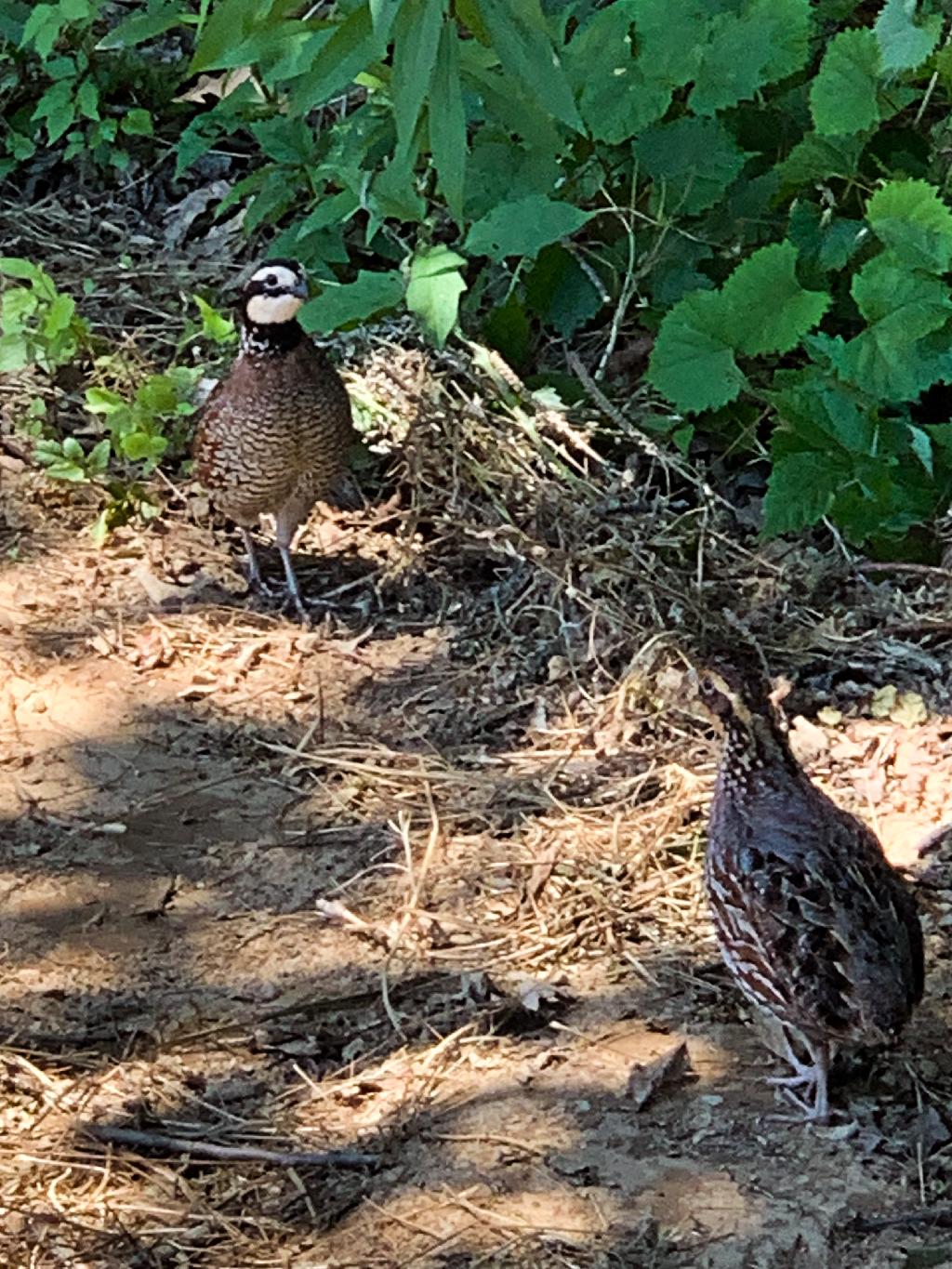
Concerned about the status of your breeding quail? Who isn't? Several years of dry weather and a "hard" winter in 2021 have exerted their collective toll on quail populations in the Rolling Plains. Several folks have commented to me that they haven't seen a quail in months. The next 45 days provide a timely, easy opportunity to assess the breeding capital of bobwhites and scaled quail on you property/lease via their spring whistle counts. We don't start our official counts at RPQRR until May 15, then conduct them twice weekly until July 1. But for most of you two to four counts would suffice.
Spring cock call counts for RPQRR from 2007-2020. Dashed line represents average (4.7 birds/stop). Counts conducted from mid-May through June. Scaled quail were reintroduced in 2014.
If you've never done a formal whistle count, it's not difficult. Just conduct them at multiple points across your property (we do so at 1-mile intervals). Start the count about sunrise and continue until about 9 o'clock, or when the wind becomes an issue. If you don't have "young ears" (say what?) take along someone who does. Listen for a 5-minute period and record (a) the number of unique cocks you hear whistling and (b) the total number of whistles heard (either bob-white! or "quawk" for scaled quail). A data sheet featuring a bullseye target is convenient for helping distinguish among different birds calling. See the publications B-6173 Counting Quail (tamu.edu) and TQI_handbook.pdf (tamu.edu) for more information and a sample data sheet.
When analyzing spring cock call count data I usually think in multiples of "3"; hearing 3 or fewer bobwhites per stop is "poor", 4-6 is "fair", 7-9 is "good" and anything above 9 is "excellent". But I may have to revise my scores down this year to multiples of "2" this Spring (2 or fewer = poor; 6 or more = excellent). Blue quail don't call as often, so use 1, 2, 3, and 4, respectively to assess their abundance.
The peak calling period at RPQRR is in mid-June (average of June 13). Peak calling ranged from 25 May to 9 July across years. Spring call counts at RPQRR are "moderate predictors" (r2 = 0.54) of our "Minimum Known Population" (see An evaluation of population indices for northern bobwhite - Wildlife Society Bulletin Wiley Online Library) for more details.
My ears are cast skyward and my hearing aids deployed. I'm curious about your results, so let me know what you're hearing ([email protected]).
Please consider making a donation to the Rolling Plains Quail Research Foundation to help fund their research.
About the Author : Dr. Dale Rollins
Visit authors website | View more articlesDr. Dale Rollins founded RPQRF in 2007 and served as its executive director until 2021. A native of Hollis, Oklahoma, Dr. Rollins earned his BS from Southwestern Oklahoma State University, his MS Degree from Oklahoma State University (studying bobwhite and scaled quail in his home county), and his PhD from Texas Tech University. He also served as Professor and Extension Wildlife Specialist for Texas AgriLife Extension in San Angelo from 1987-2013.
Dr. Rollins retired from Texas Agrilife Extension Service in August 2013, but returned as the Program Coordinator for Texas A&M’s “Reversing the Quail Decline†initiative. He also founded the Texas Brigades program in 1992 and has taught a dozen sessions of QuailMasters, an annual 12-day course on quail and quail habitat held at various locations across the state.
Dr. Rollins has received numerous awards including being inducted into the Texas Conservation Hall of Fame in 2018, named a ‘Hero of Conservation†by Field & Stream Magazine, named a “Quail Crusader†by Outdoor Life, and winning the National Quail Calling Championship from Quail Unlimited in 2002.
Related Aritlces
SportDOG: Gear the way youd design it
My dentist, Doc Biehn, was a waterfowler and I always got to check it out when I got my teeth cleaned as a kid. I remember one visit when he handed me a new, Marlin Super Goose he extracted from his closet. I'd never seen anything like the 10 gauge, bolt action shotgun that took a 3.5 inch shell and came with a two-shell clip and full-choked 34-inch barrel. That beast weighed a whopping 10.5 pounds, making it a virtual shoulder-cannon for waterfowlers. I could barely lift the heavy artillery let alone work the bolt without significant muzzle rock. My amazement turned to confusion, and in the end I couldn't see how that firearm would replace my side-by-side or pump in the blind. The Super Goose must have been designed by someone who didn't hunt geese.

Field Cocker Madness
The brace of pointers was stunning, and they were locked up on the edge of one of the thickest patches of greenbriar I'd ever seen. The tangle was so dense it resembled unfurled rolls of concertina wire. A little cocker named Rip didn't care, for when he was cut loose, he snaked his way through that mess with more moves than a belly dancer. I'd I couldn't see him, but to know where he was I just needed to see which section of greenbriar was shaking. When the dog locked on his target, a covey of wild quail exploded. They believed if they held their ground they'd never have to leave. How wrong they were.

The Smith Setter Celebration
It’s tough to beat the warm days and cool nights of Georgia in the Spring. The high heat and humidity, the kind that drives field trailers in droves to the Dakotas, the Rockies, or Canada, hasn’t yet hit. The sounds of songbirds float on the light-variable winds, while the thundering gobbles of Eastern wild turkeys echo through the fields and draws. Bird doggers hear them, but they’re really listening for the ‘poor Bob White’ whistle. Gentleman Bob has been an important part of life on the land off of Ben Hatcher Road for a long time.