Field Cocker Madness


Rip is an example of a recent and ongoing movement created by a handful of English field cocker devotees. While the name "cocker" stems from their initial use by British game keepers who used the stoic dogs for hunting woodcock, field cockers are gaining favor on commercial quail operations, for grouse hunting, as retrievers in driven and Continental shoots, and for many other flushing/retrieving scenarios.

Field cockers have been an integral part of the British sporting world for well over a century, they have only had a small but loyal following on our side of the Pond. Two groups of breeders, John Rex and Diane Deming Gates have been working with Robert Milner and have outstanding pups from winning lines. Their working relationship includes Ian Openshaw, the legendary UK field trialer who recently set a British record that will be difficult-if-not-impossible to beat: his 100th Field Trial Championship.

According to John Rex Gates, "field cockers are the smartest little dogs I've ever been around. Field cockers love to retrieve, they are easy to break, and they are great flushing dogs. All these dogs want to do is find birds and please their handler, and their drive and huntability knows no bounds." The Gates are pretty hot for a certain great young cocker owned by Milner, Mallowdale Lestyn (call name Haggis), whose sire has 37 UK Field Trial Champions in his 5-generation pedigree. "I love the attitude of the field cocker," said Miss Diane. "When I watch a working dog I imagine they are thinking ' I can do and I will do'. Just when I think they've done it all they come up with a 'watch this!' move that makes me smile."

Milner's introduction to English field cockers came years ago while visiting Oppenshaw in the UK. "Ian is probably the best cocker and springer trainer in the world," the Eukanuba pro said. "I was looking at Labs when his cockers caught my eye. I picked one up and found him to be the smartest dog I've ever had."

But Milner says you've got to be a bit careful with the breed. "Cockers work at such a high intensity that it's important for the handler to get them under control. That is by far the most important element in their training. When focused on a task they are dynamic and bold. They're quick learners that are capable of excellence. They'll have no problem diving into the thickest of covers, but it's their size and smarts that makes them snake through the smallest of openings. Cockers are born wild, so bringing them under control is an important first step."

Cockers are great flushers and retrievers, but they don't do well in the extreme cold. "Cockers don't have the physical protection from cold water," Milner said. "They don't have the double, oily coat that sheds water, so you've got to be very careful when running them in late-season waterfowl conditions. Aside from that those tenacious, goal-oriented dogs are capable of anything. In fact, Queen Elizabeth recently added a cocker to her kennel at her hunting estate, Sandringham."

Up in Alna, Maine is Pat Keliher of Thornapple Cockers. Keliher has had a life well-lived. He's guided for grouse and woodcock out of Libby's Camps in Northern Maine, seaducks on the coast, and striped bass and bluefish in between. He's held leadership positions in conservation at both the NGO and state level, and for the past decade holds a cabinet level position as the Commissioner of Maine's Department of Marine Resources. Keliher still guides, hunts, fishes, and field trials, and English field cockers are his choice.

"When I was guiding full time 100 years ago I ran springers and had a lab," he said. "Fred Bradley of Hawthorne Kennels was my training mentor. After watching Fred run 6 cockers, one questing and the others healing I was hooked and hooked hard. I've hunted and trained them since 1989 and even got into field trialing because I love training so much. My training grounds are behind my house, so I'll run the dogs every day and compete in just under a dozen trials per year."
 Keliher loves cockers so much that he won't set out without at least a four-pack. "I know that a lot of folks favor cockers as strike dogs for Bobwhite quail just as they like setters, pointers, or Brits for the New England uplands. But I believe the English field cocker might be the best grouse dog of all. You see, the more a grouse gets pressured the more skittish they become. "Over time, I've developed a quiet, stealthy approach and I get those from my cockers. I'll walk in the woods with three heeling behind me and one working out front. They are all steady to wing and shot and the healing dogs honor the flush and retrieve of the dog that is working. Their small size makes them perfect for getting into the thickest primary and secondary growth cover. They're intelligent and biddable, so I don't need to make any commotion. With the exception of some rustling leaves or snapping twigs we're quiet. There are no bells clanging, no beepers sounding, and a quiet and infrequent use of the whistle. Because of their size, a cocker might not be able to jump an old stone wall, but they make up for it in other ways. The use their size to their advantage, and that means they'll often go under logs instead of over them, they'll go around stone walls, and when it comes to cover they'll just go through it. They're tough, that's for sure.
"Field cockers are easy to read when they're making game, and they hunt at a perfect distance for a good, clean shot. I like to run four at a time because I can always have a fresh dog on the ground. The others healing behind me in what some call a controlled chaos as they each jockey for position by my left knee. Hunting with multiple dogs means we can hunt at a leisurely pace all day. My hunting buddies are all in great shape because once we start we just keep going."
Keliher also loves duck hunting with his cockers. "I hunt a number of ponds and rivers that that are ideal for early season teal and woodies," he said. "What's interesting is that they don't sink in the mud like a heavier dog and just seem to glide along on top of it. They are strong markers and get to downed ducks super fast, and they don't hesitate for a second if the water is cold or there is skim ice on top. I'd never take them on a January sea duck hunt as there are better breeds for that. But who can beat puddle ducks in the morning and grouse and woodcock in the afternoon? That's a pretty damn good day for me."

It's no surprise cocker fans are bullish about their breed of choice. The dog's athletic ability helps them to navigate small, tight spaces. Their drive boarders on a fury, and if you could bottle their energy there would be enough power to replace oil, natural gas and electricity. Who doesn't like biddable and easy to train pups with great noses and bird smarts? I guess that leaves us with a different question about the cockers rise in popularity; why the decline in the first place?

About the Author : Tom Keer
Visit authors website | View more articlesTom Keer owns The Keer Group, an outdoor marketing company which works perfectly with his freelance writing career. He casts his four English setters in Northeast upland coverts and Southern quail fields with fortunate regularity. Hes been lucky to be surrounded by people and dogs that are much smarter than him. Visit him at www.thekeergroup.com or at www.tomkeer.com
Related Aritlces
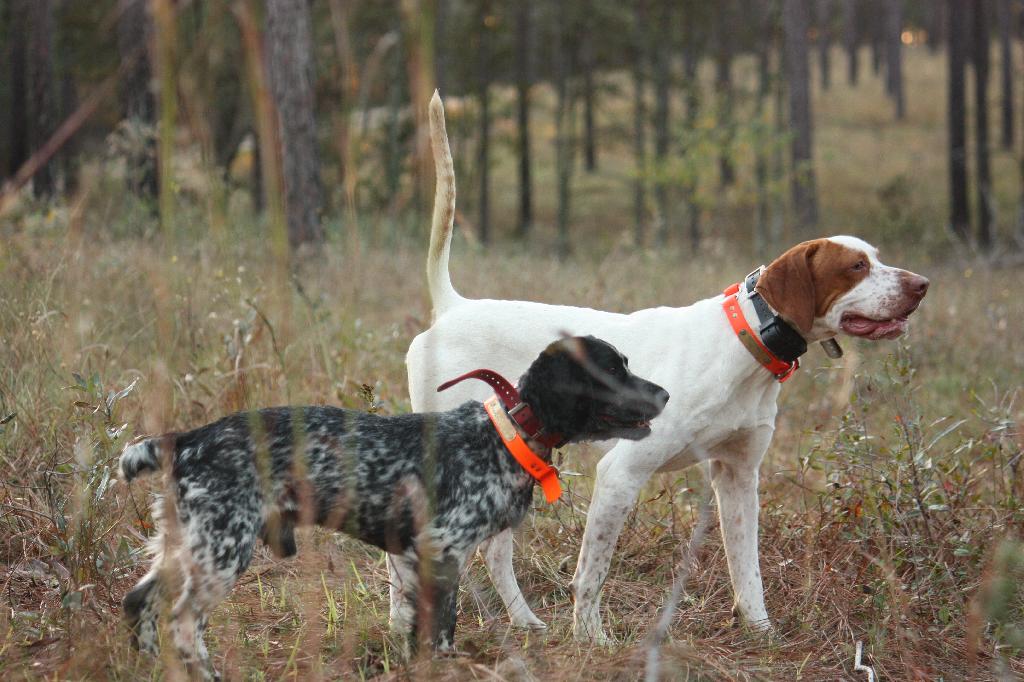
The Great Debate: Pointing or Flushing Dogs for Quail
My wife said I winced when we pulled up to the only game in town. It was an old motel of a vintage that reminded me of the Golden Era of travel by car. Over the years families probably over-nighted here while on their way to any one of a number of the nearby wild quail Valhallas. No visible capital improvements had been done for a long time, at least I couldn't see any renovation. The 30-some-odd rooms looked sad while the adjoining restaurant and tavern was booming.

Field Trials Matter
Most scouts yawn when linemen run 40's, but not at the 2020 combine. Mekhi Becton, a 6-foot-7-inch, 364 pound offensive lineman out of Louisville ran a blistering 5.1. Heads didn't turn so much as they spun off of heads, for what current lineman of Beckton's size runs what used to be speed of yesteryear's fullback? My, my have times changed.
SportDOG: Gear the way youd design it
My dentist, Doc Biehn, was a waterfowler and I always got to check it out when I got my teeth cleaned as a kid. I remember one visit when he handed me a new, Marlin Super Goose he extracted from his closet. I'd never seen anything like the 10 gauge, bolt action shotgun that took a 3.5 inch shell and came with a two-shell clip and full-choked 34-inch barrel. That beast weighed a whopping 10.5 pounds, making it a virtual shoulder-cannon for waterfowlers. I could barely lift the heavy artillery let alone work the bolt without significant muzzle rock. My amazement turned to confusion, and in the end I couldn't see how that firearm would replace my side-by-side or pump in the blind. The Super Goose must have been designed by someone who didn't hunt geese.