Teaching the Heel Command to Your Cocker Spaniel
Posted 06/18/2026
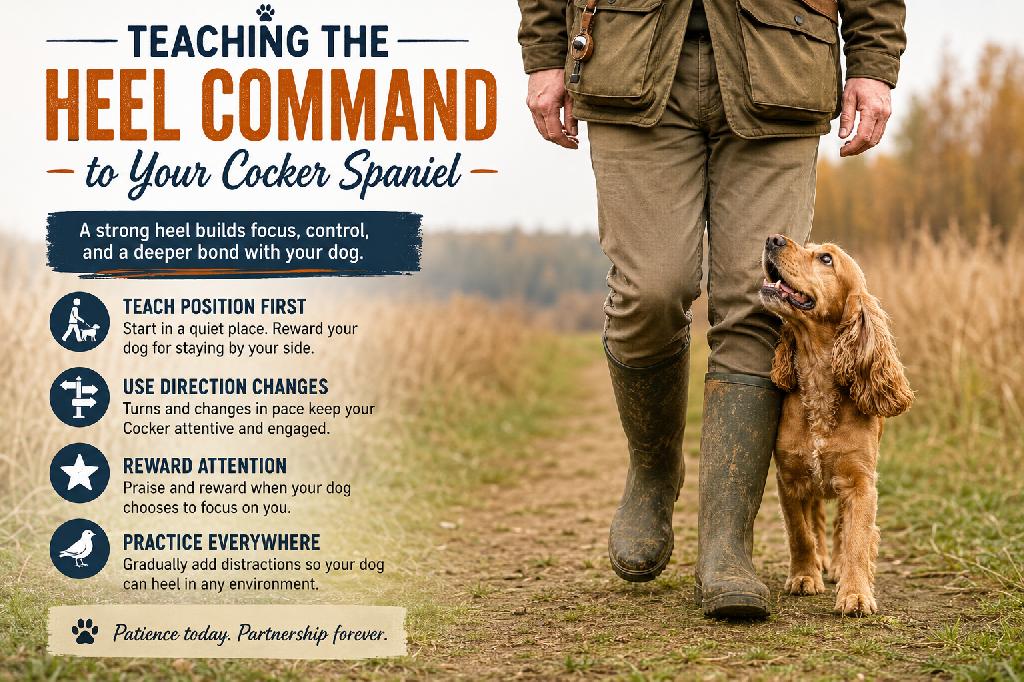
If you've ever tried walking a young Cocker Spaniel through a field, down a gravel road, or even across a parking lot, you've probably discovered one thing quickly: Cockers are naturally curious. Every scent, every bird, every rustle in the grass seems worth investigating.
That enthusiasm is one of the reasons we love them. It also makes teaching a solid heel command one of the most valuable skills you'll ever put on your dog.
A good heel isn't about forcing a dog to walk like a robot. It's about teaching your Cocker to move with you, pay attention to you, and stay under control when excitement levels start climbing.
For hunting dogs, that's a skill that pays dividends everywhere, from training days to hunt tests to actual mornings in the field.
What Heel Really Means
Many people think heel simply means "don't pull on the leash."
That's part of it, but not the whole picture.
A properly trained heel means your dog walks beside you, stays attentive, and adjusts its pace to match yours. When you stop, the dog stops. When you turn, the dog turns. The dog is focused on your movement rather than making its own decisions.
For a hunting Cocker, heel is often the bridge between excitement and control.
Before a hunt, after a retrieve, around roads, parking areas, livestock, or other hunters, heel keeps everything organized and safe.
Start Somewhere Boring
One of the biggest mistakes handlers make is trying to teach heel where distractions are everywhere.
Don't start in a field full of birds.
Don't start at the local park.
Start in your backyard, driveway, garage, or even your living room.
The less interesting the environment, the easier it is for your dog to focus on you.
Your goal isn't to test the dog.
Your goal is to teach the dog.
Choose Your Side
Traditionally, dogs heel on the left side.
That tradition comes from generations of hunters and handlers carrying guns on their right side.
But if you're more comfortable with the dog on your right, that's perfectly acceptable.
The important thing is consistency.
Pick a side and stick with it.
Introduce Position First
Before you ever start walking, teach your Cocker where heel position is.
Place the dog beside you.
Reward when it stands or sits where you want it.
Take a single step.
If the dog stays with you, praise and reward.
Take another step.
Then another.
At first, you're not teaching distance.
You're teaching location.
Think of it as creating a comfortable spot beside your leg where good things happen.
Keep Sessions Short
Cockers are smart, but they're also energetic.
Five minutes of focused work is often more productive than thirty minutes of repetition.
I would rather see three short training sessions during the day than one marathon session that leaves both dog and handler frustrated.
End while the dog is succeeding.
That's how confidence grows.
Use Direction Changes
One of my favorite ways to teach heel is by making frequent turns.
Walk ten feet.
Turn left.
Walk ten feet.
Turn right.
Turn around.
Change speed.
Slow down.
Speed up.
The dog learns very quickly that paying attention to you is easier than guessing where you're headed next.
If your Cocker is staring at birds, grass, or butterflies, your direction changes naturally bring its focus back to you.
Reward Attention
Many handlers reward position.
The best trainers reward attention.
A dog can be standing beside you physically while mentally being somewhere else entirely.
When your Cocker looks up at you, checks in with you, or chooses to focus on you despite distractions, that's worth rewarding.
Those little moments create the kind of teamwork that hunting dogs need.
Don't Turn Heel Into a Punishment
This is important.
Heel should not mean the fun is over.
Too many dogs learn that being called into heel position means freedom disappears.
Mix things up.
Heel for thirty yards.
Release.
Heel again.
Release again.
Let the dog understand that cooperation doesn't always end the adventure.
In fact, cooperation often earns more freedom.
Adding the Command
Once your dog consistently moves beside you, start introducing the verbal cue.
Say "Heel" just before you begin moving.
Repeat it calmly.
No yelling.
No constant chatter.
One command is enough.
Over time the word becomes associated with the behavior.
Soon you'll notice your Cocker moving into position when it hears the command.
That's when you know learning is taking place.
Taking Heel Into the Field
Eventually you'll need to practice where distractions exist.
Start small.
Maybe that's your front yard.
Then a quiet field.
Then a training day with other dogs.
Then hunting situations.
Remember that dogs don't automatically generalize lessons.
A dog that heels perfectly in your driveway may act like it has never heard the command when pheasants start flushing.
That's normal.
Training simply needs to progress gradually.
Moving Too Fast
Most heel problems happen because handlers skip steps.
If your dog struggles in a distracting location, go back somewhere easier and rebuild confidence.
Repeating Commands
"Heel. Heel. Heel. Heel."
Avoid that habit.
Give the command once.
Help the dog succeed.
Then praise.
Repeated commands teach dogs they can ignore the first few.
Pulling Constantly on the Leash
A tight leash often creates more pulling.
Instead, use movement, direction changes, and rewards to encourage the dog to stay with you.
Expecting Perfection
Remember that your Cocker is still a hunting dog.
A bird scent may occasionally win the battle for attention.
That's not failure.
That's an opportunity for another training session.
Final Thoughts
A reliable heel command isn't about creating a robot. It's about building partnership.
The best hunting Cockers are dogs that know when it's time to hunt hard and when it's time to walk calmly at their handler's side.
Take your time. Keep training enjoyable. Celebrate small successes.
Before long, you'll have a dog that can switch seamlessly from charging through cover after birds to quietly heeling beside you on the walk back to the truck.
And that's the kind of control that makes every hunting companion better.
That enthusiasm is one of the reasons we love them. It also makes teaching a solid heel command one of the most valuable skills you'll ever put on your dog.
A good heel isn't about forcing a dog to walk like a robot. It's about teaching your Cocker to move with you, pay attention to you, and stay under control when excitement levels start climbing.
For hunting dogs, that's a skill that pays dividends everywhere, from training days to hunt tests to actual mornings in the field.
What Heel Really Means
Many people think heel simply means "don't pull on the leash."
That's part of it, but not the whole picture.
A properly trained heel means your dog walks beside you, stays attentive, and adjusts its pace to match yours. When you stop, the dog stops. When you turn, the dog turns. The dog is focused on your movement rather than making its own decisions.
For a hunting Cocker, heel is often the bridge between excitement and control.
Before a hunt, after a retrieve, around roads, parking areas, livestock, or other hunters, heel keeps everything organized and safe.
Start Somewhere Boring
One of the biggest mistakes handlers make is trying to teach heel where distractions are everywhere.
Don't start in a field full of birds.
Don't start at the local park.
Start in your backyard, driveway, garage, or even your living room.
The less interesting the environment, the easier it is for your dog to focus on you.
Your goal isn't to test the dog.
Your goal is to teach the dog.
Choose Your Side
Traditionally, dogs heel on the left side.
That tradition comes from generations of hunters and handlers carrying guns on their right side.
But if you're more comfortable with the dog on your right, that's perfectly acceptable.
The important thing is consistency.
Pick a side and stick with it.
Introduce Position First
Before you ever start walking, teach your Cocker where heel position is.
Place the dog beside you.
Reward when it stands or sits where you want it.
Take a single step.
If the dog stays with you, praise and reward.
Take another step.
Then another.
At first, you're not teaching distance.
You're teaching location.
Think of it as creating a comfortable spot beside your leg where good things happen.
Keep Sessions Short
Cockers are smart, but they're also energetic.
Five minutes of focused work is often more productive than thirty minutes of repetition.
I would rather see three short training sessions during the day than one marathon session that leaves both dog and handler frustrated.
End while the dog is succeeding.
That's how confidence grows.
Use Direction Changes
One of my favorite ways to teach heel is by making frequent turns.
Walk ten feet.
Turn left.
Walk ten feet.
Turn right.
Turn around.
Change speed.
Slow down.
Speed up.
The dog learns very quickly that paying attention to you is easier than guessing where you're headed next.
If your Cocker is staring at birds, grass, or butterflies, your direction changes naturally bring its focus back to you.
Reward Attention
Many handlers reward position.
The best trainers reward attention.
A dog can be standing beside you physically while mentally being somewhere else entirely.
When your Cocker looks up at you, checks in with you, or chooses to focus on you despite distractions, that's worth rewarding.
Those little moments create the kind of teamwork that hunting dogs need.
Don't Turn Heel Into a Punishment
This is important.
Heel should not mean the fun is over.
Too many dogs learn that being called into heel position means freedom disappears.
Mix things up.
Heel for thirty yards.
Release.
Heel again.
Release again.
Let the dog understand that cooperation doesn't always end the adventure.
In fact, cooperation often earns more freedom.
Adding the Command
Once your dog consistently moves beside you, start introducing the verbal cue.
Say "Heel" just before you begin moving.
Repeat it calmly.
No yelling.
No constant chatter.
One command is enough.
Over time the word becomes associated with the behavior.
Soon you'll notice your Cocker moving into position when it hears the command.
That's when you know learning is taking place.
Taking Heel Into the Field
Eventually you'll need to practice where distractions exist.
Start small.
Maybe that's your front yard.
Then a quiet field.
Then a training day with other dogs.
Then hunting situations.
Remember that dogs don't automatically generalize lessons.
A dog that heels perfectly in your driveway may act like it has never heard the command when pheasants start flushing.
That's normal.
Training simply needs to progress gradually.
Common Mistakes
Moving Too Fast
Most heel problems happen because handlers skip steps.
If your dog struggles in a distracting location, go back somewhere easier and rebuild confidence.
Repeating Commands
"Heel. Heel. Heel. Heel."
Avoid that habit.
Give the command once.
Help the dog succeed.
Then praise.
Repeated commands teach dogs they can ignore the first few.
Pulling Constantly on the Leash
A tight leash often creates more pulling.
Instead, use movement, direction changes, and rewards to encourage the dog to stay with you.
Expecting Perfection
Remember that your Cocker is still a hunting dog.
A bird scent may occasionally win the battle for attention.
That's not failure.
That's an opportunity for another training session.
Final Thoughts
A reliable heel command isn't about creating a robot. It's about building partnership.
The best hunting Cockers are dogs that know when it's time to hunt hard and when it's time to walk calmly at their handler's side.
Take your time. Keep training enjoyable. Celebrate small successes.
Before long, you'll have a dog that can switch seamlessly from charging through cover after birds to quietly heeling beside you on the walk back to the truck.
And that's the kind of control that makes every hunting companion better.
Related Aritlces
Hup or Sit?
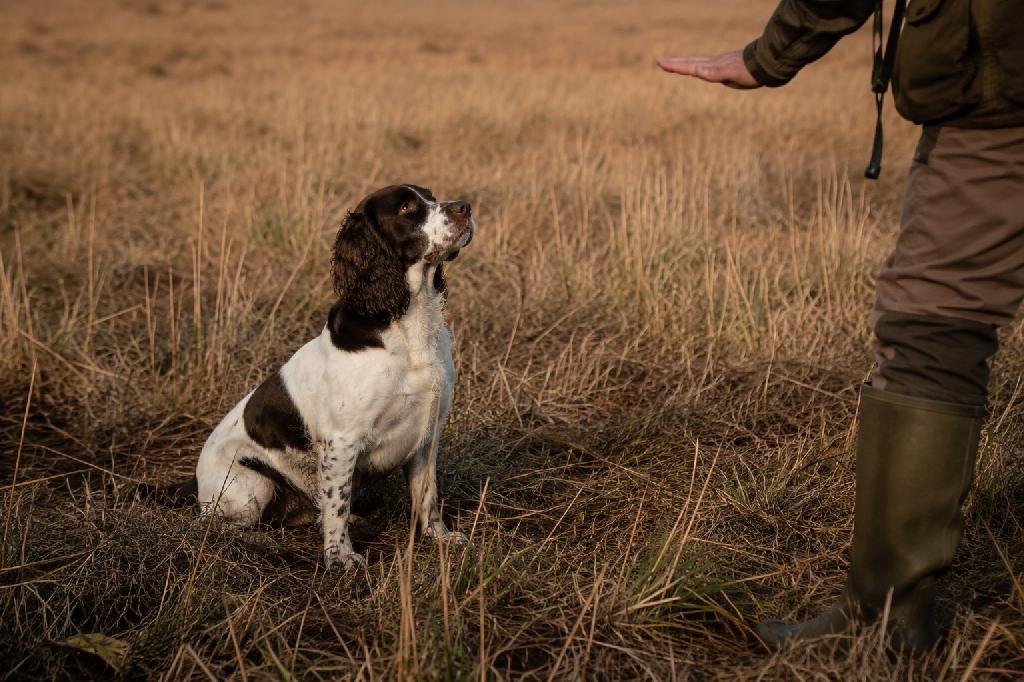
If you've spent any time around working English Cockers, you've probably heard handlers use the word "hup" almost as often as they use a whistle.
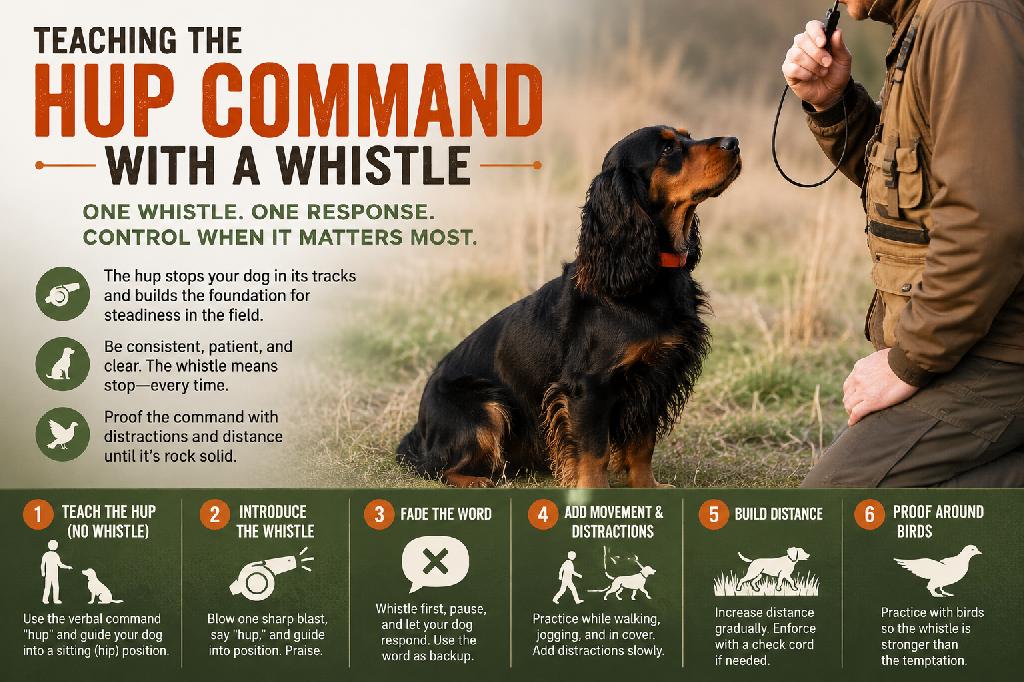
Teaching the Hup Command with a Whistle
If there is one command that separates a pleasant hunting cocker from a chaotic one, it is the hup.