Featured Breed of the Week : Chesapeake Bay Retriever
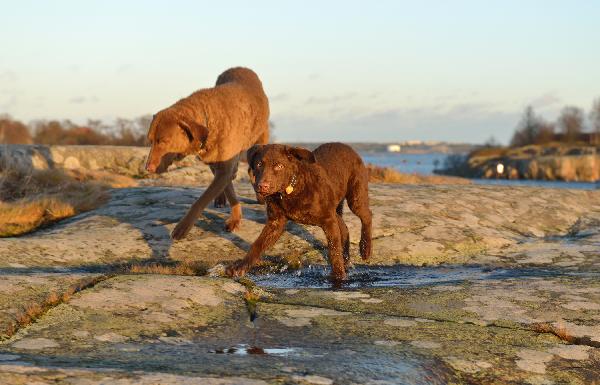
This breed came into existence in the 19th Century and almost instantly gained popularity amongst market hunters who relied upon its skills to retrieve waterfowl, to pull their fishing nets, and for fishermen rescue missions. With time, the Chesapeake Bay Retriever has come to be recognized as an excellent family pet and a hunting companion.
Hunters love this dog due to its features and its temperament. It is very jolly and has a bright disposition. Its courage, alertness and peculiar smartness coupled up with the willingness to work make it a very suitable hunting dog.
Brief description of the Chesapeake Bay Retriever
An American original Chesapeake Bay Retriever is a large and high-energy breed that can live up to 13 years. The male Chessie has a height of 23 to 26 inches and can weigh anything between 65 and 80 pounds. The female CBRs, on the other hand, measure 21 to 24 inches high and can weigh 55 to 70 pounds.
CBRs have a thick double coat that is scientifically proven to protect them from icy conditions. The oil found on both the outer coat and undercoat help with the resistance of water, and they keep the Chessies warm and dry. Minimal maintenance is required for this breed's fur. Most people who own this breed do well with brushing it once a week, using a short-tooth brush.
The Chesapeake Bay Retriever's outer fur can either be brown, sedge or deadgrass. Unlike some other dog breeds, there is no preference of one colour over the other with CBRs. The only consideration that those who own this breed make is about the similarity of colour of the coat and the environment in which they intend to use the dogs in.
This breed has displayed versatility in a large number of field trial competitions and hunting tests. Its conformation and obedience have been identified as some of the most important traits that the Chessie possesses. These two traits, combined with its stamina and ability, have helped it maintain its popularity as a hunting dog.
History has it, however, that the Chesapeake Bay Retrievers are quite stubborn and can be difficult to train. Which is why most trainers in the current day world are required to rely on a consistent obedience schedule executed on a daily basis to ensure that it acquires and upholds physical discipline.
Brief History of the Chesapeake Bay Retriever
The Chessie stands out as one of the countable breeds that originate from the USA. Their history began with the rescue of two puppies from a sinking ship in Maryland in the early 1800s. The male puppy was known as Sailor and the female one was called Canton. Together, they were referred to as the Newfoundland dogs, or simply the St. John's water dogs. Other people also referred to them as Lesser Newfoundland dogs. Sailor was adopted by John Mercer, a West River resident, and Canton was adopted by Dr. James Stewart from Sparrow's Point. There is no evidence of these two CBRs having a litter together.
It is however known that they bred with other area dogs and created the beginnings of the new Chesapeake Bay Retriever breed. Some of the area dogs they bred with include spaniels and hounds. Keen interest was placed on the ability of the offspring that resulted, as opposed to the concerned breed.
The offspring of the two dogs eventually intermingled at the Carroll Island Kennels, and have since then spread throughout the region. Since 1877 these dogs were referred to as the Chesapeake Bay Ducking dogs. The name was held until 1918 when a single type going by the name Chesapeake Bay Retriever was officially recognized and registered by the American Kennel Club.
#chesapeakebayretriever
Related Aritlces
Your Great Hunting Dog
Responsible Reproduction
Continue Reading

Field Cocker Madness
The brace of pointers was stunning, and they were locked up on the edge of one of the thickest patches of greenbriar I'd ever seen. The tangle was so dense it resembled unfurled rolls of concertina wire. A little cocker named Rip didn't care, for when he was cut loose, he snaked his way through that mess with more moves than a belly dancer. I'd I couldn't see him, but to know where he was I just needed to see which section of greenbriar was shaking. When the dog locked on his target, a covey of wild quail exploded. They believed if they held their ground they'd never have to leave. How wrong they were.
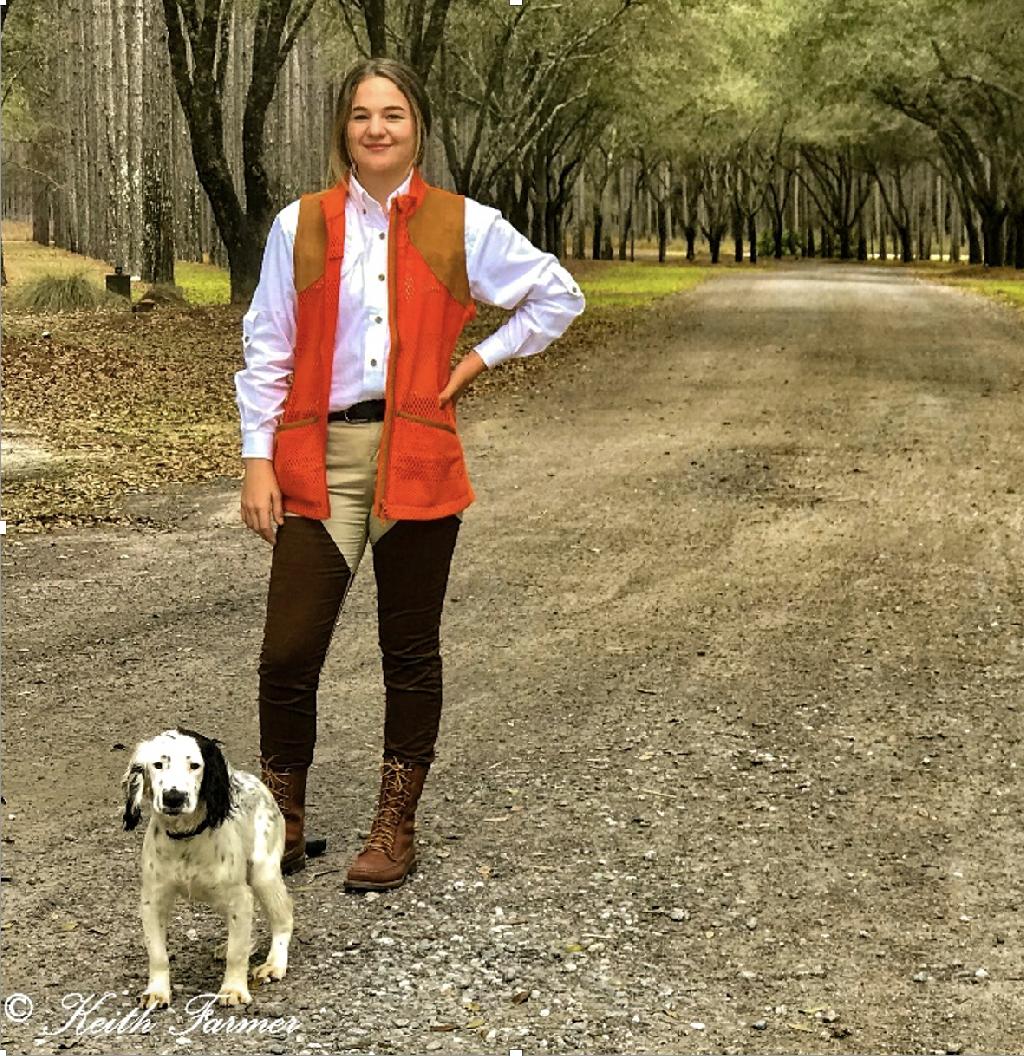
Girls, Guns, and Gun Dogs!
Growing up in the south one gains an appreciation for late fall/early springtime bobwhite quail hunting behind a brace of pointers about as much as anything can be appreciated. The landscape here is dotted with private plantations, public shooting preserves, and small family farms that hold the elusive Gentleman-Bob...opportunities abound. In fact, I cut my gun dog teeth, as it were, training pointing breeds and stumbling around bottom lands I could access hunting quail. It would be some years before I switched my focus over to retrieving breeds entering the world of professional training and trial competition.