The Nose Knows: Reading your Birddogs Signs by Tom Keer
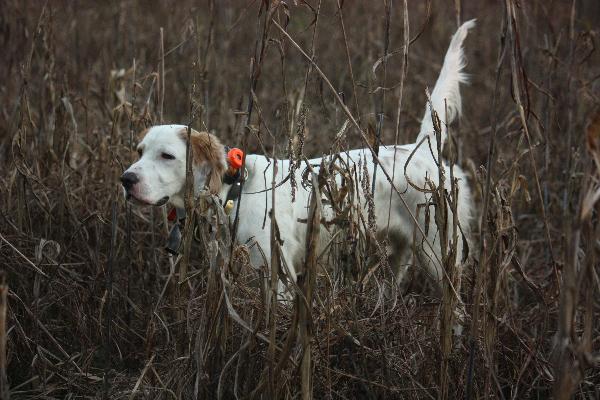
1. Changes in scenting conditions. We all remember those perfect days when every dog put down was jam on. That might be because they had frequent bird contacts and were extra focused. But dogs have stellar days when there are fewer birds around, and that's largely due to good scenting conditions that make it easy for them to find birds.
Cool or cold days create temperature differences between the bird and the air. That difference makes it easier for dogs to find birds. Moisture from a light rain, a dusting of snow, or even the morning dew improves scenting conditions as well. Light-variable winds, the kind into which we work our dogs, makes it easier for pup to pin the bird. Hot, dry, windless days make for difficult scenting. There are fewer trashy points, and dogs are less likely to run over birds. If your dog is having a tough time pinning quail, grouse, or pheasant it might not be his fault. It simply may be the result of weather making it difficult.
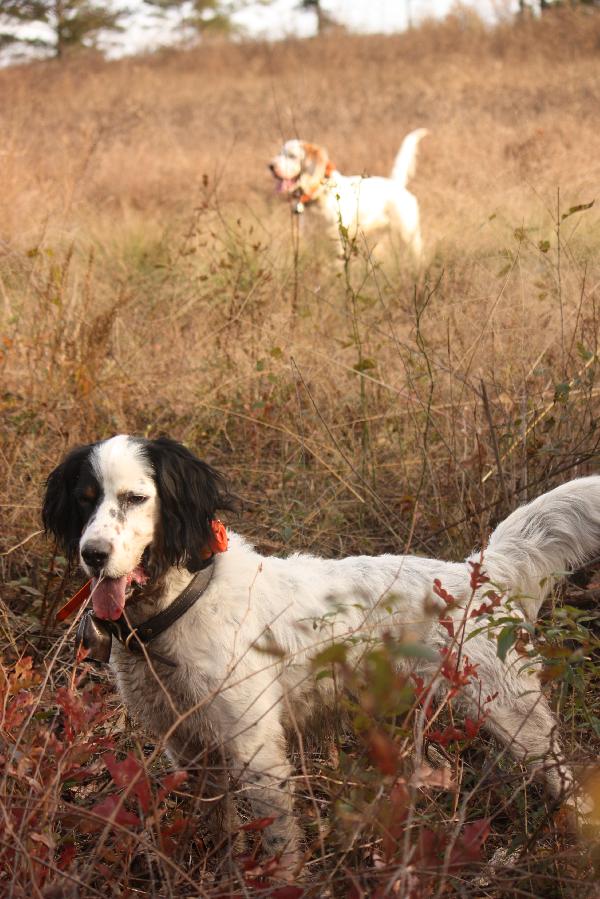
2. Foot or body scent. Foot scent is weak and left behind by running birds. Ruffed grouse prefer to run than fly. So do pheasant. Those birds, among others, don't readily take to the air to avoid avian predators like hawks. Body scent is stronger, and it comes from birds that have been stationary for prolonged periods of time. Body scent is more concentrated, thereby giving dogs an edge.
One reason field trialers favor speed in a dog is because their dogs cover more terrain and find more birds. But another reason, one that is equally important, is that fast dogs hitting scent cones pin birds. Pinned birds don't run off and provide hunters with better shooting opportunities.
Common changes in a dogs' behavior comes when scent gets stronger. Moving from foot scent to body scent fires them up. Some of my buddies' dogs exhibit snappier foot work. Others make quick directional changes, some of which directly follow the birds' path. The great dogs are ones that have the bird smarts to figure out how to get ahead of the running bird. After looking birdy they move in an off-direction to circle around and nail the bird. Those directional changes are common in birds that aren't edge runners.
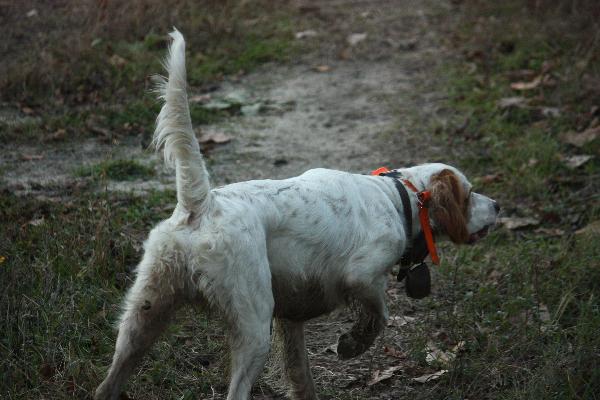
3. Trust your dog. The nose knows, and dogs register bird contacts. Some strut their stuff by moving increasingly faster through fields and coverts as they work birds. In others you'll see change in attitude. They cast rhythmically until they pick up scent. When they do their behavior shifts from search to deliberately homing in on their bird. Good bird dogs instinctively know when they are in a bird-less pass-through zone. They'll speed up to quickly eliminate bird-less zone in favor of areas more likely to hold game.
Just as some birdy dogs speed up, others slow down. Some dogs are simply more methodical in the way they find and handle birds. It's not that their prey drive is any less, it's just that their methods are slower and more deliberate. They are cautious and careful and don't want to make a mistake.
Changes in body carriage are common. When my buddy's pointer is working a bird the dog's body position drops to an intense position slightly lower to the ground. A pal's shorthair shifts from a run to a trot and as he gets closer to a contact he slows again to a speed like a quick walk. Still another friend's Brit is known to creep. His Brit creeps when it knows a bird is around but isn't quite sure where it is. Some of that may be foot scent or conditions related but knowing that's he's saying he's close to a bird is key.
Part of the fun of bird dogging is that all dogs behave somewhat differently. By studying their body language you'll read what they're telling you. That's part of being on a good team. Their job is to find you a bird and yours is to put feathers in their mouths. And when we uphold our end of the bargain we become part of one of the winningest teams I know.

About the Author : Tom Keer
Visit authors website | View more articlesTom Keer owns The Keer Group, an outdoor marketing company which works perfectly with his freelance writing career. He casts his four English setters in Northeast upland coverts and Southern quail fields with fortunate regularity. Hes been lucky to be surrounded by people and dogs that are much smarter than him. Visit him at www.thekeergroup.com or at www.tomkeer.com
Related Aritlces
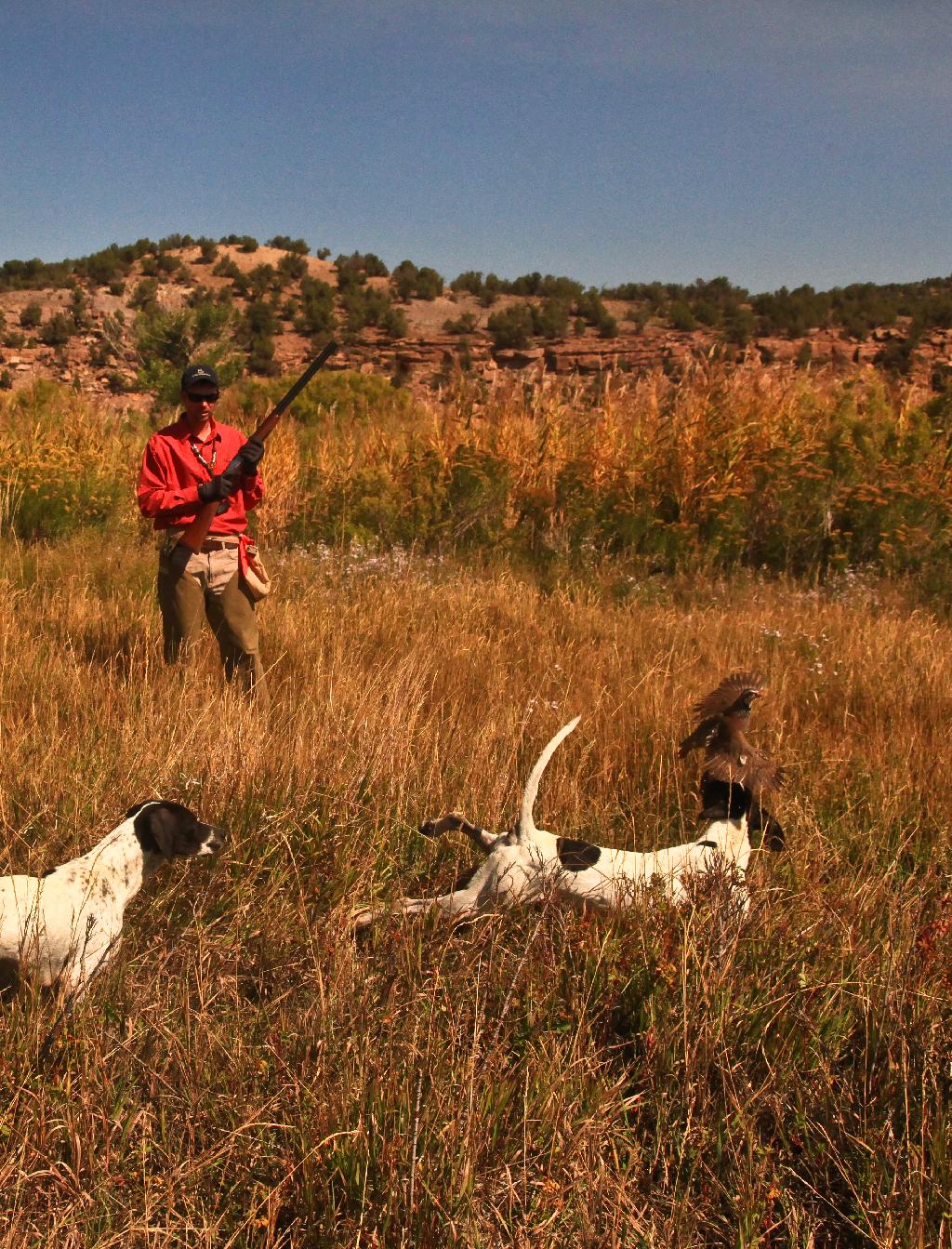
Whatever you do, dont shoot the dog - By Tom Keer
I've never seen a bird dog get shot, but I hear of at least one instance per year. When the stories roll in I get sick to my stomach. They unfold in pretty much the same way. A group of folks review the pre-hunt safety talk. All have heard it before, all are in agreement. The dogs are cut loose, the hunt is underway, and spirits are high. Jokes fly around, conversation is light, and everyone agrees they are more happy in the field than at work.
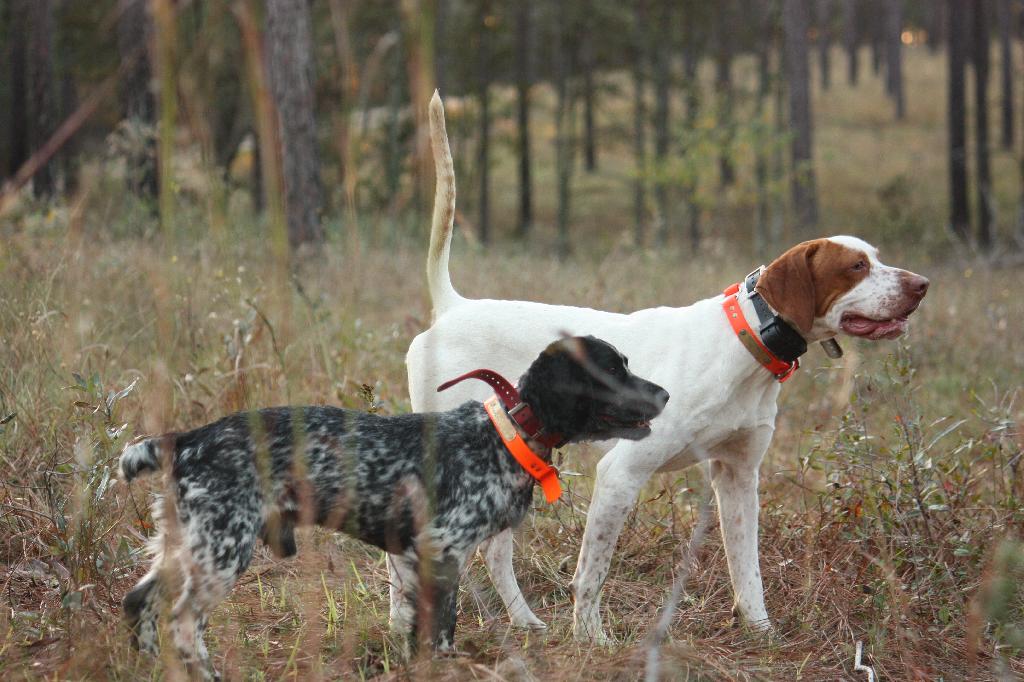
The Great Debate: Pointing or Flushing Dogs for Quail
My wife said I winced when we pulled up to the only game in town. It was an old motel of a vintage that reminded me of the Golden Era of travel by car. Over the years families probably over-nighted here while on their way to any one of a number of the nearby wild quail Valhallas. No visible capital improvements had been done for a long time, at least I couldn't see any renovation. The 30-some-odd rooms looked sad while the adjoining restaurant and tavern was booming.

You Cant Just Have One
I love the saying 'anything done in moderation shows a lack of interest' because it's true. My gun cabinet, my rod rack, my decoy rack and my kennels are all full. I'm immoderate, just like you.