Understanding Bird Scent - Part 1 The Birds
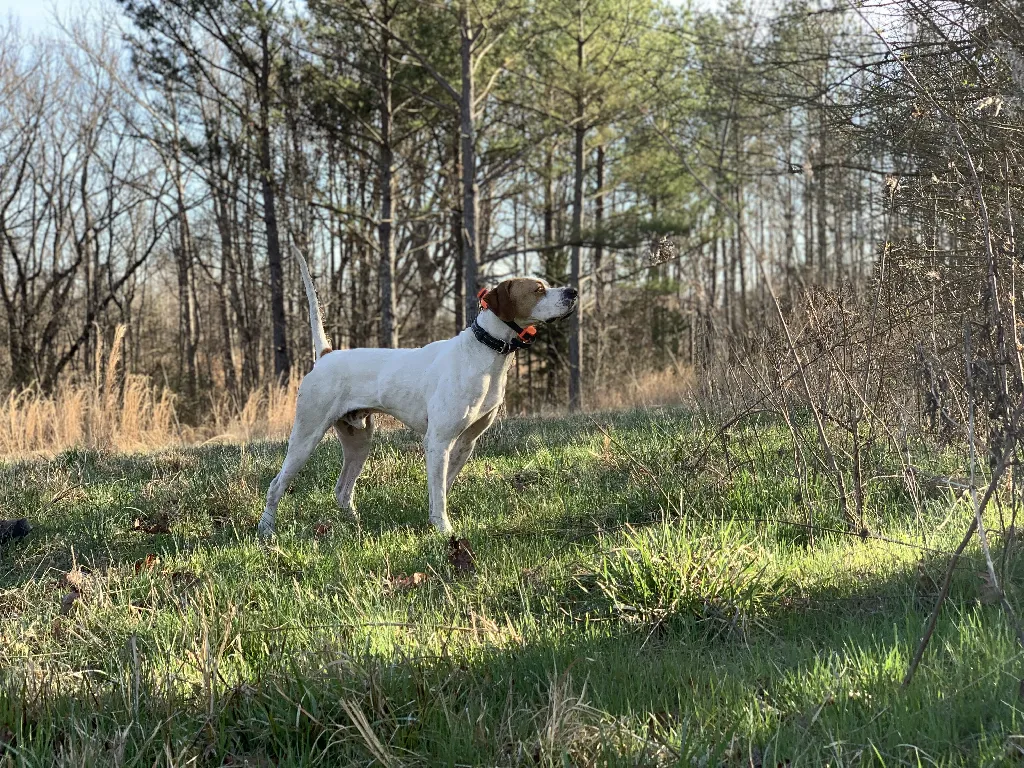
All bird dog owners have witnessed it; one day your dog is pointing birds at 30 yards and the next day he can't find a ham sandwich lying in front of his nose. This conundrum has challenged me for years to research and understand bird scent. Bird scent is the common denominator in all bird dog work but is the least studied and written about. During this past fall hunting season, I decided to spend time doing more research on bird scent.

This article is the first of three on the subject of bird scent. In this article we'll discuss how bird scent is created, in the second article, we'll discuss the diffusion and travel of bird scent and, finally, the third article we'll discuss the receptor of the scent...the dog's nose. Let's get started.
We'll begin with a scientific description of scent. Scent is created by a concentration of volatilized chemical compounds that have the ability to vaporize. That vaporization is then dispersed into the atmosphere which creates a scent cloud and then identified by a dog's sense of olfaction. That's a simplified explanation.
Okay, we have a simplified explanation; however, what creates the volatilized chemical compound? Research indicates that most of those compounds are created from bacteria. Since bacteria are the catalyst for creating scent, let's take a deeper look at this invisible factor. Whether it's a bird, dog or human, warm living bodies are covered with bacteria. The human scalp alone has 1.46 million bacteria per square centimeter. Birds are covered with bacteria....both internally and externally. Birds have a population of bacteria known as 'normal microbial flora' which colonizes the skin and mucous membranes of the respiratory and gastrointestinal tract. These bacteria are not disease causing and are referred to as 'nonpathogenic'. (Normal & Abnormal Bacterial Organisms of Birds by Linda Pesek, DVM). As we search for the sources of scent from birds, we should keep in mind that bacteria will interact with both living and dead matter to create scent. The bacteria eat the matter, extract nutrients for themselves and disburse their waste which vaporizes. That process, the vaporization and dispersion of the volatilized compounds creates a scent cloud.
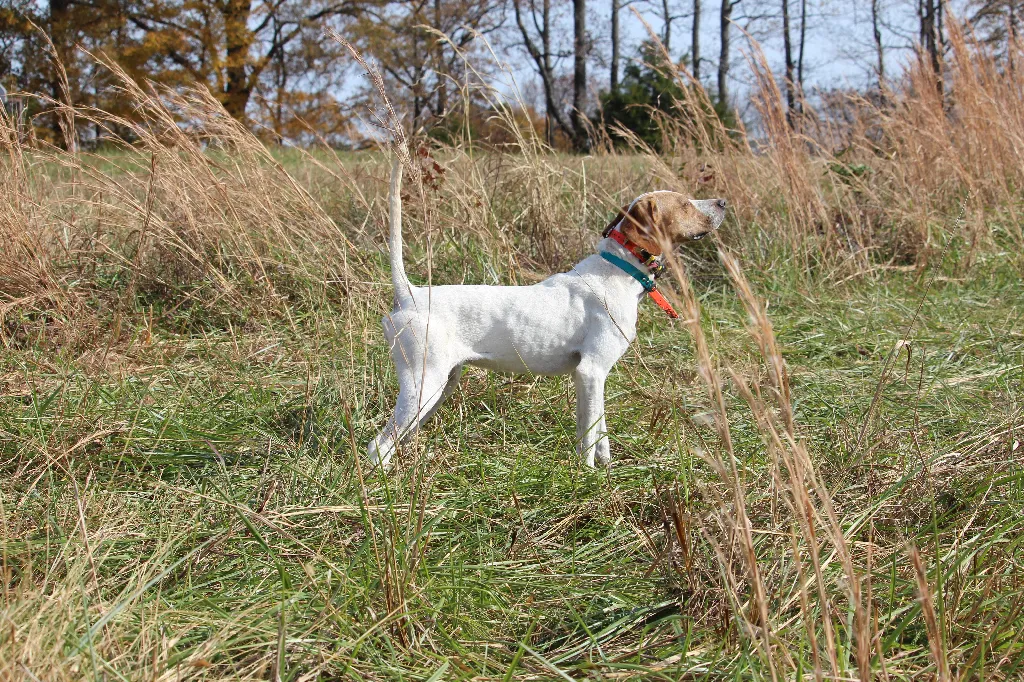
Okay, we have the scientific definition as a foundation; now let's visit the practical side of bird scent...just what are all these little bacteria, in and outside of a bird, munching on?
I stumbled with this question during my early research. Bird dog folks I spoke with said it was dandruff type shedding on the bird, one said it was the bird's droppings and another said it was simply sweat (birds don't sweat) and yet another said it was oil created by the feathers; however, feathers are dead and not capable of producing oil. It was obvious to me that I needed much more research.
Beginning with a simple internet search of ornithology, I contacted the Cornell University Department of Ornithology. They provided me with a scent track that included books, research papers and noted scholars. My gratitude to Cornell University.
There are four sources of scent dispersed from our popular gamebirds. Each source initially disperses its own vapor scent cloud (often referred to as a scent cone).
The first source, and the one your author feels has the greatest impact, is the uropygial gland. Here is a quote from a paper published by Dr. Rick Axelson (DVM) titled Preening or Uropygial Gland in Birds. December 12, 2008.
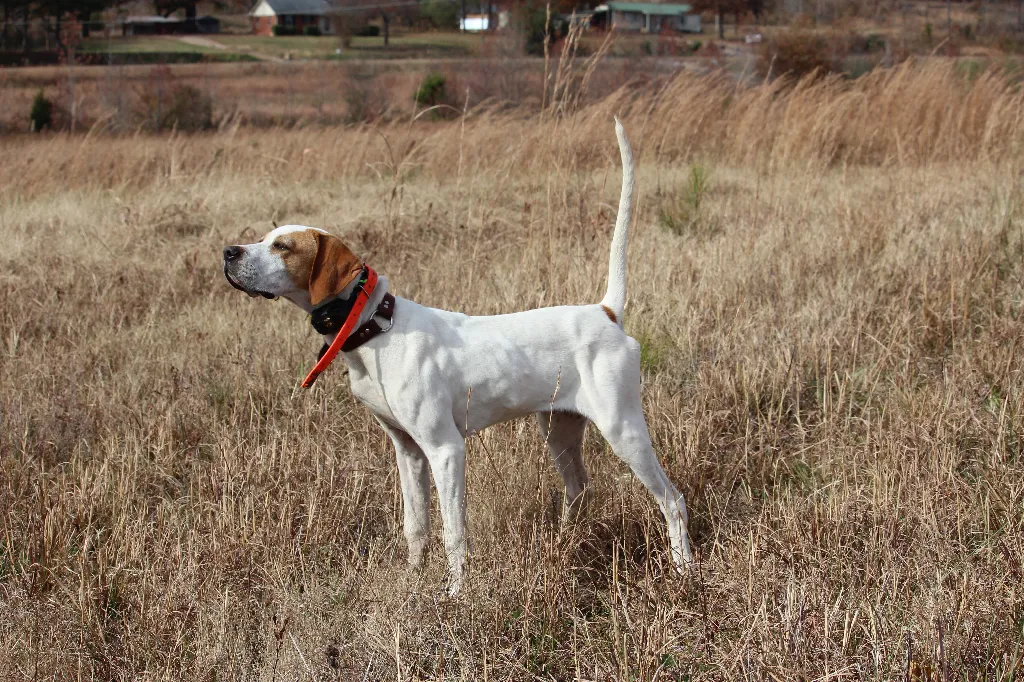
It (uropygial gland) secretes a thick, transparent, complex oil consisting primarily of diester waxes (uropygiols), fats and fatty acids. The gland is located at the base of the tail, on the lower back, just in from of the tail feathers. This area is generally featherless except for a tuft of down at the tip called uropygial wick. The gland is bilobed, or has two symmetric parts. The oil from each lobe of the gland is secreted through small papilla (nipple-like projection). It performs many functions in the bird including water proofing, and keeping the skin, feathers and bill supple. During preening, a bird transfers this oil to its feathers by rubbing its head and beak against the oil gland and then spreading the oil over the feathers on the rest of the body.
The uropygial gland wick is always there. It's a constant that provides scent at all times. Through preening, it also affects the second and third vapor scent clouds; which increases its importance. Bacteria love oil...remember that bacteria was used to help clean-up the Gulf oil spill.
The second vapor scent cloud is a cocktail mix of several ingredients. All these ingredients interact with bacteria to create a scent cloud. One ingredient in this scent cloud are rafts of dead skin that are continuously shed by a bird. There is minor disagreement amongst researchers regarding whether the skin sheds become scent creating vapor or are they simply a "raft" that carries other volatilized compounds airborne. After studying many papers, your author feels that they are both. The evidence is very strong that they do serve as a raft (small air ship) which carries bacteria (scent) into the atmosphere. Another ingredient joining this cocktail are the small segments of the capsule that surrounds new feather growth. As the feather grows, the capsule breaks apart and mixes with the wax and oil distributed by the uropygial gland. And, of course, many of our game birds enjoy a dust bath. Add dust to the cocktail. And finally, if the bird is a ground rooster, then there is a good chance that there is residual scent, on the birds bottom, from bird droppings.
The third vapor scent cloud is from the ground. This is the scent cloud that most favors the tracking dog. This scent cloud is also a cocktail mix. It would include bird droppings, a mixture of skin cells, feather capsule pieces, dust, bacteria and crushed vegetation. Ground bacteria immediately attack even the most microscopic piece of damaged vegetation from a walking or running bird. Remember that uropygial gland? Those skin cells, feather capsule pieces and dust were all rolled around in the uropygial gland wax and oils which were distributed by the bird through preening. As the bird moves, the motion (imagine a flour sifter) shakes many of these particles loose and they fall to the ground. Also, the running bird rubs against foliage, branches, etc. and leaves preening oil from the feathers.
And, here is the fourth scent vapor cloud...bird breath. Dr. Dale Rollins, Executive Director of the Rolling Plains Quail Research Ranch in Texas is a strong believer in the bird's respiratory system creating scent. Dr. Rollins told me that his pointing dogs have never pointed a dead bird (no breath). They point healthy birds and wounded birds but never a dead bird. This makes sense...we all learned at an early age to use a mouth wash before a date. Bacteria in the mouth creates scent. In paragraph five (above) we quote Linda Pesek stating that bacteria is in the respiratory tract. Birds breathe through both their mouth and nostrils. Dr. Rollins asked me to mention that his conclusion is based on observation; not from scientific research.

A wild card in this subject of bird scent is pheromones. There are both sex pheromones and defensive pheromones. The sex pheromone is believed to identify the bird's species, sex, age and social dominance. Defensive pheromones are released when a bird is stressed; being pinned by a pointing dog would be a good example. For birds, most research I could locate indicates pheromones are released by that reliable uropygial gland; however, it could also include the respiratory system...maybe both.
Regarding the four vapor scent clouds, shortly after dispersal, they all interact and become a potpourri of scent. With all that amount of scent in the air, you may now ask "how could my dog miss that melange of scent"? We'll answer that question in the next edition of this series on scent. We'll cover all the atmospheric conditions that are known to affect scent dispersal.
Literature Cited
Axelson, Rick DVM, December 12, 2008, Preening or Uropygial Gland in Birds, Care & Wellness
Iowa State University, May 2004, The Science of Smell Part 2: Odor Chemistry (Yahoo Search)
Pesek, Linda DVM, July 1999, Normal & Abnormal Bacterial Organisms
About the Author : Paul Fuller
Visit authors website | View more articlesPaul Fuller is host of Bird Dogs Afield TV. The show is available on his website birddogsafield.com and his YouTube Channel [youtube.com/birddogsafield]. Bird Dogs Afield has 3.3 million views on YouTube. Paul and Susan, his wife, travel across America and Canadian provinces to film and share their upland hunting experiences with like-minded sportsmen. He has published the iconic DVD series titled Grouse, Guns & Dogs and most recently, his new book titled 21st Century Pointing Dog Training. Paul loves all bird dogs, however, his personal choice is the German shorthaired pointer. Paul can be reached at [email protected].
Related Aritlces

Understanding Bird Scent-Part 3 The Dogs Nose
The canine nose - truly one of nature's most amazing accomplishments. A dog's nose not only dominates her face, but her brain, as well. In fact, a dog relies on her sense of smell to interpret her world, in much the same way as people depend on their sight. Although this contrasting world view may be hard to imagine, know that your dog interprets as much information as you do. However, she does much of this by smelling an object or animal, not by staring at it. (Stanley Coren, Sarah Hodgson, Understanding A Dog's Sense of Smell).
Understand Bird Scent-Part 2 Diffusion
In last month's column, Understanding Bird Scent-Part 1 - The Bird, we learned about how bird scent is created. We know that there are scent rafts that create four different scent clouds that carry the scent into the atmosphere. Once the scent is airborne, there are numerous atmospheric weather conditions that affect the scent dispersal and the ability of our pointing dogs to locate a bird. In this part, of our three part series, let's examine those weather conditions that affect bird scent diffusion. We'll also look at the effect weather has on bird movement which also produces scent diffusion.
The Great Debate: Pointing or Flushing Dogs for Quail
My wife said I winced when we pulled up to the only game in town. It was an old motel of a vintage that reminded me of the Golden Era of travel by car. Over the years families probably over-nighted here while on their way to any one of a number of the nearby wild quail Valhallas. No visible capital improvements had been done for a long time, at least I couldn't see any renovation. The 30-some-odd rooms looked sad while the adjoining restaurant and tavern was booming.