Featured Breed of the Week : Wirehaired Pointing Griffon
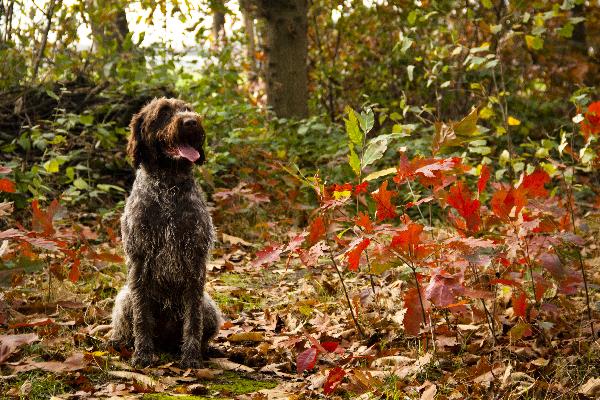
This breed has been described as both happy and friendly. They generally get along with people, and they barely qualify to be guard dogs owing to their gentleness. When kept indoors, the Wirehaired Pointing Griffon prefers older children who have a better understanding of how to handle dogs properly. Further to that, this breed interacts quite well with other pets, though they might require some training to get over their nervousness.
That said, however, the Wirehaired Pointing Griffons are quite energetic, which is one of the reasons they are excellent hunting dogs. They have been found to do quite well in areas where they have plenty of space to run around in. As much they can adapt to life in city apartments, they are best suited for the countryside and rural areas.
A brief description of the Wirehaired Pointing Griffon's appearance
The Korthal's Griffons or Griffon d'arret a poil dur Korthals are strong medium-sized dogs. As already introduced, this breed gets its name from the appearance of its coat. The undercoat is usually thick and is weather-resistant. The topcoat, on the other hand, has a harsh texture and comprises straight, wiry hairs. Griffs have defined eyebrows and a moustache, both of which happen to be extensions of their undercoat.
Most hunters and dog owners have been found to prefer the steel grey-colored Griffs with brown markings. Some tend to prefer griffons that have chestnut brown coats, white and orange coats, white and brown coats, as well as roan coats, but their number is not as large as those who prefer the steel grey colored Griffs. The brown, white and orange furred Griffons are perceived as being less desirable.
The male Wirehaired Pointing Griffons measures 22 to 24 inches in height and the females average 20 to 22 inches. The average weight of most Wirehaired Pointing Griffons is 50 to 60 pounds, which is quite ideal for the hunting activities these dogs are used for.
Brief History of the Wirehaired Pointing Griffon
The existence of the griffons is accredited to one Eduard Karel Korthals, a Dutchman who resided in France. He began the breeding process in 1873 with the hope of ending up with a dog that would match the desired traits of an ideal gun dog. Resiliency, the capability to partner with its owner, and the ease of training were the main traits that Korthals was aiming to bring up through the breeding process.
In 1874, Korthals took a dog known as "Mouche", as the foundation bitch, and begun interbreeding it with other dogs that he referred to as Griffons. Eduard proceeded with the process until he successfully produced Lina, Querida and Moustache I. These three have since then come to be known as the Korthals Patriarchs.
The first griffon club was formed in 1888 in Bavaria. The American Kennel Club registered Zolette, the first Korthals Griffon in 1887. The Griffon was however presumed to be of Russian heritage, and this led to it being referred to as a Russian Setter. This went on until 1916, when the breed became officially become recognized as the Wirehaired Pointing Griffon. It was in the same year that the Westminster Kennel Club Dog Show hosted sixteen Griffons, and this played a very crucial role in the increase of its popularity.
Korthals' intention to have a medium-sized trainable dog that was resilient and had a harsh coat was an overall success. In the present day world, it is one of the most versatile gun dogs on a global scope, and it is very much loved for its amicable nature.
#wirehairedpointinggriffon
Related Aritlces
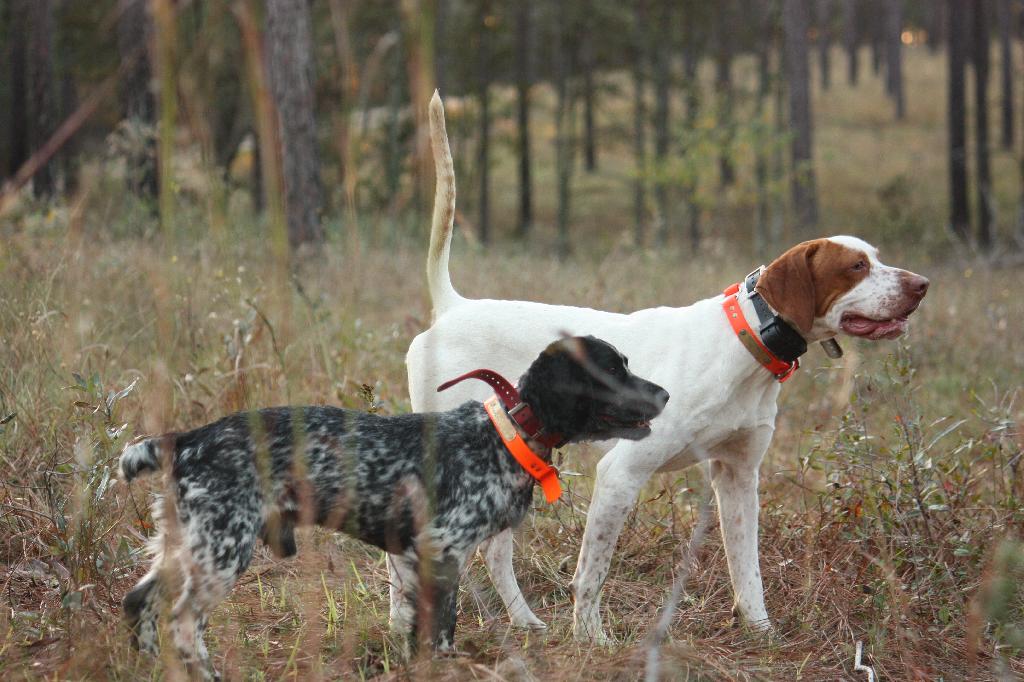
The Great Debate: Pointing or Flushing Dogs for Quail
My wife said I winced when we pulled up to the only game in town. It was an old motel of a vintage that reminded me of the Golden Era of travel by car. Over the years families probably over-nighted here while on their way to any one of a number of the nearby wild quail Valhallas. No visible capital improvements had been done for a long time, at least I couldn't see any renovation. The 30-some-odd rooms looked sad while the adjoining restaurant and tavern was booming.
Featured Breed of the Week: German Shorthaired Pointer
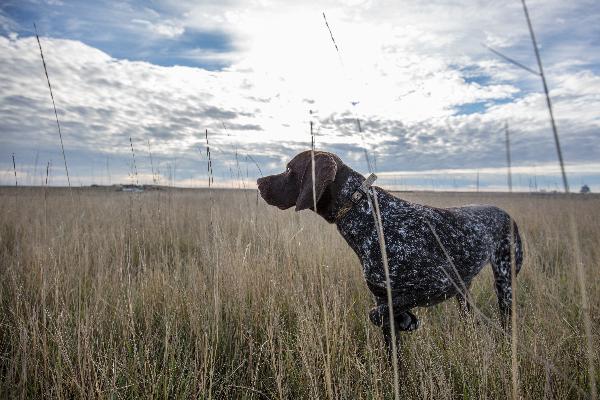
The German shorthaired pointer is an all-purpose dog. It can track, point and retrieve game. The overall picture of a German pointer is that of a well-balanced and symmetrical animal.

Featured Breed of the Week : Weimaraner
Looking for the perfect hunting dog that's built for endurance, and great speed? Dog breeds with a high alert demeanor, great stamina and grace are highly sought after. Why? They help hunters track prey such as game birds and deer.